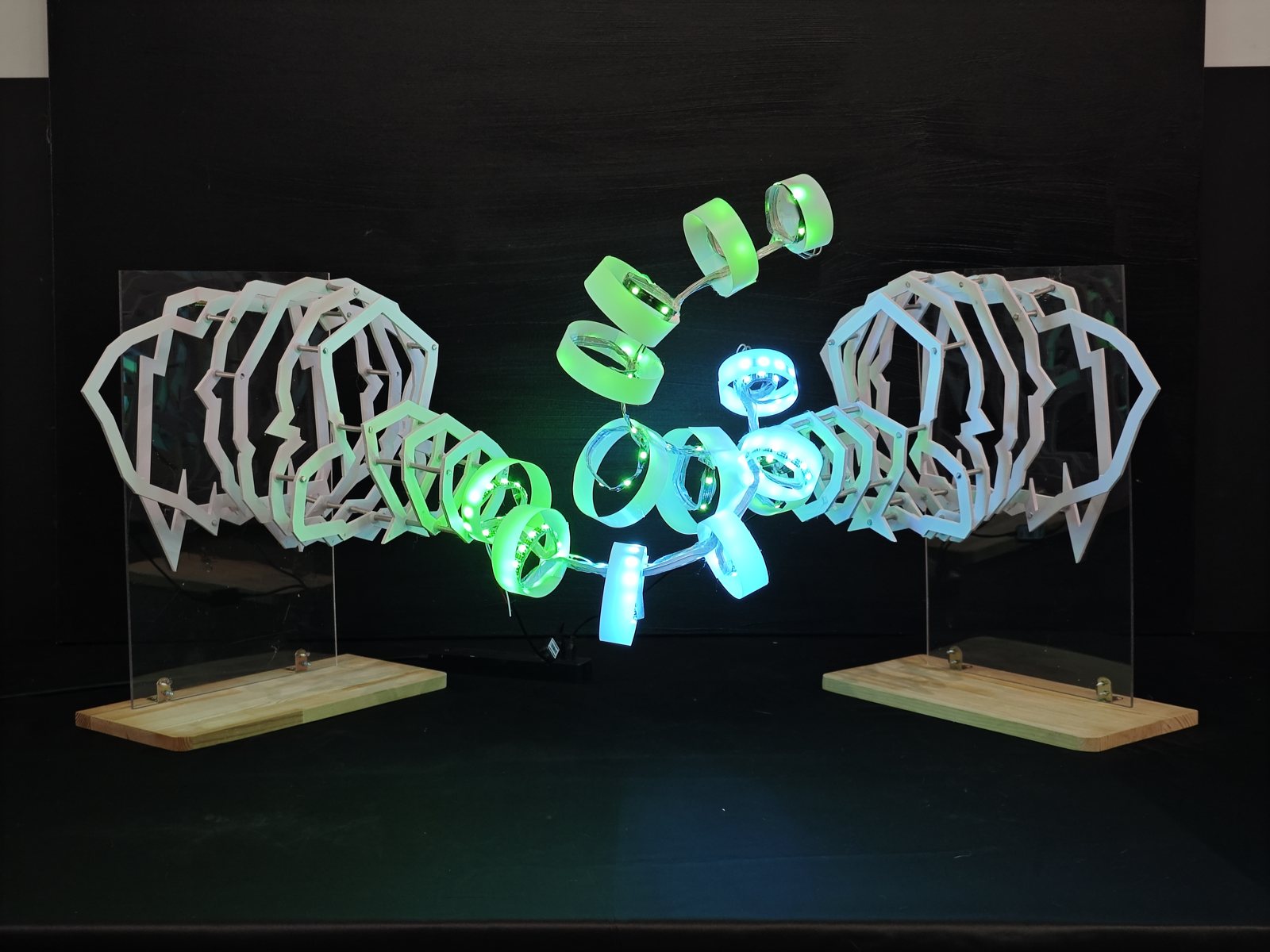
SONG OF THE ELEPHANTS
横截面
Cross Section
- Date
- August 2024
- Location
- Nanshan, Shenzhen, China
- Size
- 1.5m*0.5m*0.4m
- Material
- PVC, LED W2812B, arduino, acrylic plate, diffuser sheet, aluminum wire
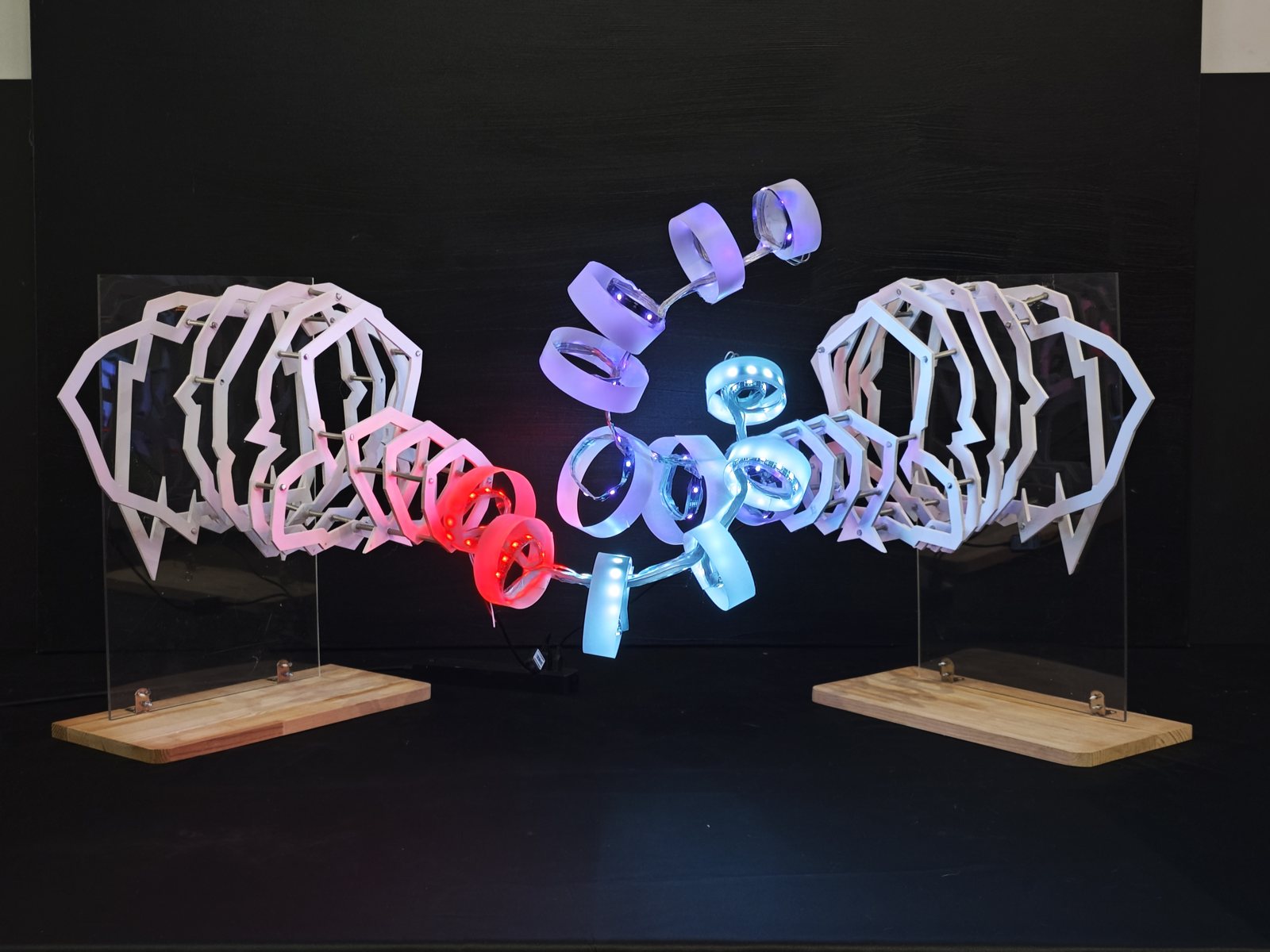
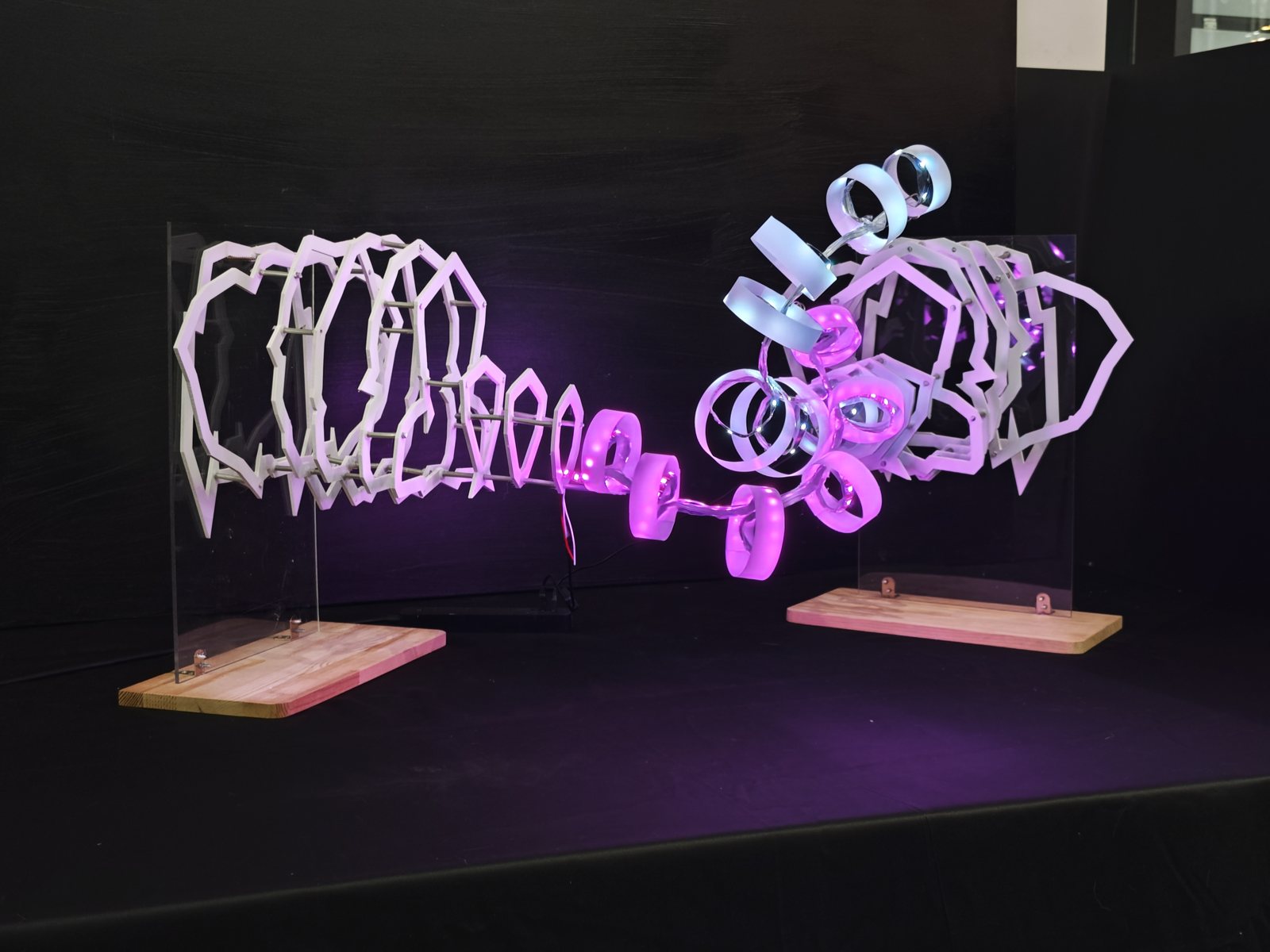
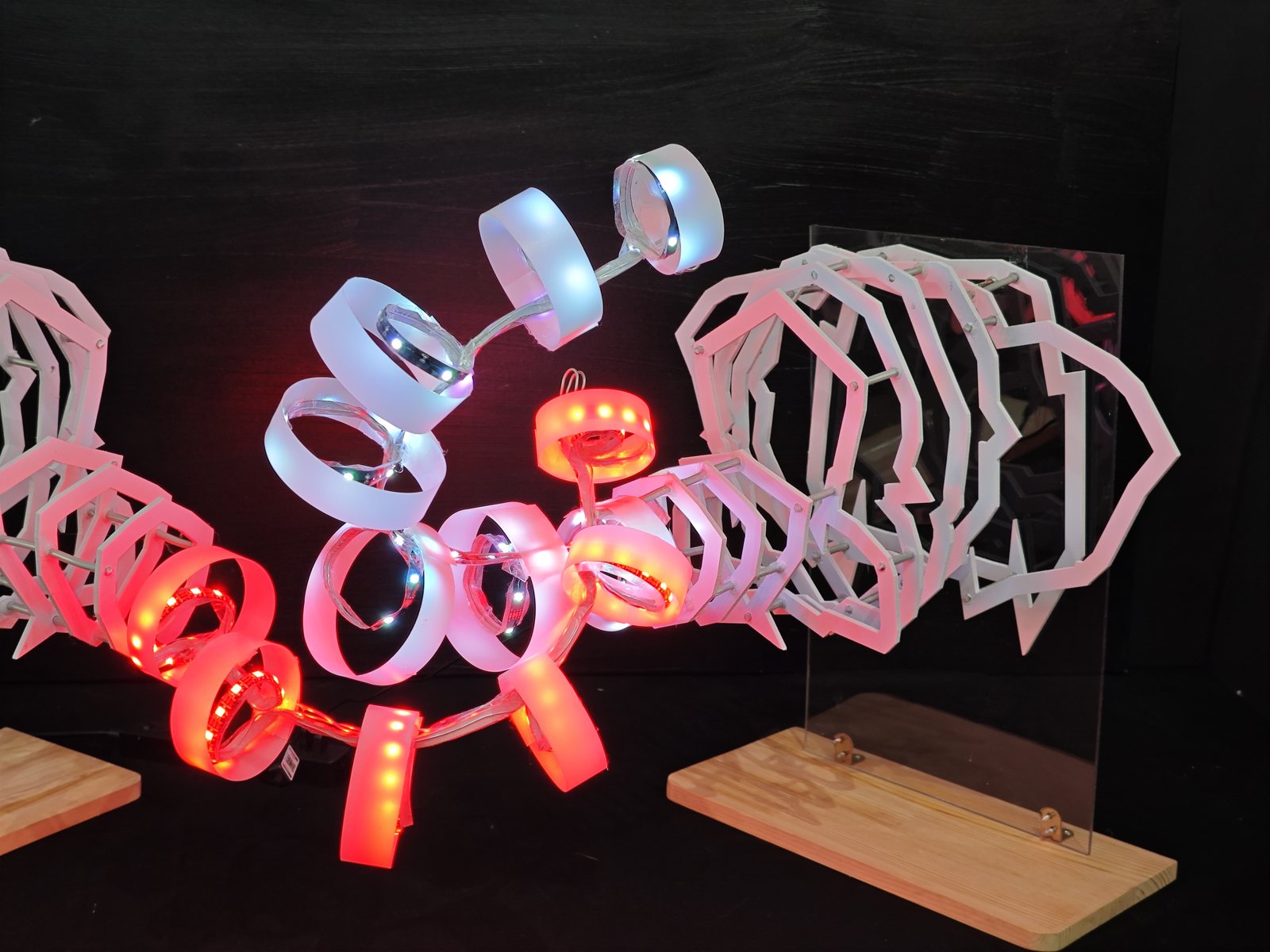
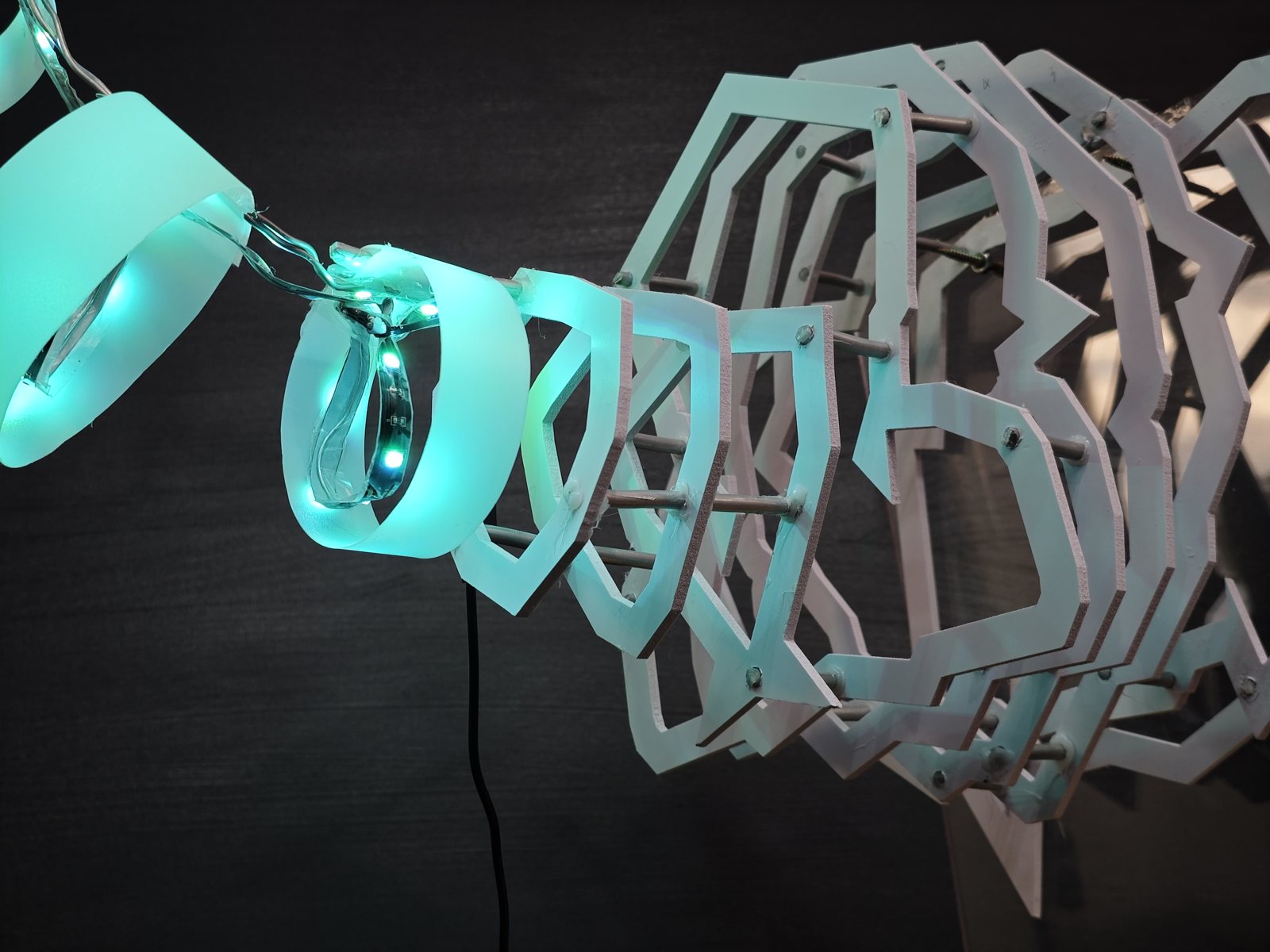
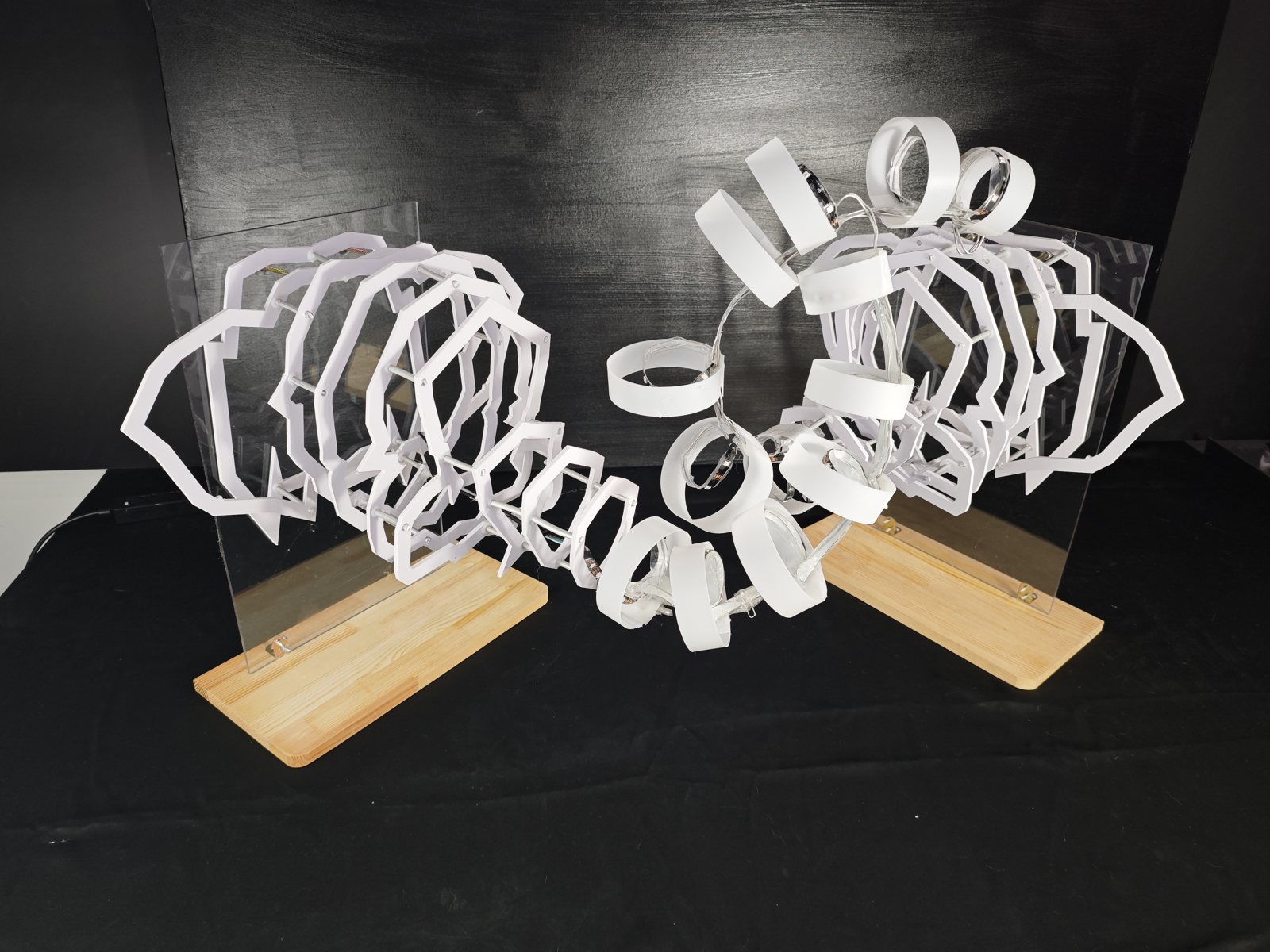
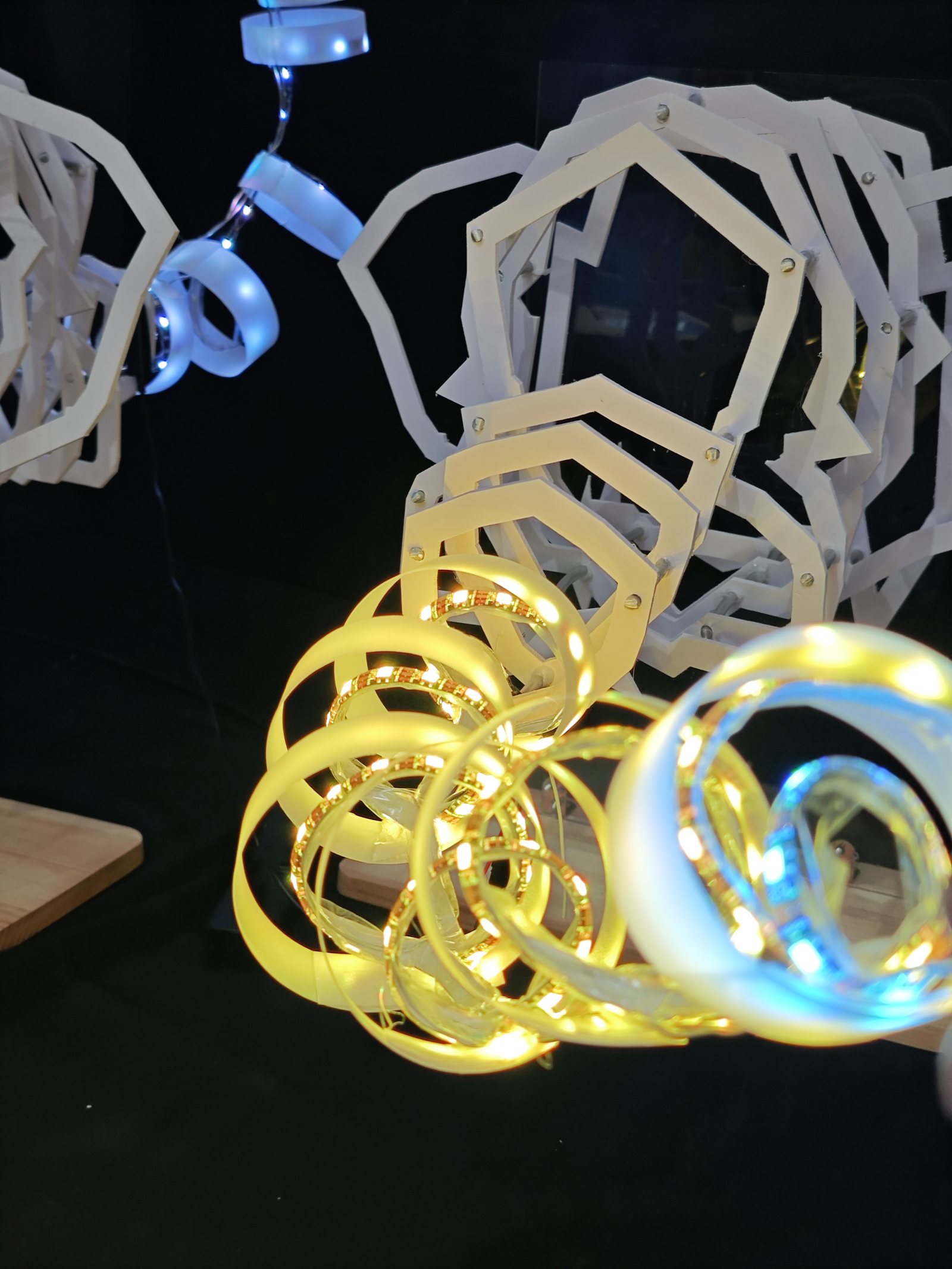
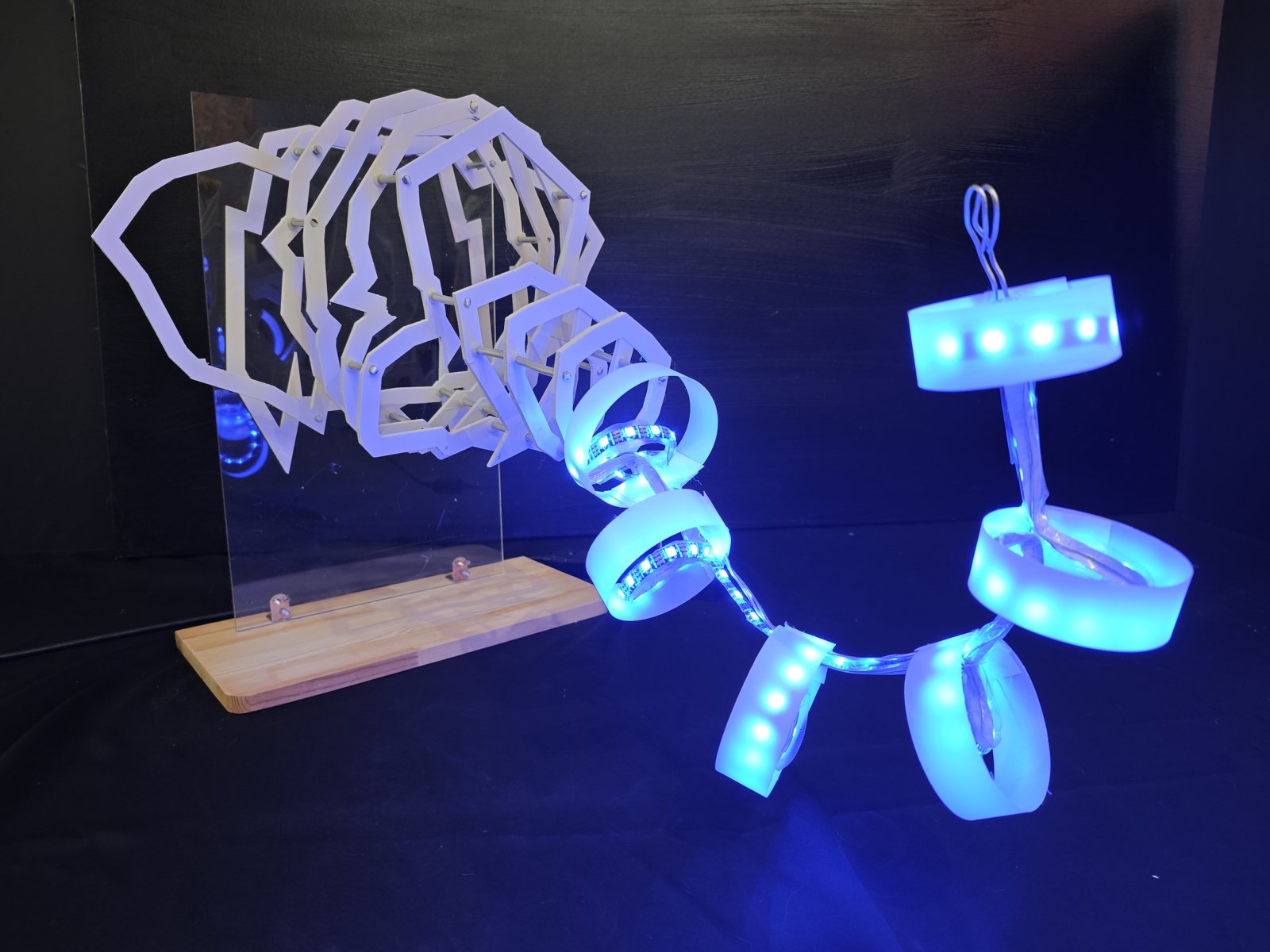
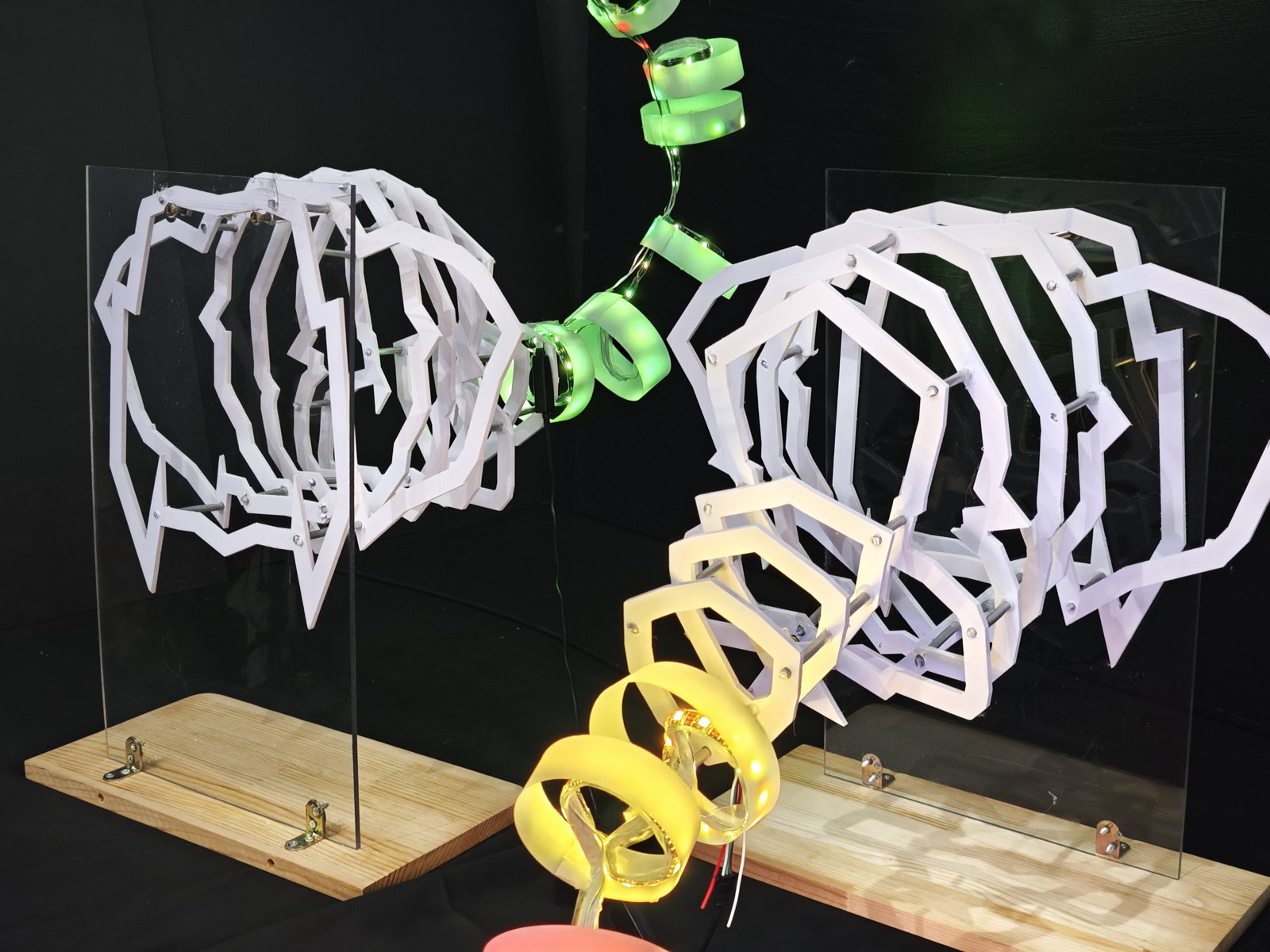
The fusion of water and fire The blue trunk represents lower sound frequencies; the red one detects higher ones.
CONCEPTUALIZATION
Summer 2023, Guizhou.
I was teaching Shui ethnic children and conducting dyslexia screenings. One day, during a drawing class titled "What Animal Am I?" a particularly quiet child with dyslexia created a moving piece. The drawing depicted a dinosaur-like creature that was, in fact, a green elephant.
As I gradually got to know him better, he shared with me, "I feel like a green, symmetrical elephant. I might be communicating in a language that others can’t hear."
In Shui culture, the elephant symbolizes tranquility and blessing. Through installation art, I aim to express this "language that others can’t hear"—the extraordinary spatial awareness of dyslexia and the ever-changing beauty of symmetry.

BRAINSTORM
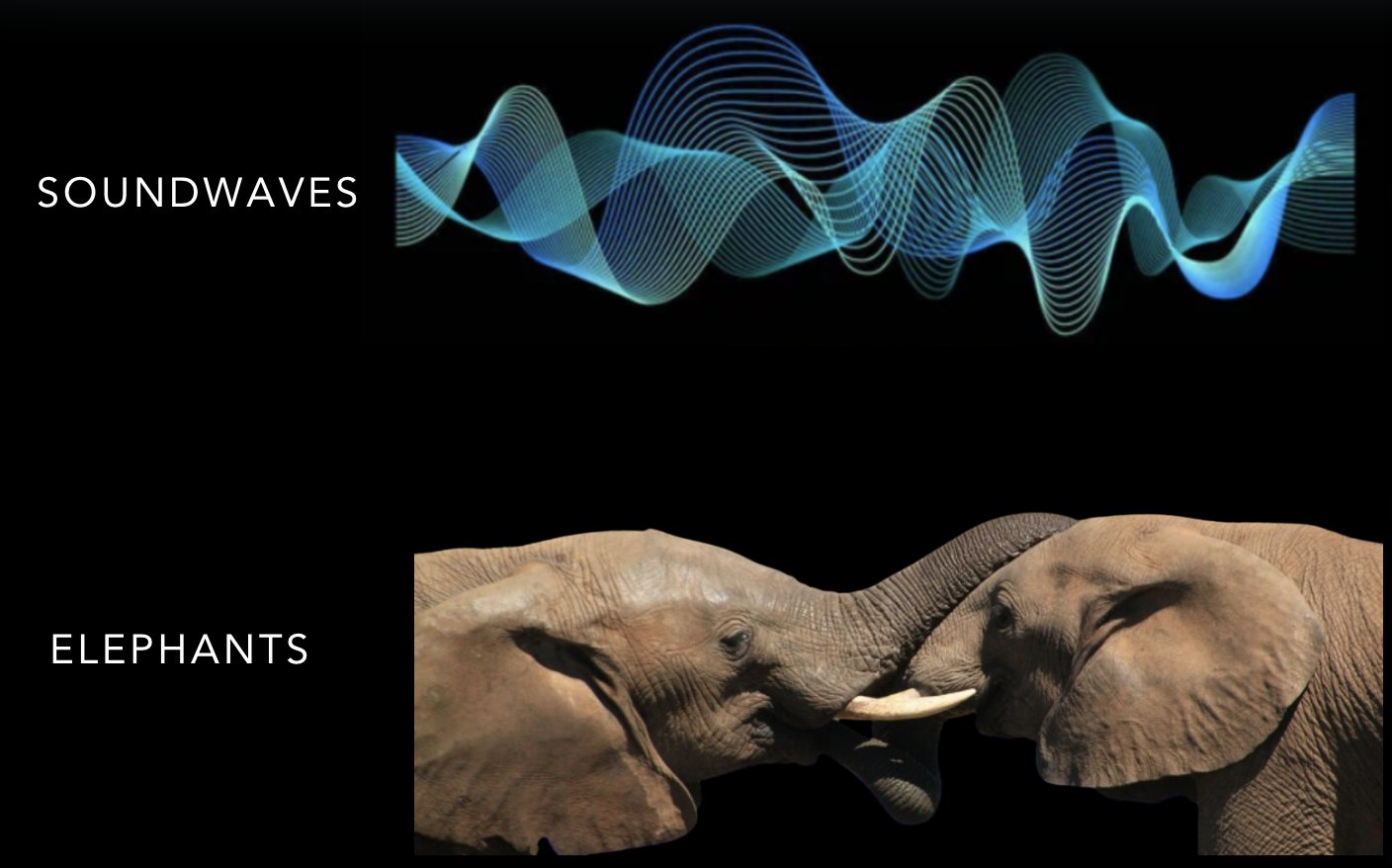
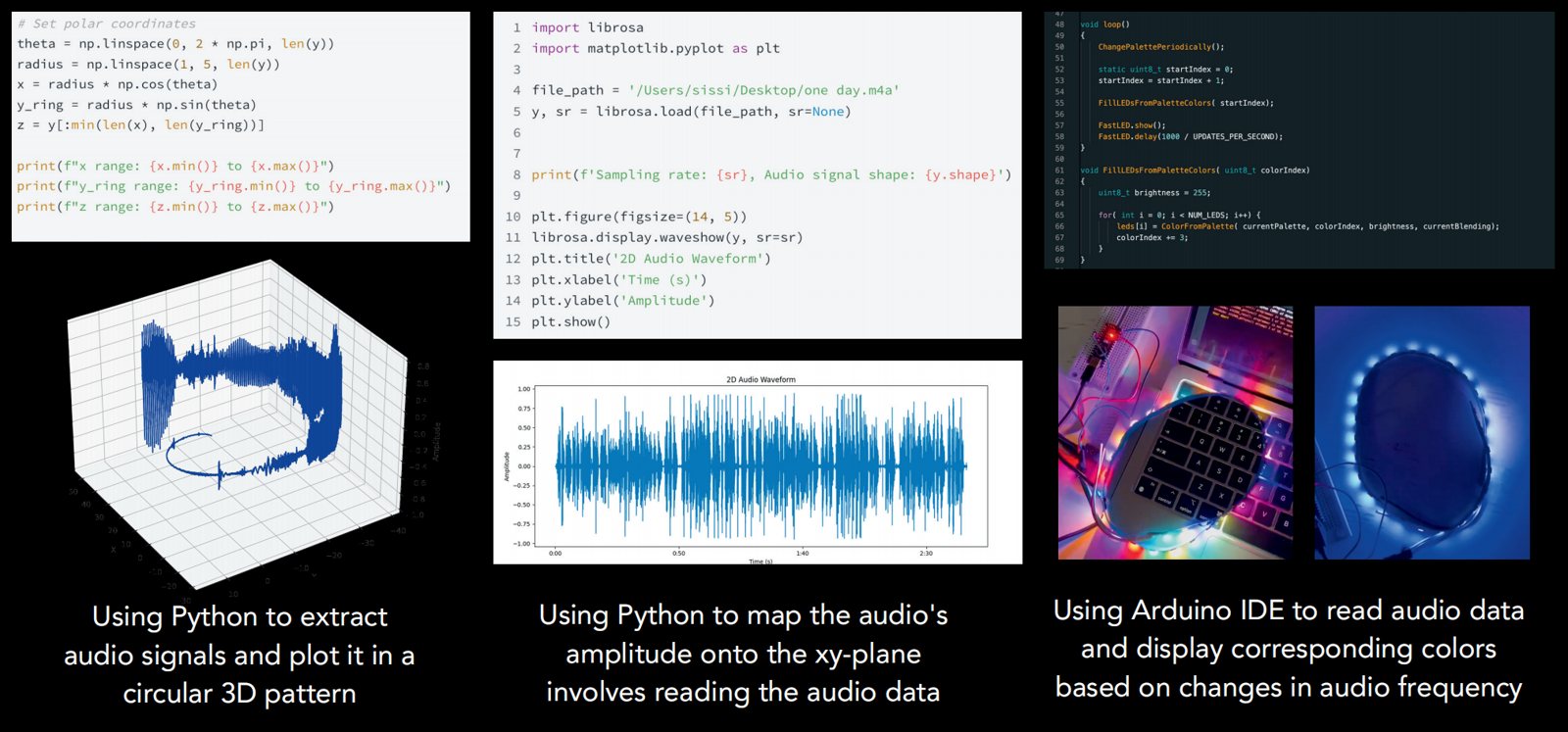
Soundwave visualization allows human voices to interact with waveforms.
Elephants communicate using infrasound, which is inaudible to humans but crucial for their long-distance communication, similar to dyslexic’s unnoticed voices.
I want to incorporate the design and variations of soundwaves into the elephant's trunk to reflect communication and relationships between individuals.
SKETCH
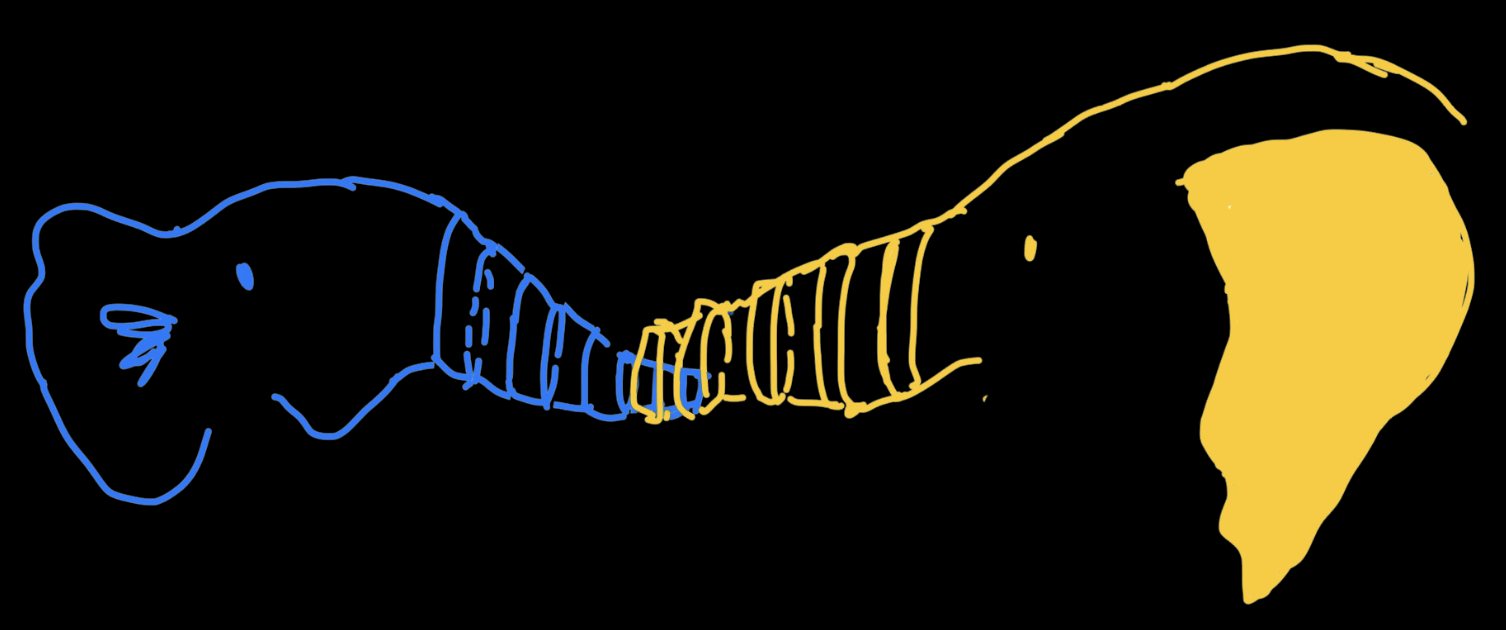
I decided to create two elephants facing each other, with a focus on their trunks, which represent cross-sections of sound visualization waves. The cross-sections are not continuous, symbolizing the rise and fall of sound.
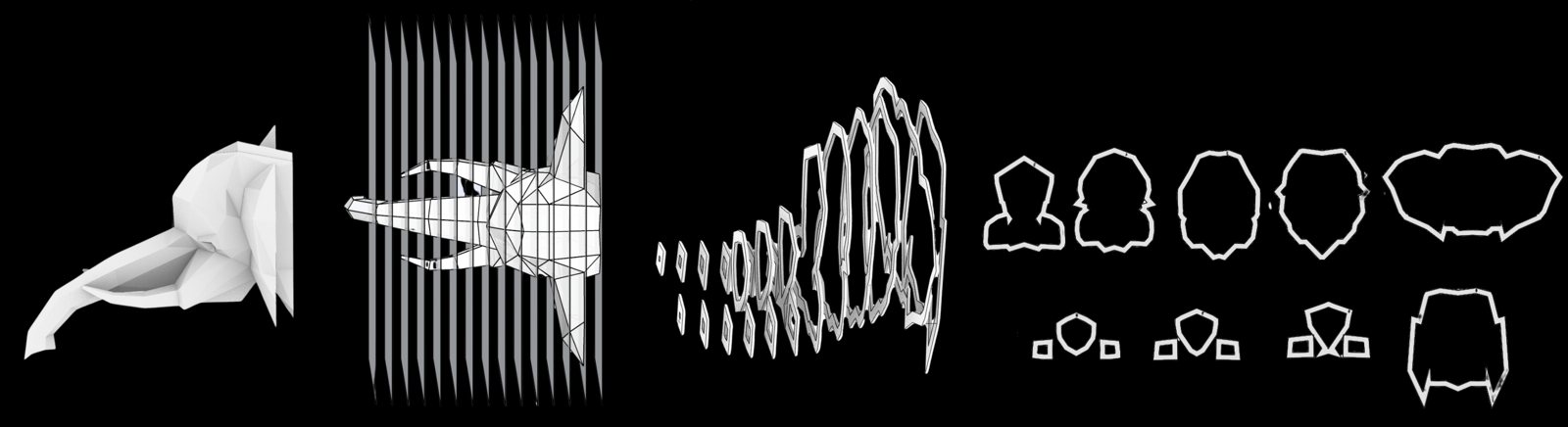
- Model a geometric elephant using Rhino
- Slice the elephant's volume with equally spaced planes
- Thicken each cross-section and define the edge width
- Lay out each cross-section and cut them from PVC board
DATA VISUALIZATION & CODE
CONSTRUCTION
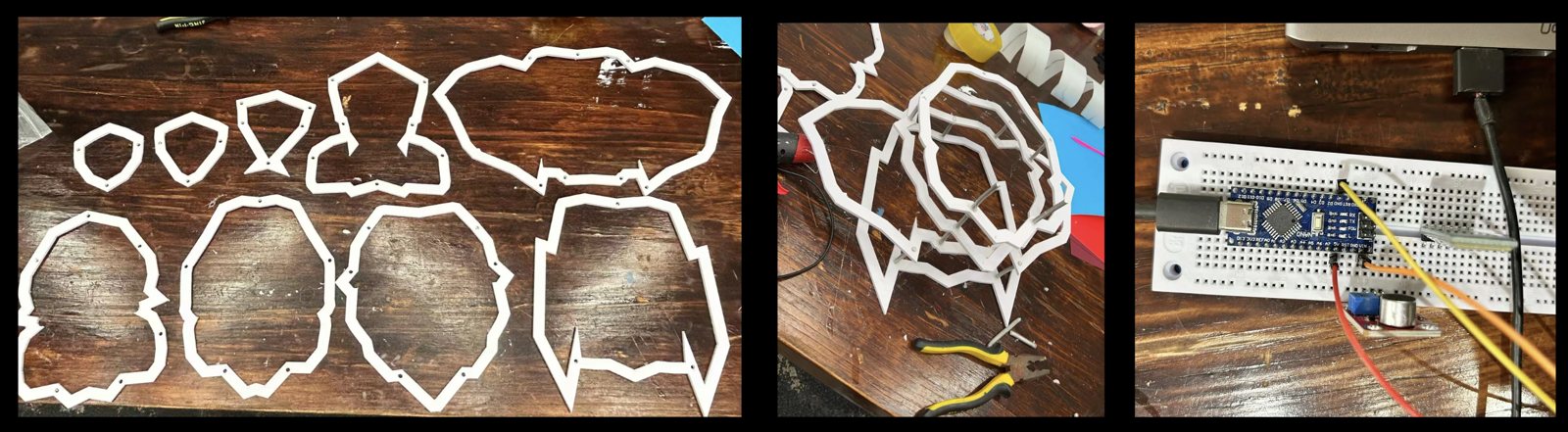
After cutting the PVC, I calculated and drilled holes into it. Next, I connected each cross-section using 3.5 cm aluminum wire and hot glue.
Shaped diffuser sheets into circles based on the size and form of the audio frequency bands and attached them to the trunk’s wire structure.
Connected a WS2812B LED strip to the data pin and power source of the Arduino Nano, enabling the lights to respond to sound fluctuations.
FINAL DISPLAY