build beautiful things

those layers, interfaces, experiences, feverdreams, fun, and space i created

maglev (pinned)

where we think different about manufacturing.

joint tuner @ fireworks: deploy

first place overall a gold medal on a red ribbon, with a little crying cat poking its face, paws and feet out of it

sponsors: fireworks, microsoft, nvidia

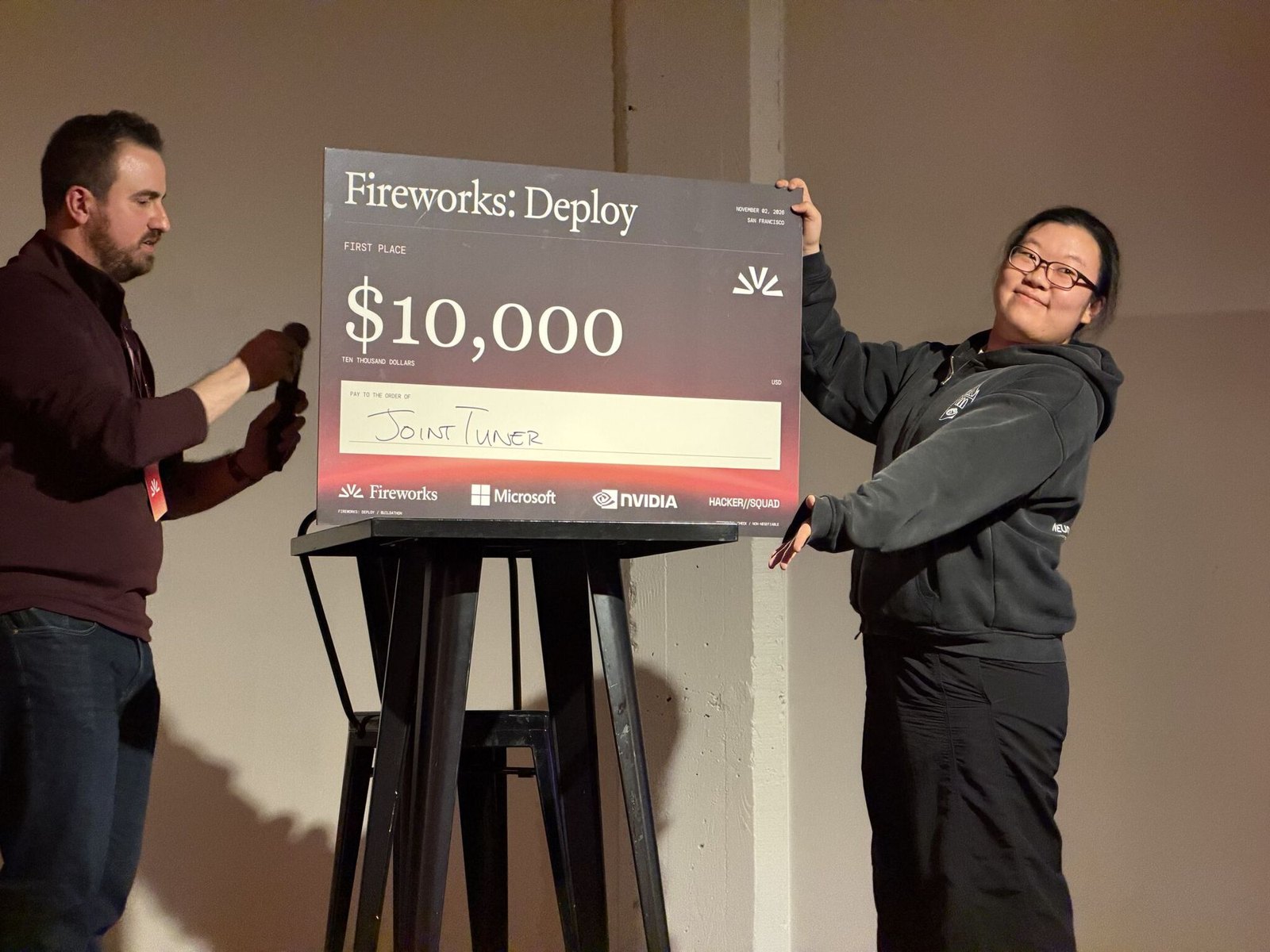
sissi on stage holding up a giant check next to the host with a microphone: fireworks: deploy, first place, $10,000, pay to the order of joint tuner, november 02, 2026, san francisco, with the fireworks, microsoft, nvidia and hacker//squad logos along the bottom
first place, $10,000, fireworks: deploy, san francisco.
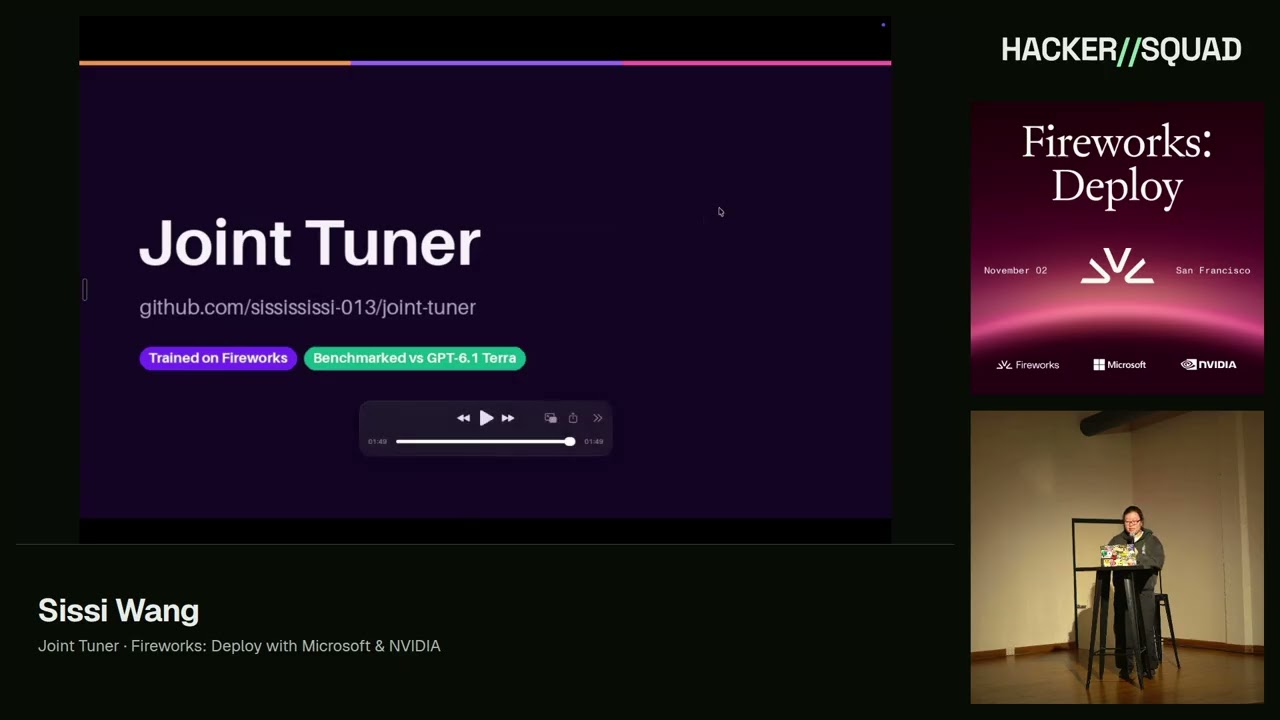
the live demo on youtube, "sissi wang - joint tuner | fireworks: deploy with microsoft & nvidia", 5 minutes 4 seconds, from hackersquad. the still shows joint tuner's title slide (github.com/sissississi-013/joint-tuner, trained on fireworks, benchmarked vs gpt-6.1 terra) beside the fireworks: deploy card and a small camera view of sissi presenting at a lectern
the live demo on stage, on hackersquad's youtube (5:04).
the demo, with my voice (1:49).
a race on one wrist joint. the classic optimizer needs 493 physical tests, gpt-6.1 terra gets it on the 1st after 23 s of thinking, joint tuner on the 5th, in about a second each.
a motor + gearbox. the orange output shaft runs joint tuner's gains in mujoco and settles inside the spec. real time.
a robot arm's elbow, driven by joint tuner's gains, meeting its spec. 37x speed.
a humanoid ankle that can't balance on its own. joint tuner's gains hold it steady. real time.
a drone's roll axis, with the lag of real rotors, settling on joint tuner's gains. 2x speed.
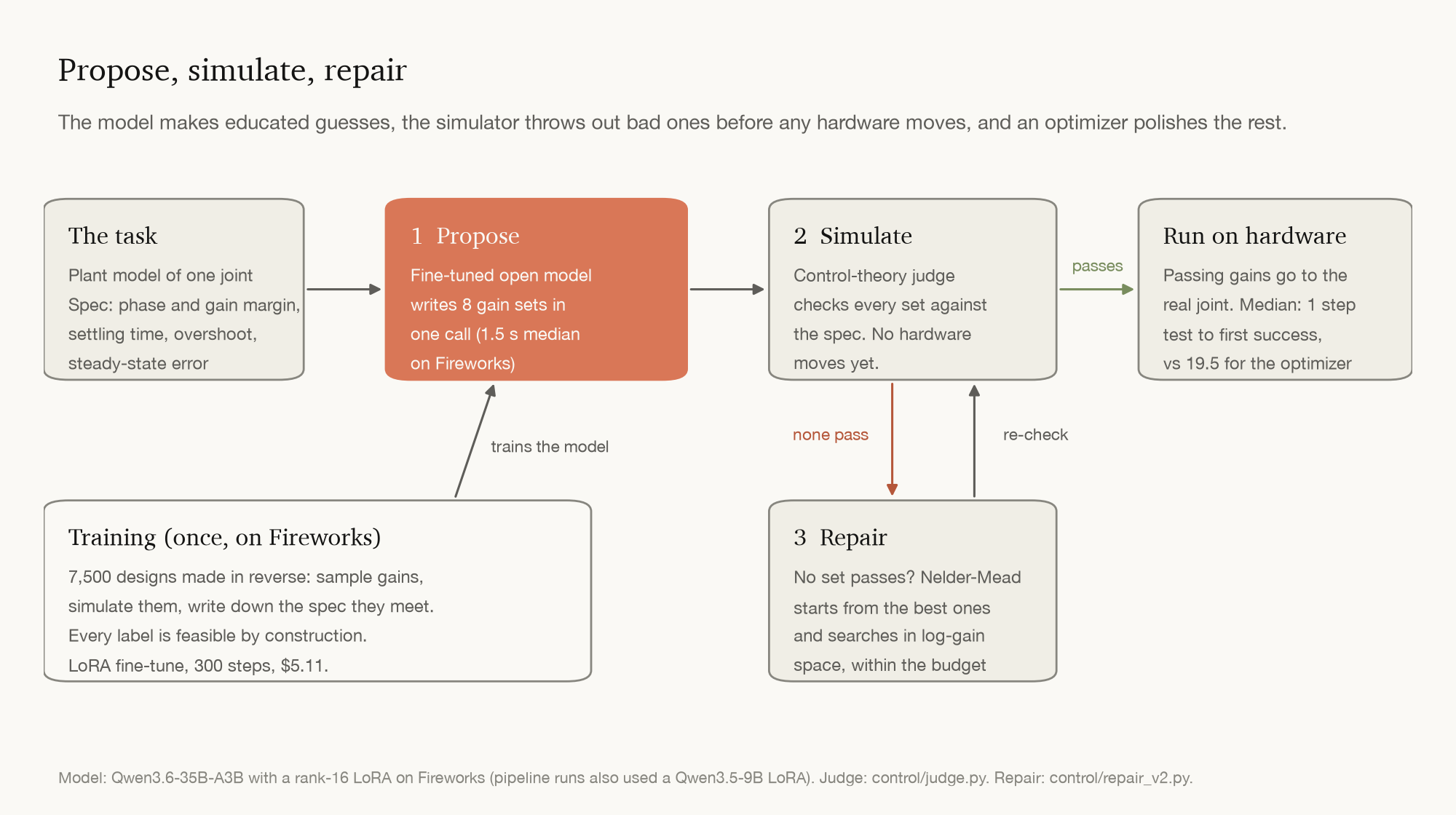
diagram: a fine-tuned model on fireworks proposes 8 gain sets, a control-theory judge simulates them and throws out bad ones before any hardware moves, nelder-mead repairs if none pass, and the passing gains go to the real joint. trained once on 7,500 simulator-verified designs for $5.11
how it works: a small model fine-tuned on fireworks proposes 8 gain sets, a simulator throws out the bad ones before any hardware moves, and an optimizer repairs the rest if needed.
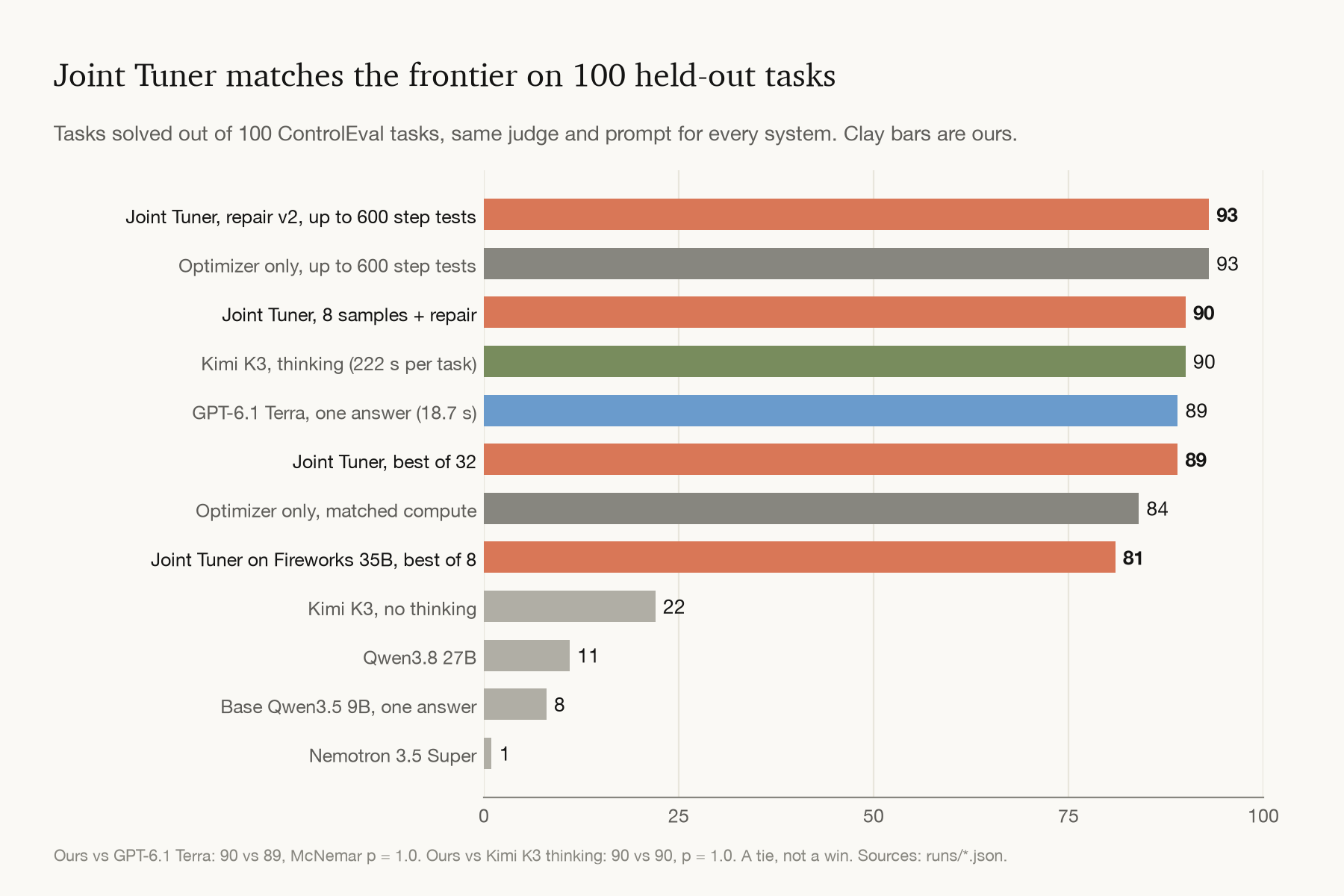
bar chart of tasks solved out of 100 held-out controleval tasks: joint tuner with repair 93, optimizer with 600 tests 93, joint tuner 8 samples plus repair 90, kimi k3 thinking 90, gpt-6.1 terra 89, down to small base models at 8 to 11
on 100 held-out tasks, joint tuner solves 90, the same as gpt-6.1 terra (89) and kimi k3 thinking (90), at a fraction of the model time.
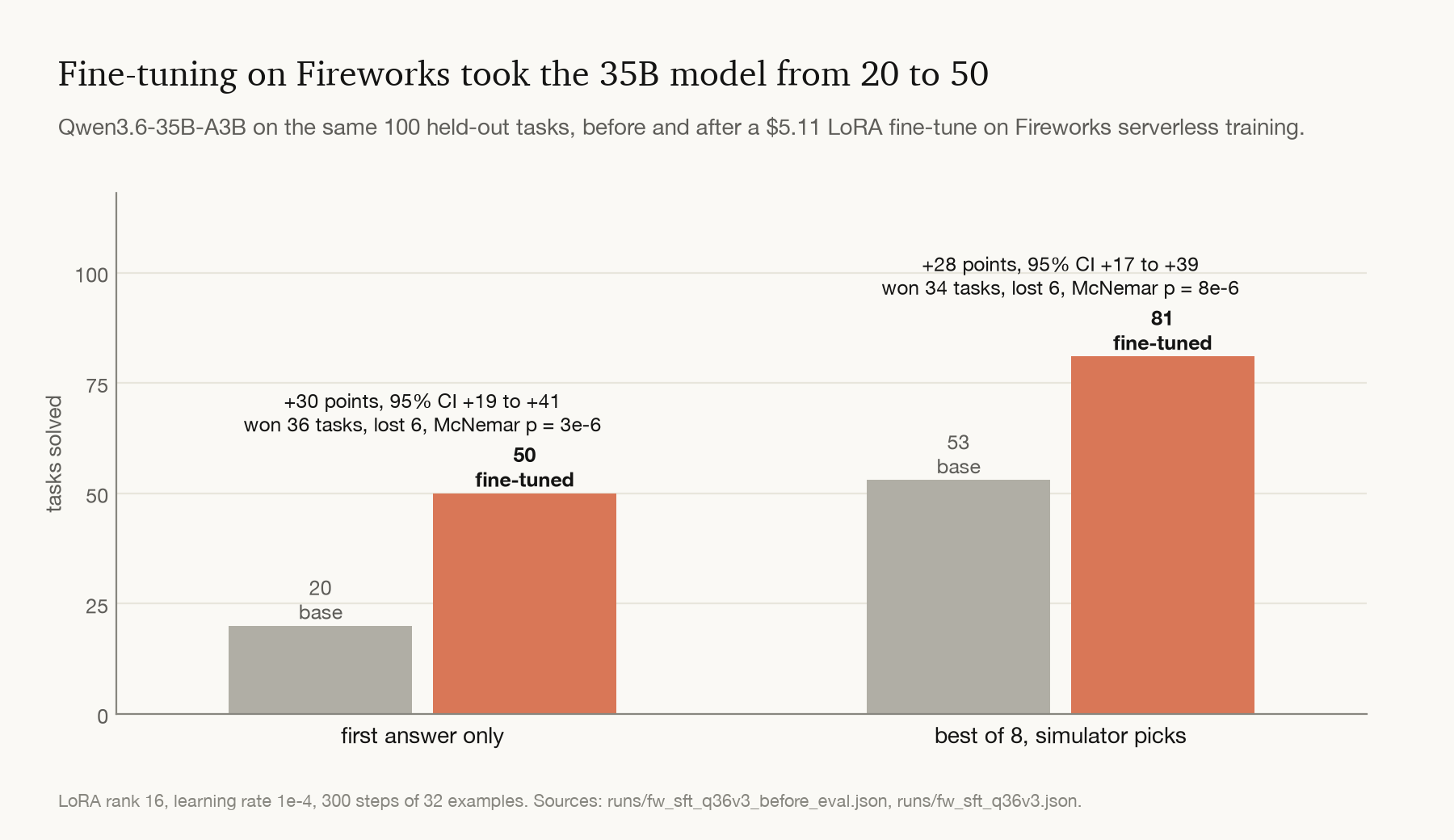
bar chart: fine-tuning the 35b model on fireworks for $5.11 took its first answer from 20 to 50 tasks solved, and best of 8 from 53 to 81
fine-tuning on fireworks for $5.11 took the 35b model from 20 to 50 right on its first answer, and from 53 to 81 with best of 8.
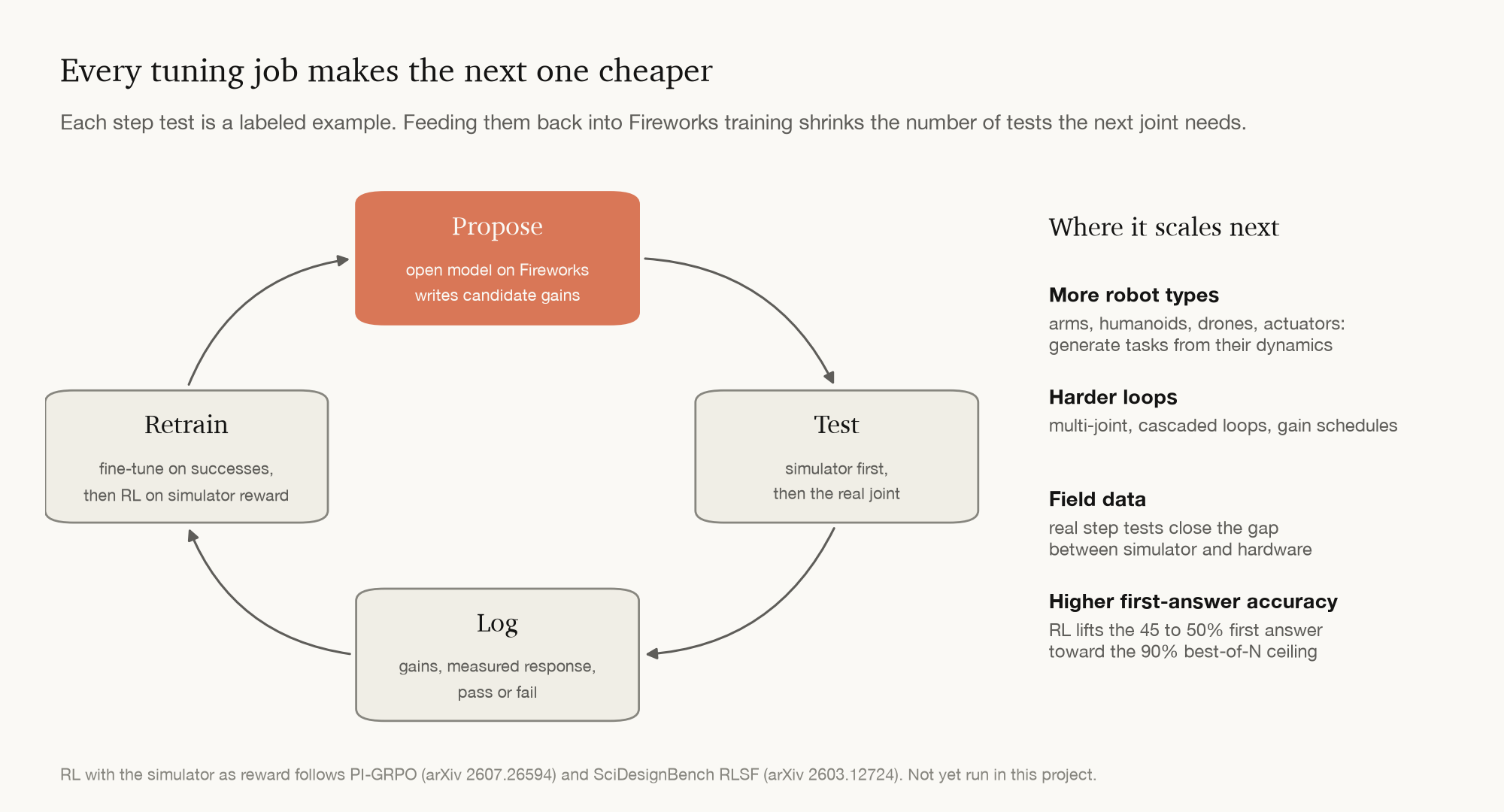
loop diagram: propose, test, log, retrain. each step test becomes a labeled example, and feeding them back into fireworks training cuts the tests the next joint needs
every tuning job leaves labeled tests behind; feeding them back into training means the next joint needs fewer tests.
the event cover: "fireworks: deploy", november 02, san francisco, with the fireworks, microsoft and nvidia logos along the bottom
fireworks: deploy, nov 2 in san francisco, with fireworks, microsoft and nvidia.

molten: an a16z la techweek spatial hackathon @ xtribe, with iana

supported by a16z techweek student grant

sponsors: elevenlabs, sidefx, rokoko, roboflow, miro, assemblyai, niantic spatial, kaedim, datafeel

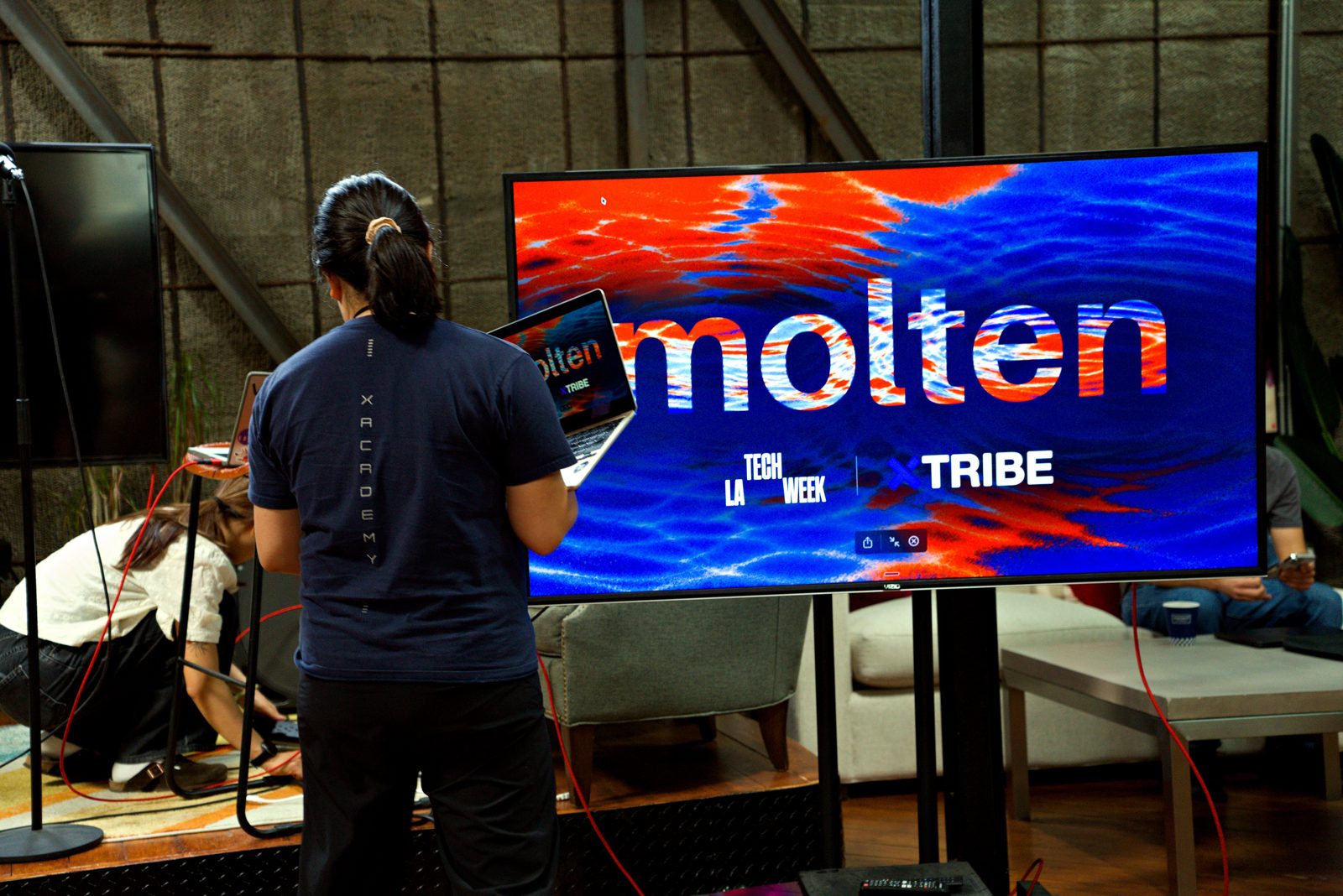
a person walking past a big screen reading molten tribe in a brick-and-steel warehouse
xtribe, inglewood.
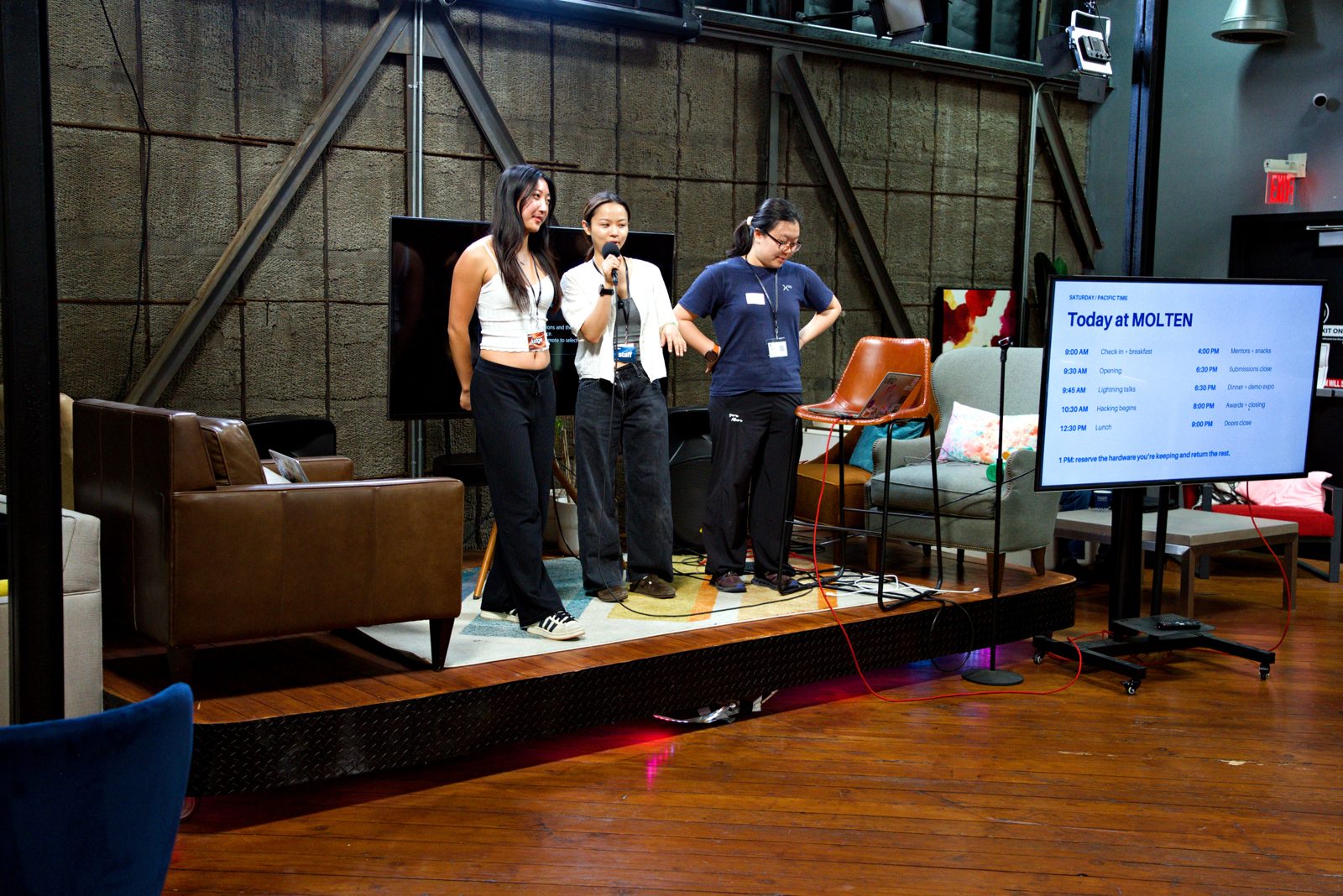
three organizers on a low stage beside a schedule slide, the room listening
opening molten.
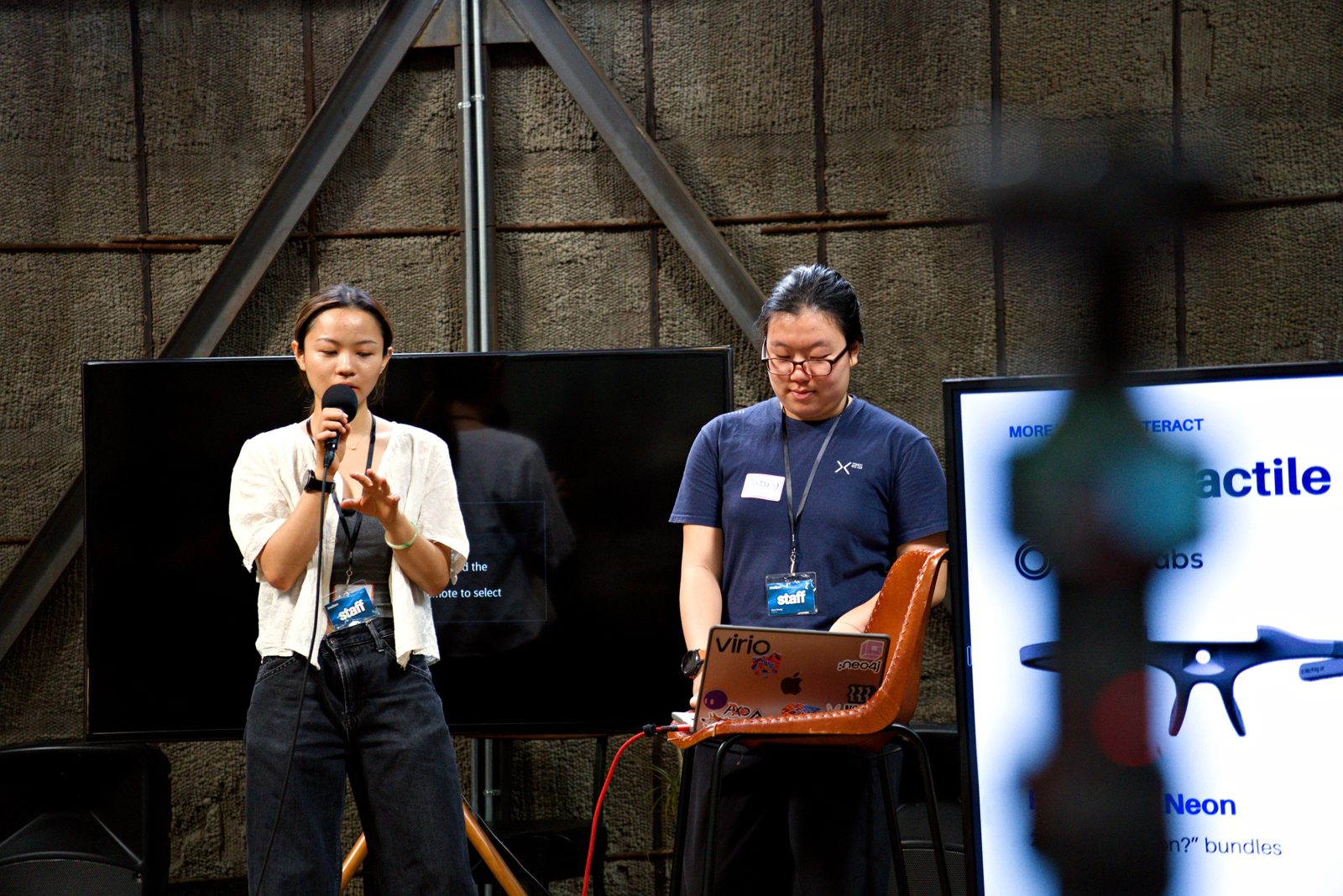
an organizer speaking into a mic on stage while sissi stands beside her with a laptop
on stage.
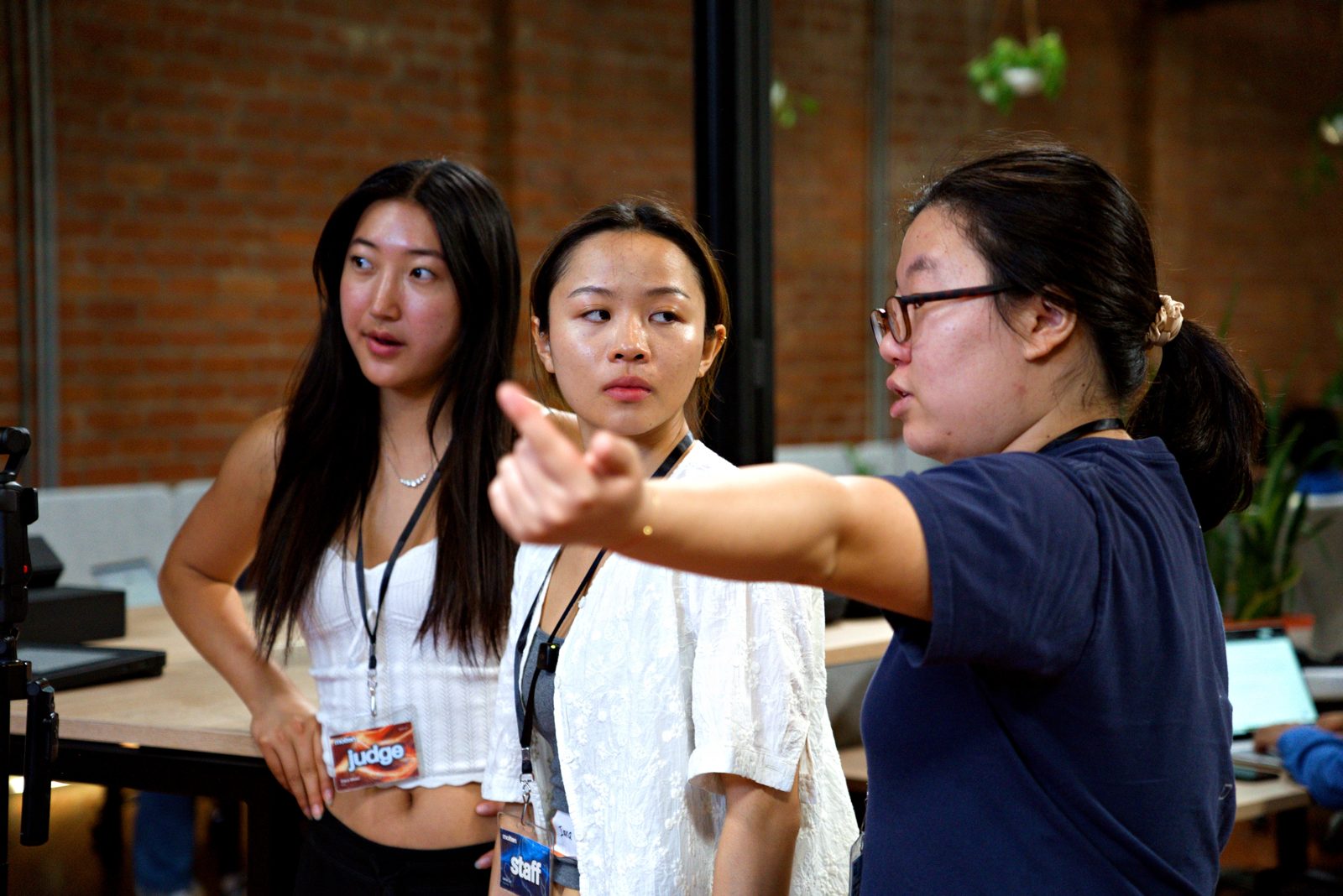
three organizers talking in the warehouse, one pointing across the room
figuring out where everything goes.
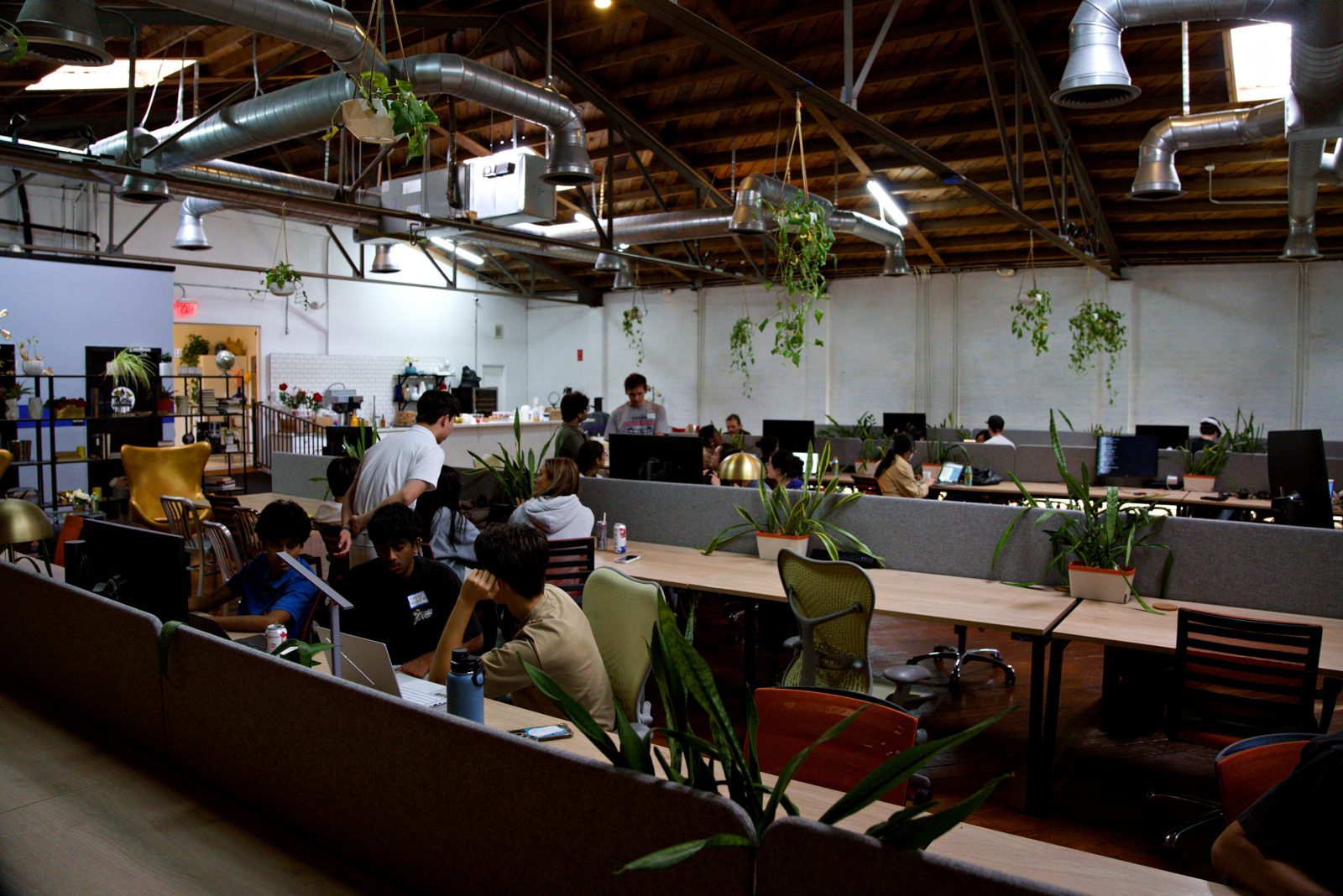
a wide shot of a high-ceilinged warehouse full of desks of people hacking
a warehouse full of builders.
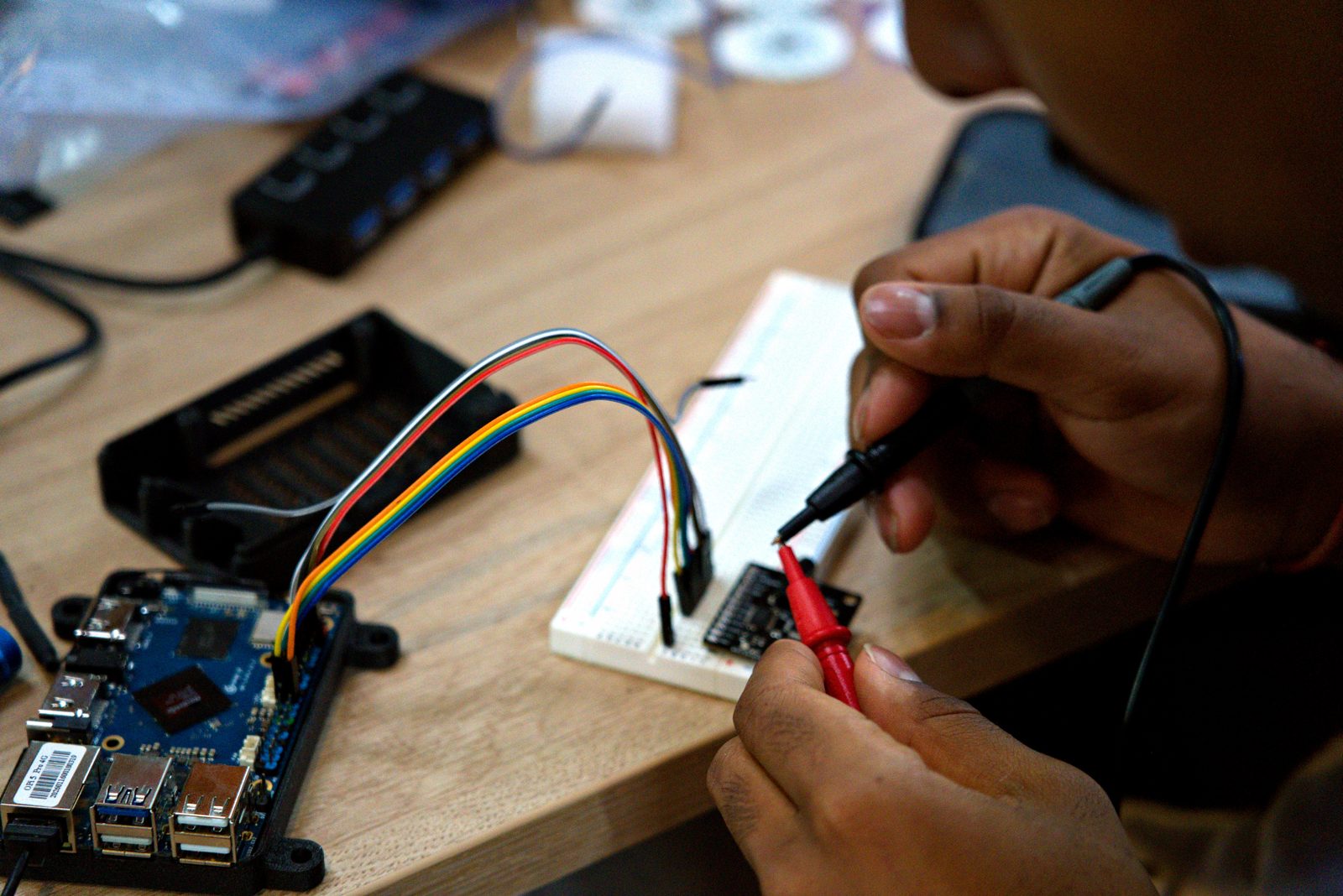
close-up of hands plugging jumper wires into a breadboard next to a dev board
wires and breadboards.
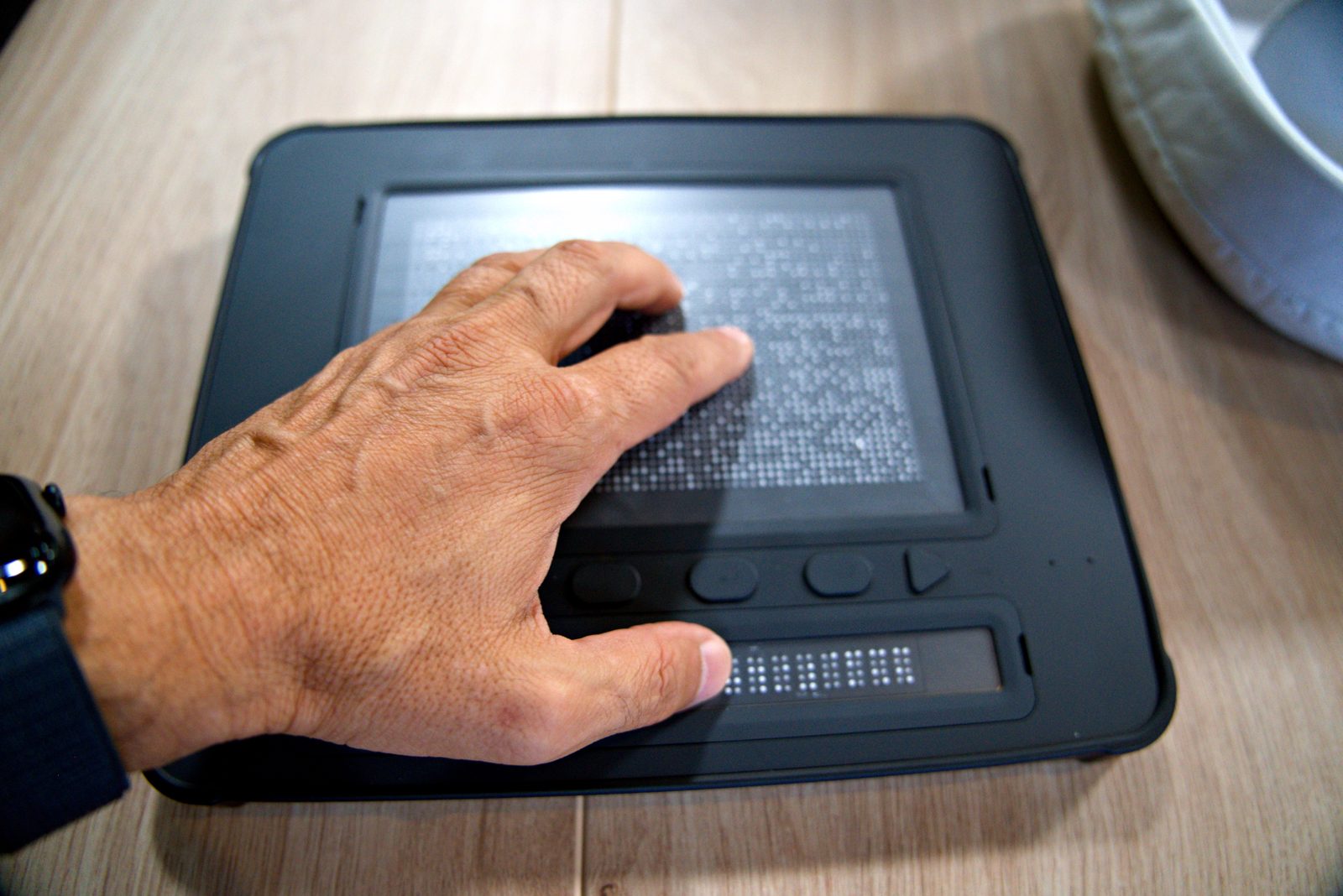
a hand resting on a dark tactile tablet with a braille display
a refreshable braille tablet.
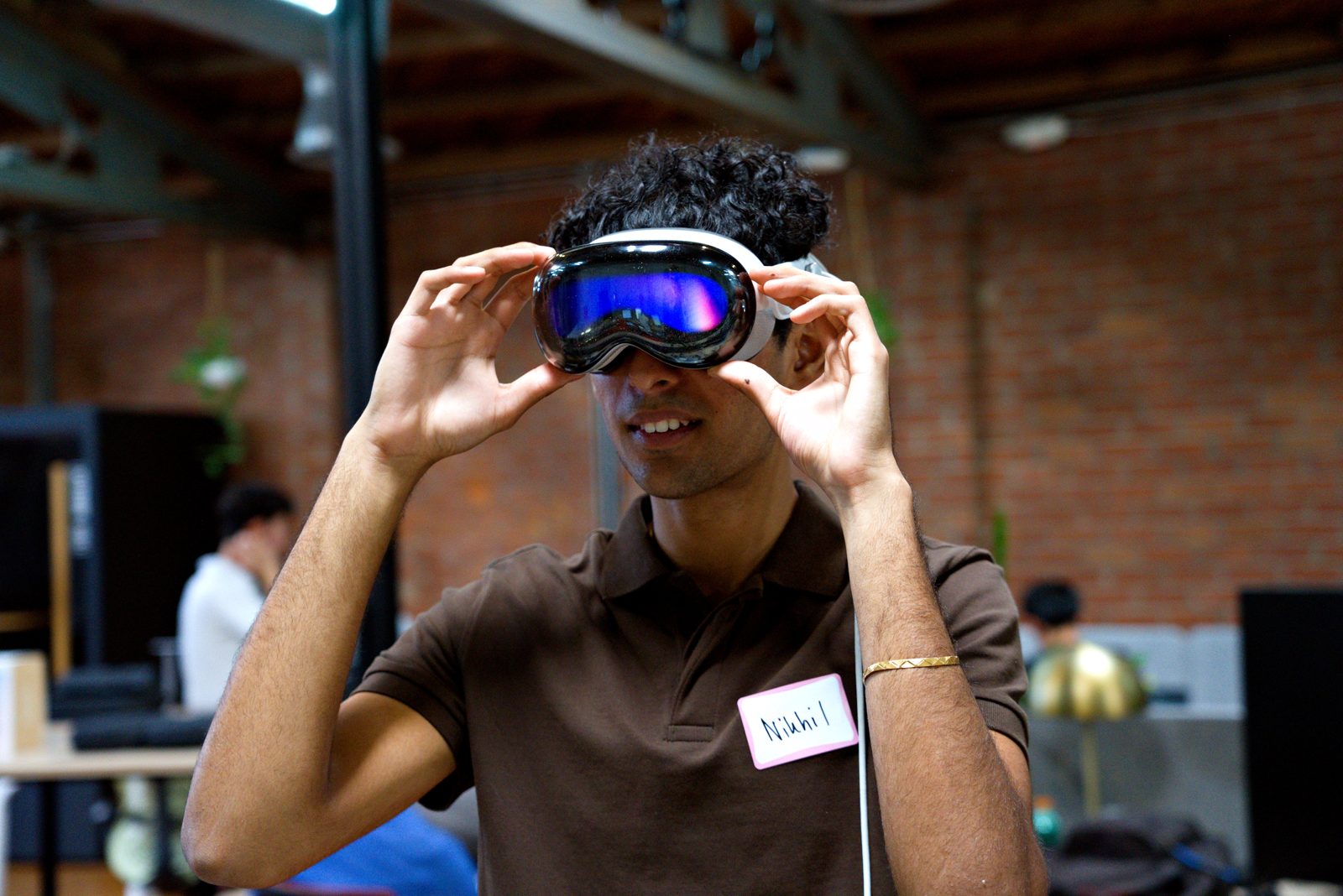
a hacker lowering a vision pro headset over his eyes
headsets on.
building in the headset.
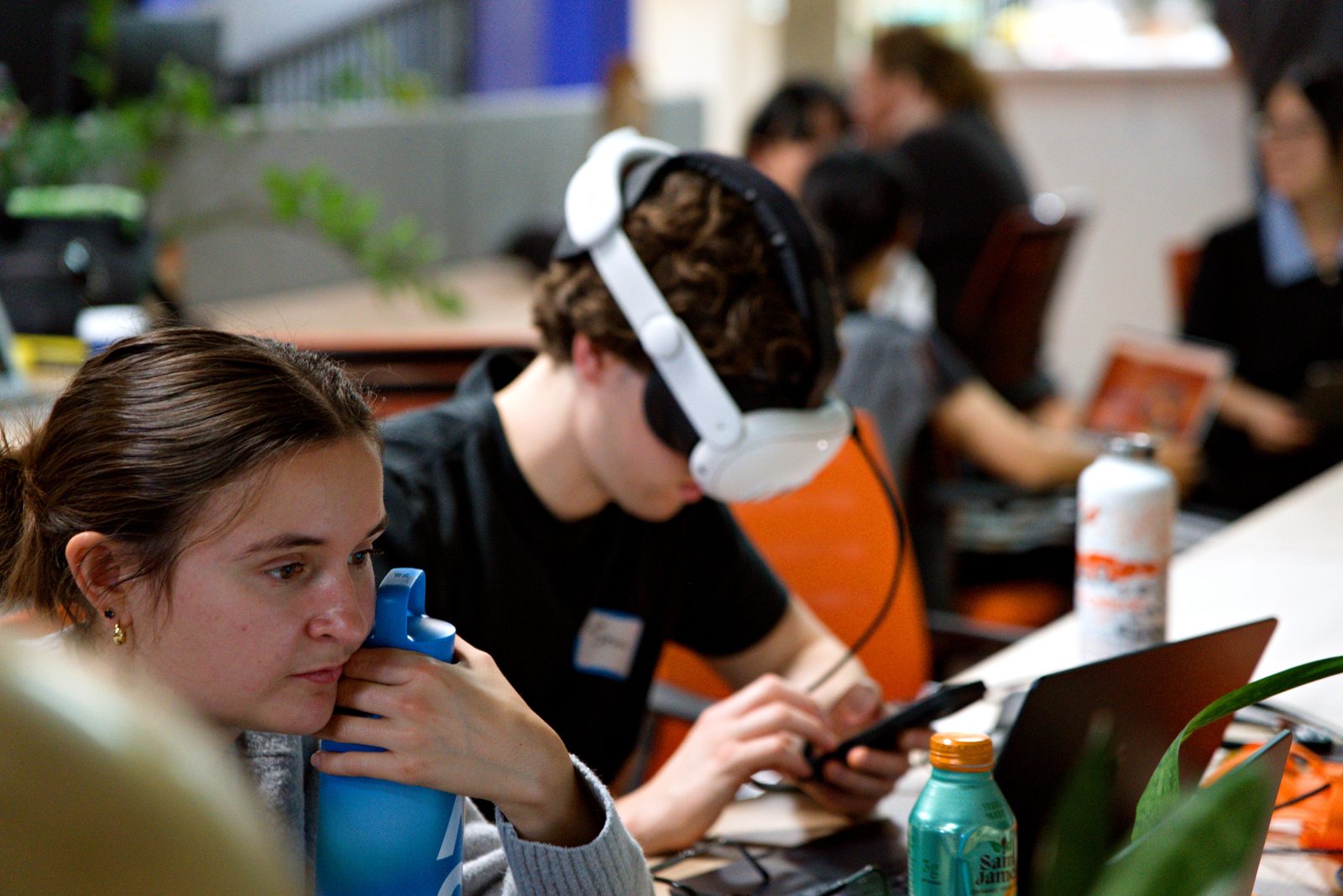
a hacker in a white vr headset at a busy table
testing in vr.
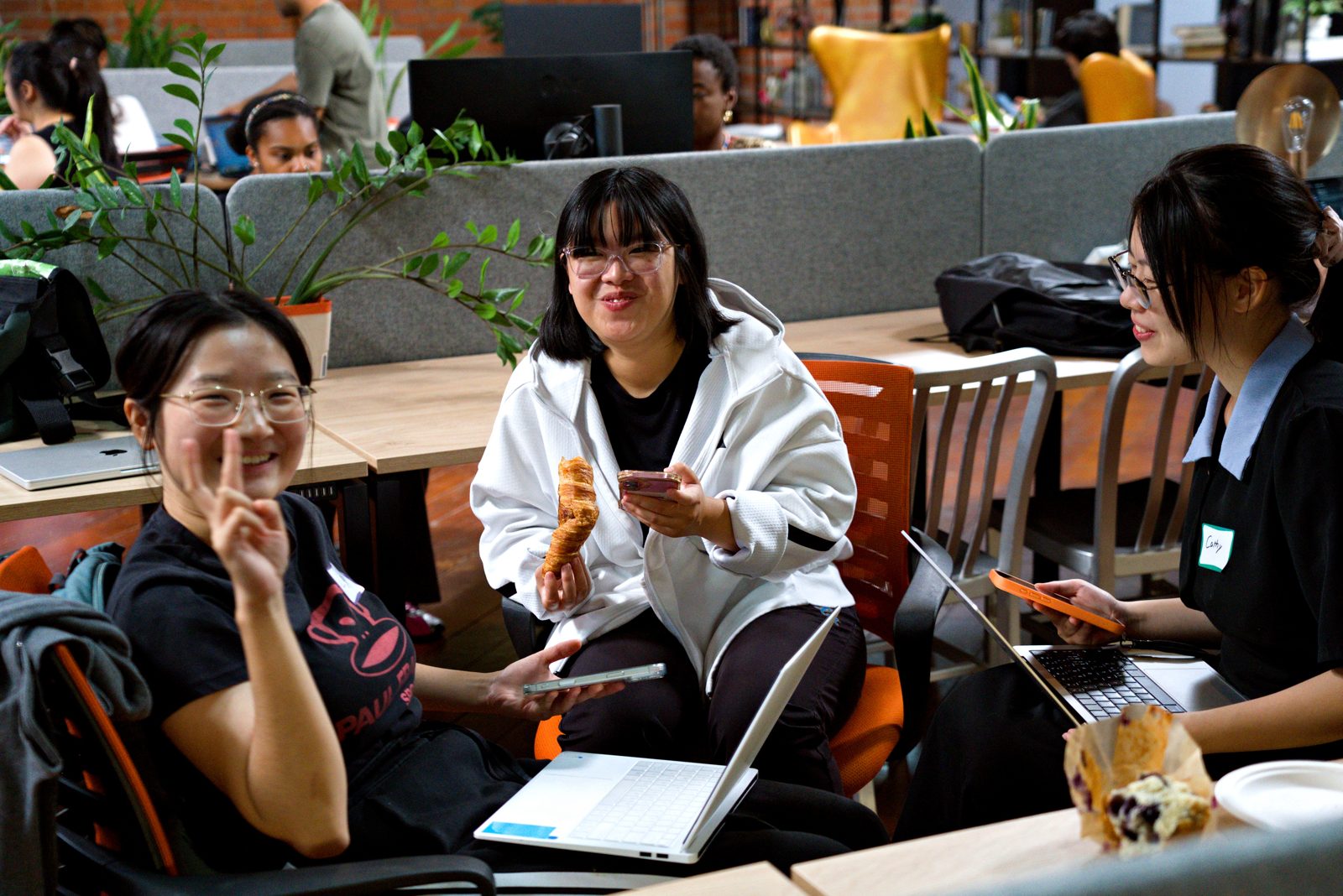
three hackers laughing at their table, one throwing a peace sign
good company.
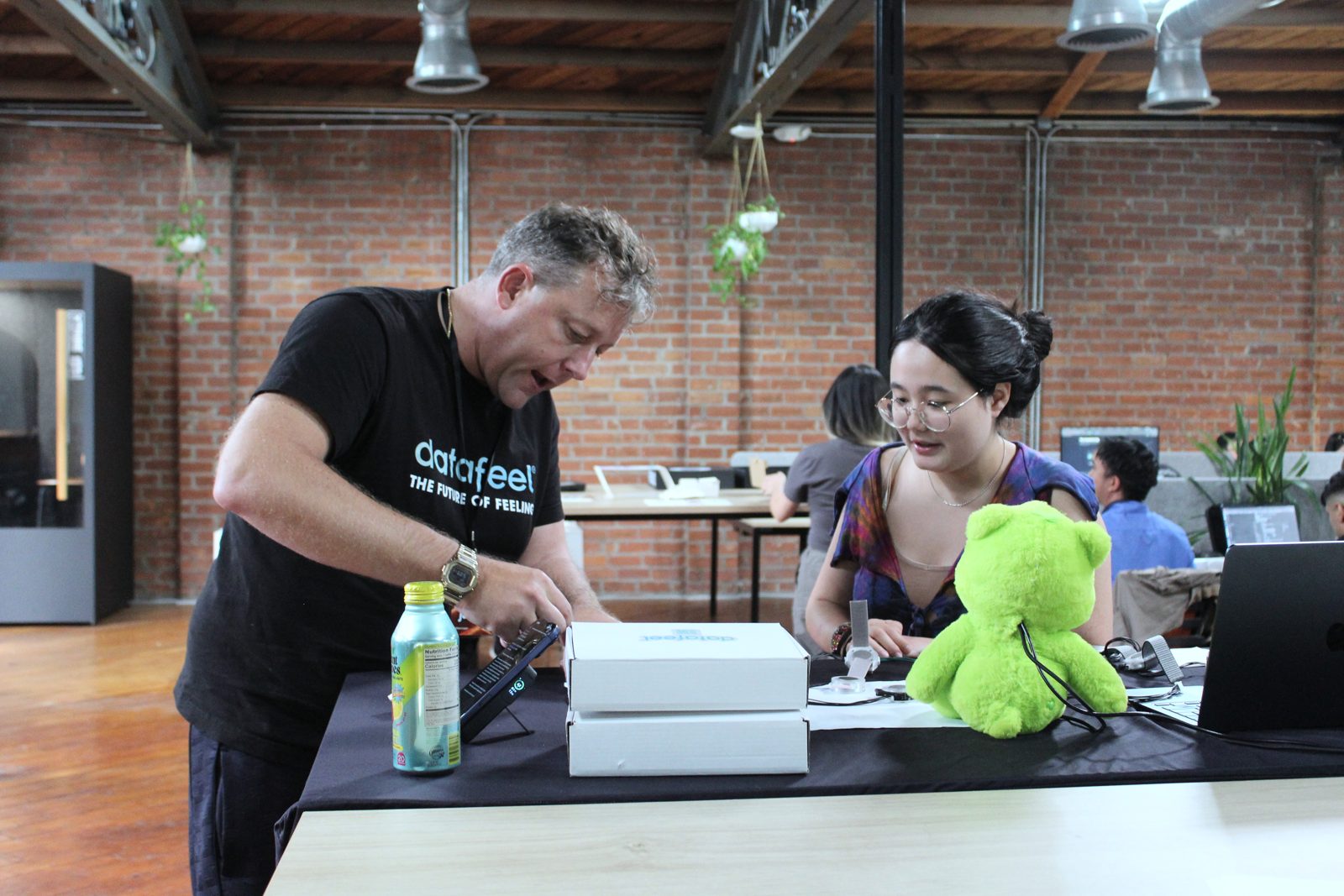
a datafeel engineer bent over a demo with a hacker, a green plush toy on the table
datafeel helping a team.
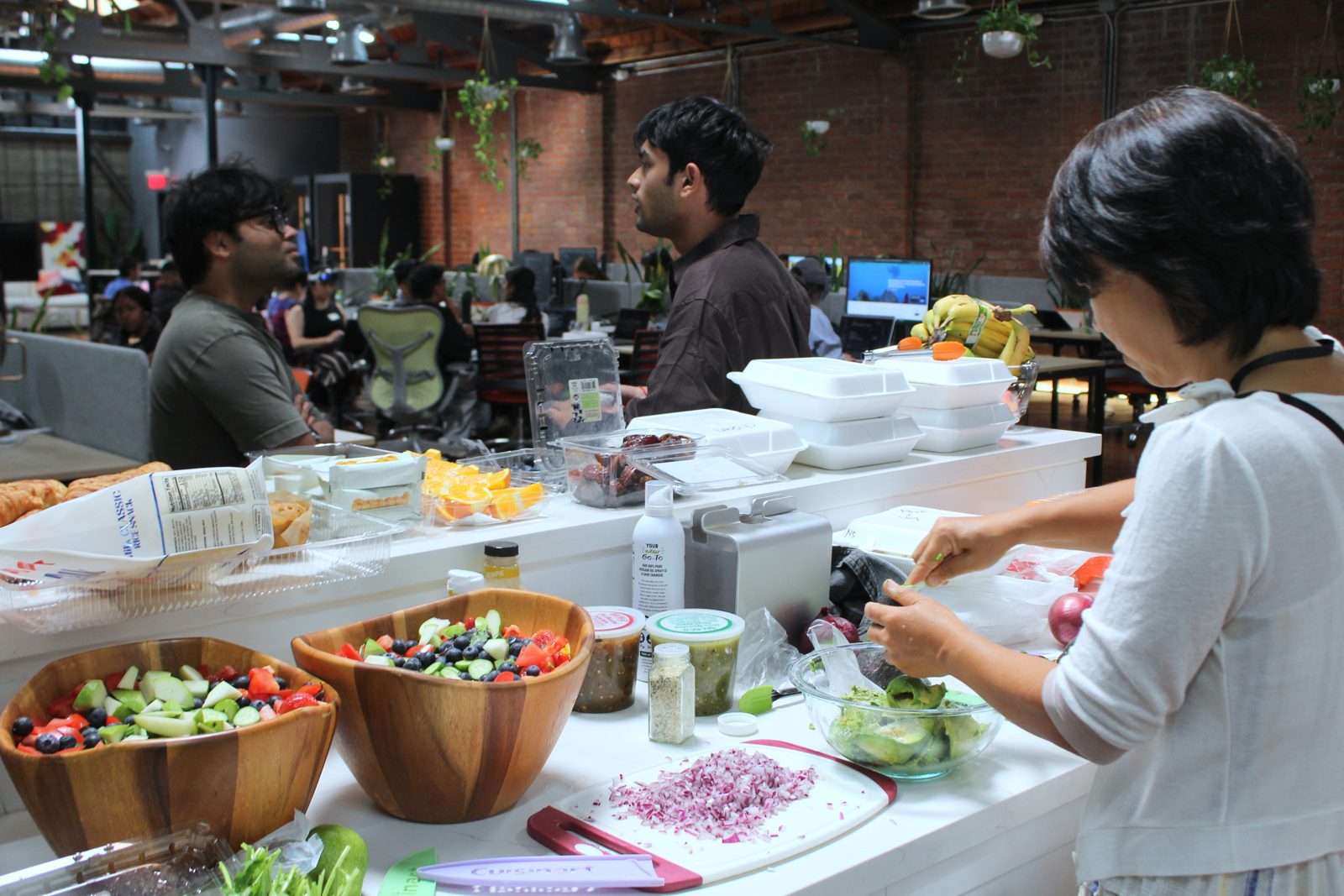
salad bowls and food laid out on a long counter while people serve themselves
lunch.
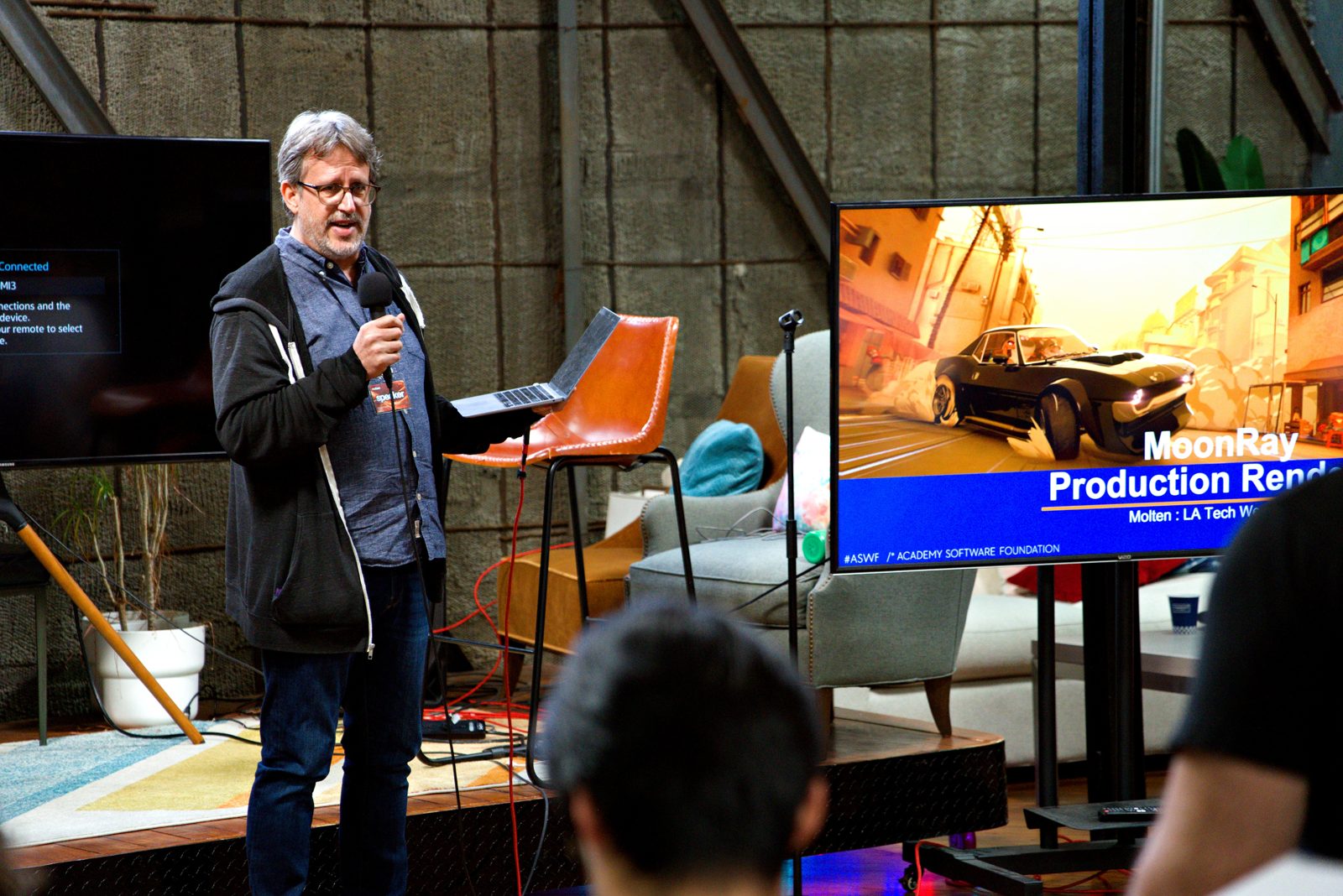
a speaker with a mic in front of a houdini production slide
a talk from sidefx.
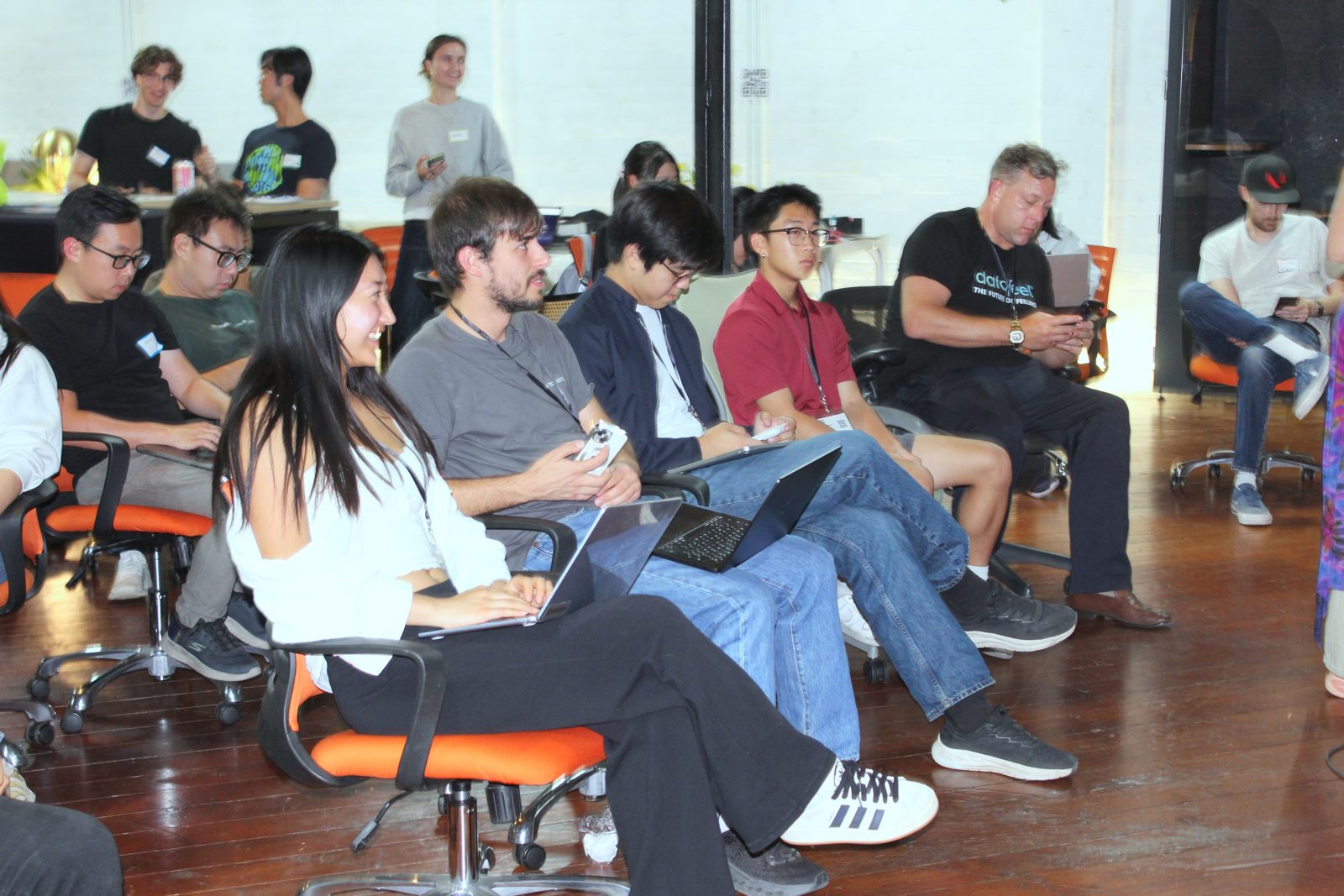
rows of hackers in orange chairs turned toward a talk
listening in.
motion capture, live.
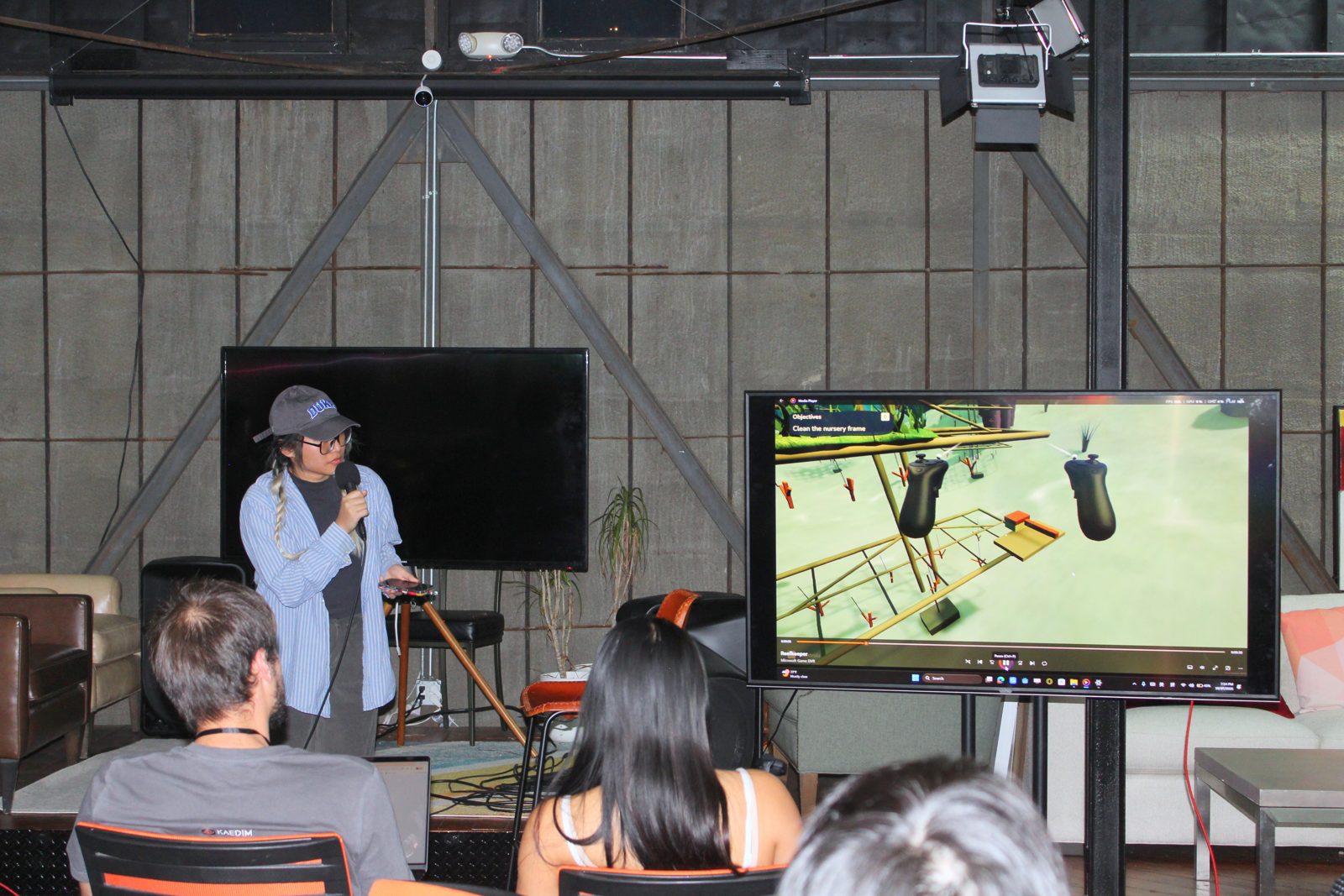
a builder presenting a game on a big screen to a seated crowd
demos.
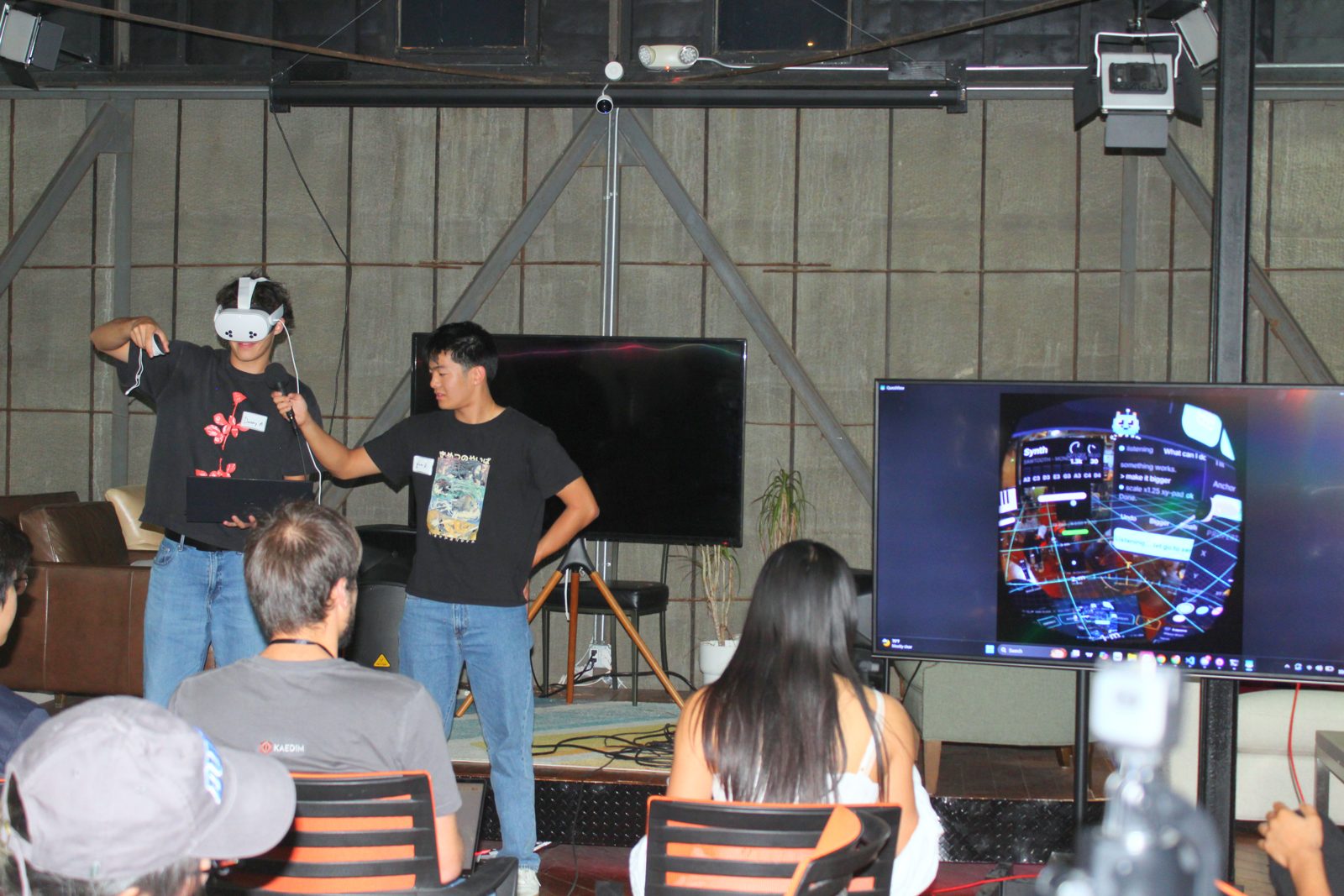
one builder wearing a vr headset while his teammate explains to the audience
a vr demo on stage.
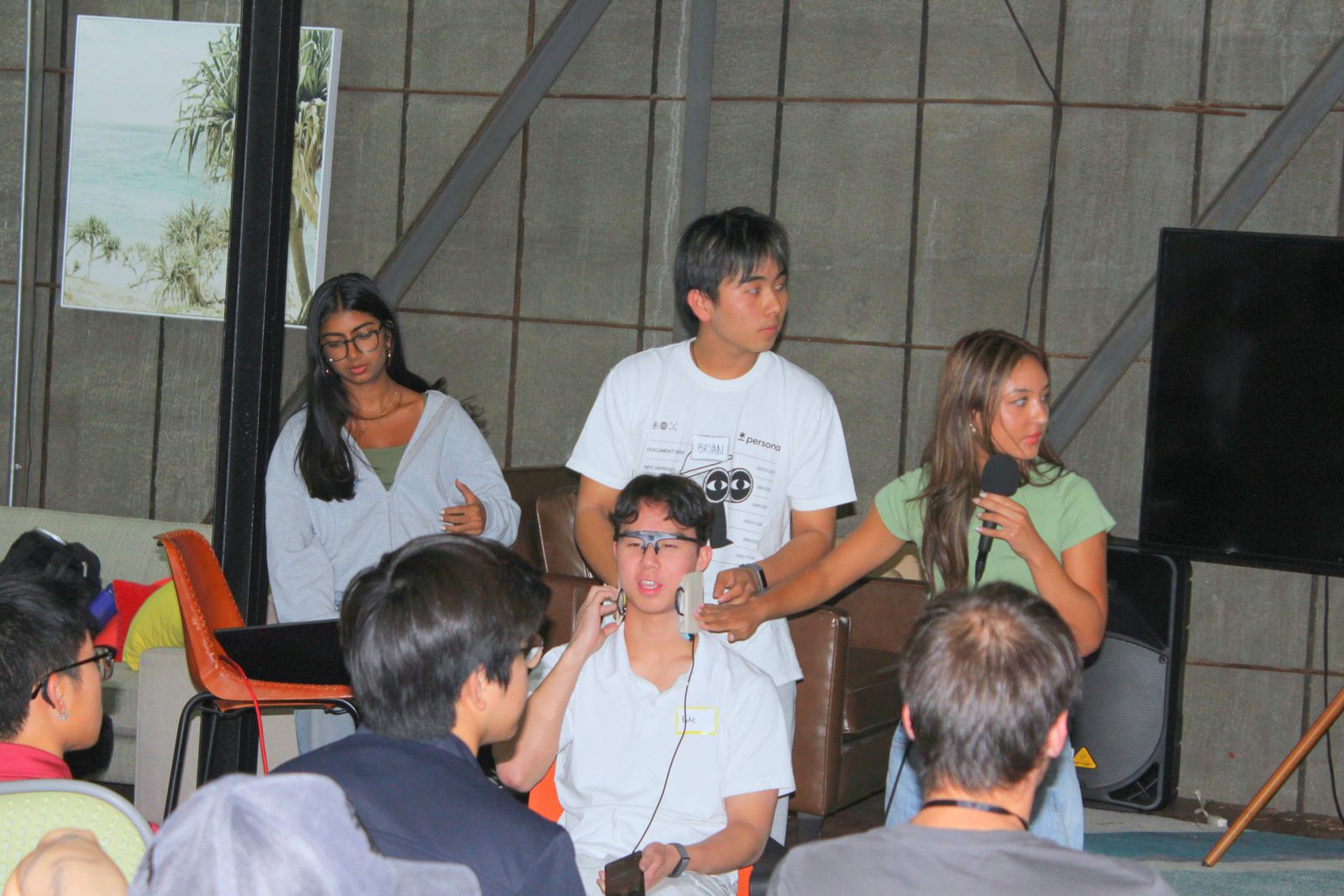
a team of three presenting from armchairs in front of the crowd
another team up.
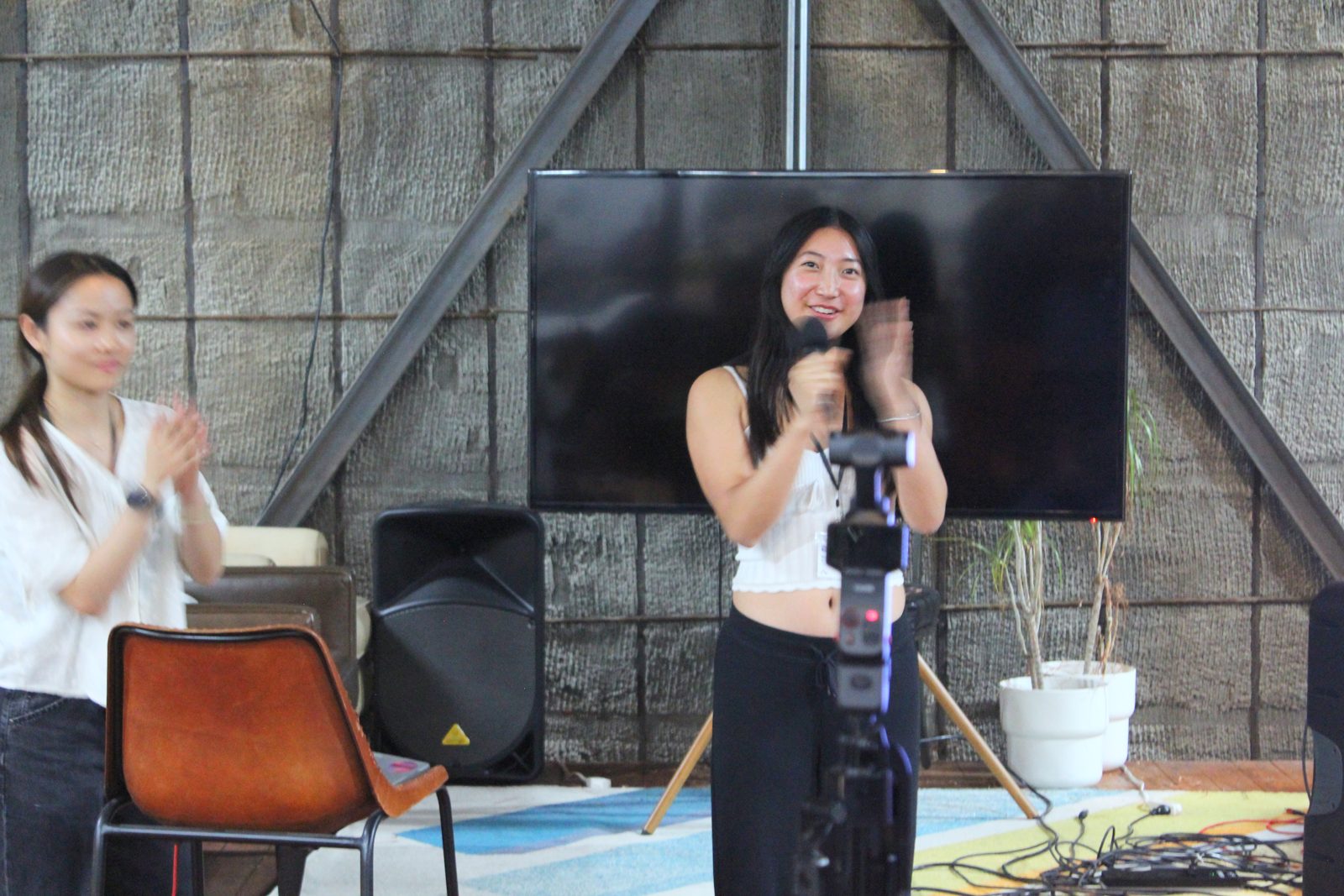
an organizer speaking into a mic while another claps beside her
closing.
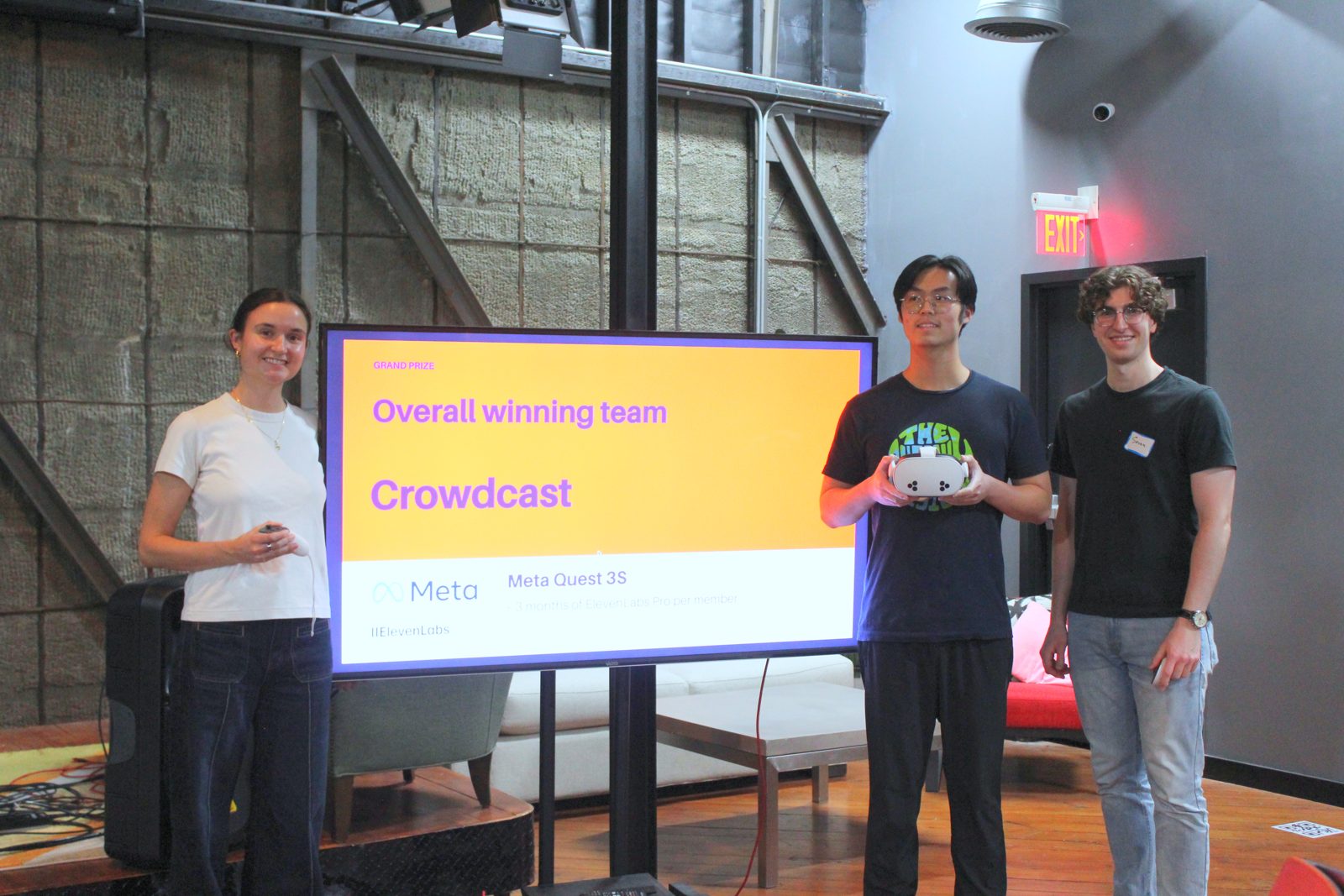
the winning team holding their prize next to a slide reading overall winning team, crowdcast
awards: crowdcast, overall winner.
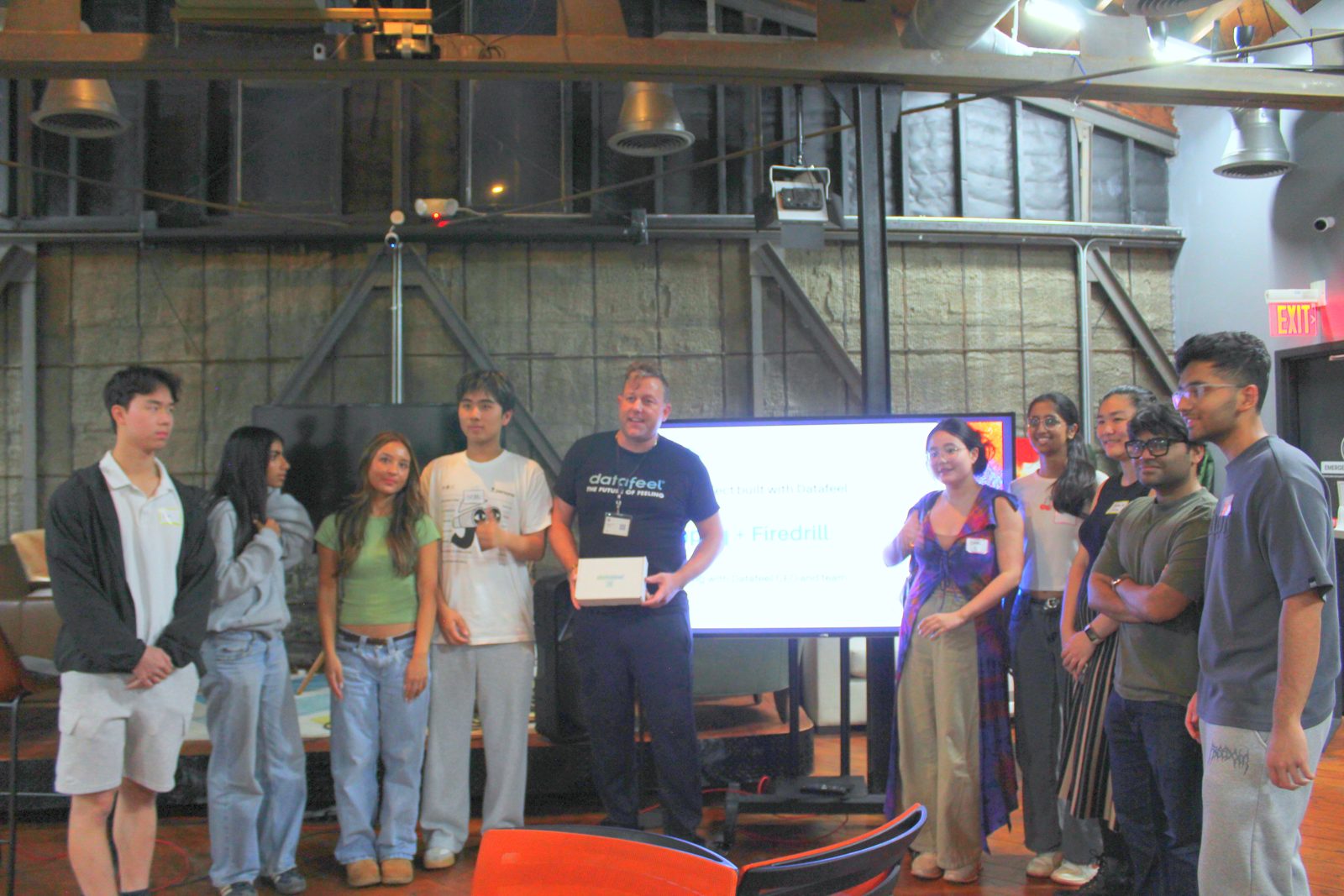
the winning teams lined up together in front of the screen
the winners.

interface: hack in between: an a16z sf techweek hackathon @ founders inc, with iana

my first time hosting a hackathon!

supported by a16z techweek student grant

sponsors: elevenlabs, assemblyai, bright data, tenstorrent, sensory, kaedim, panic, pupil labs, datafeel, genki instruments, eyegaze, dot inc., infineon, saleae, digilent, mcneel, niantic spatial

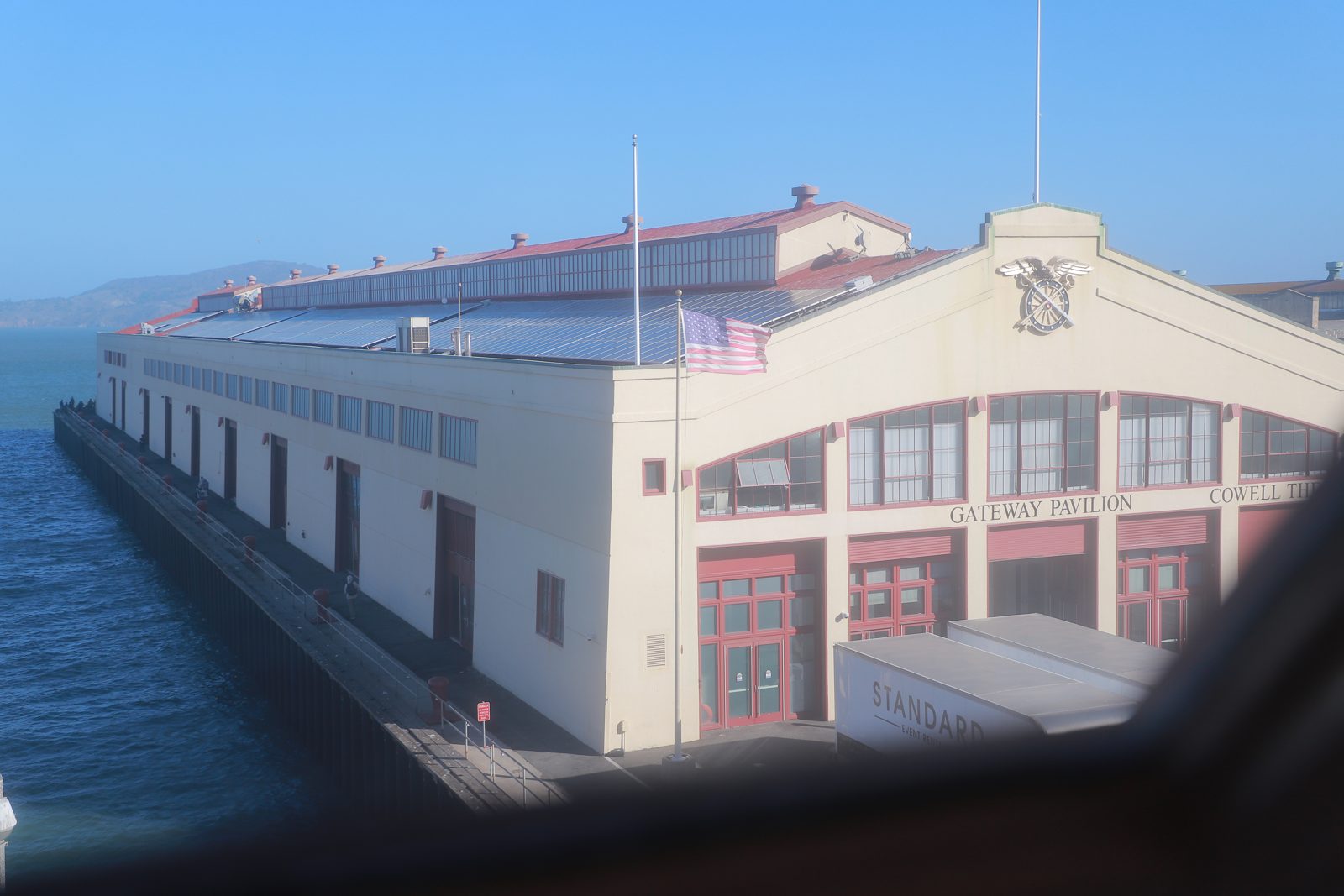
the long white pier building at fort mason over blue bay water, seen through a window frame
fort mason, the morning of.
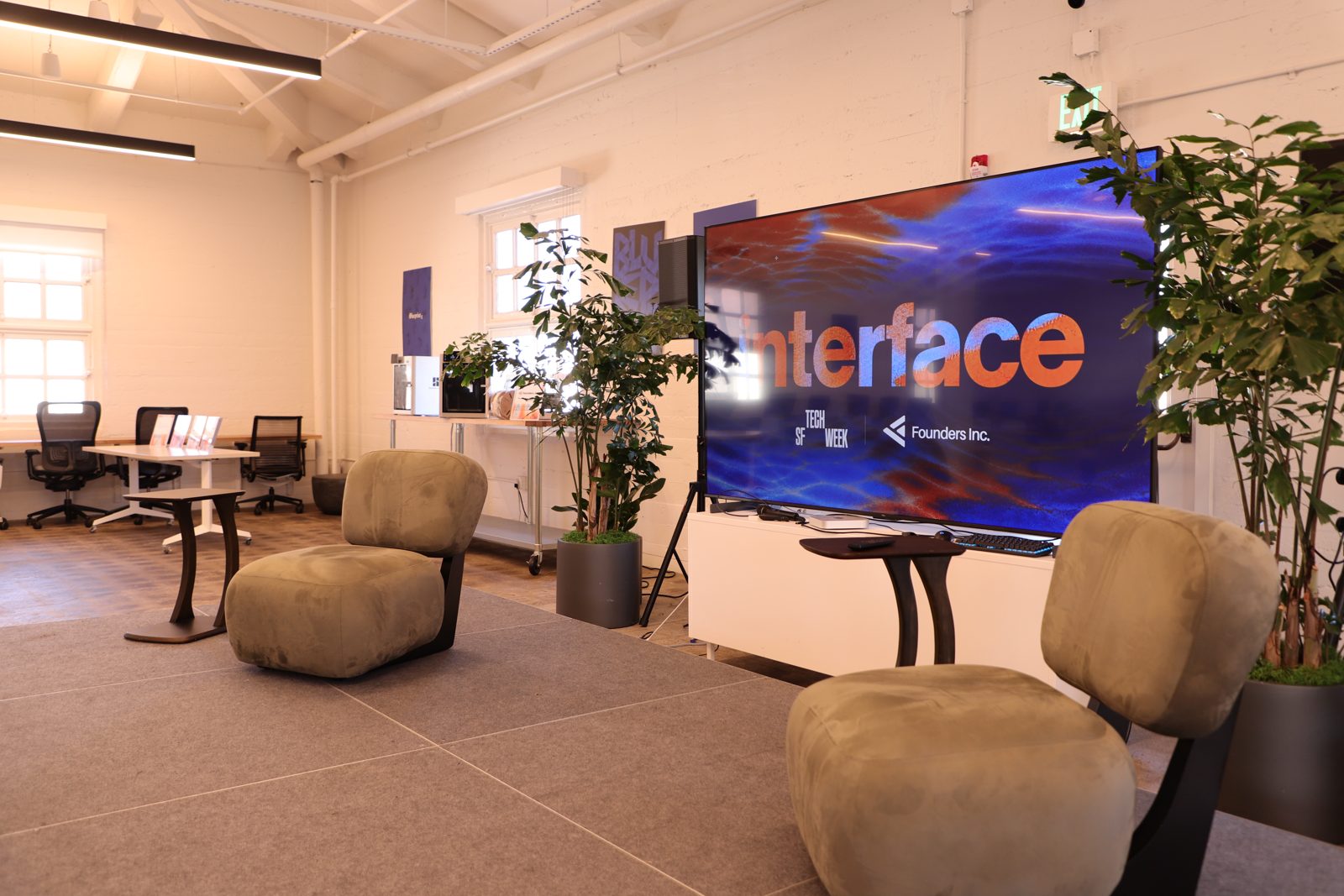
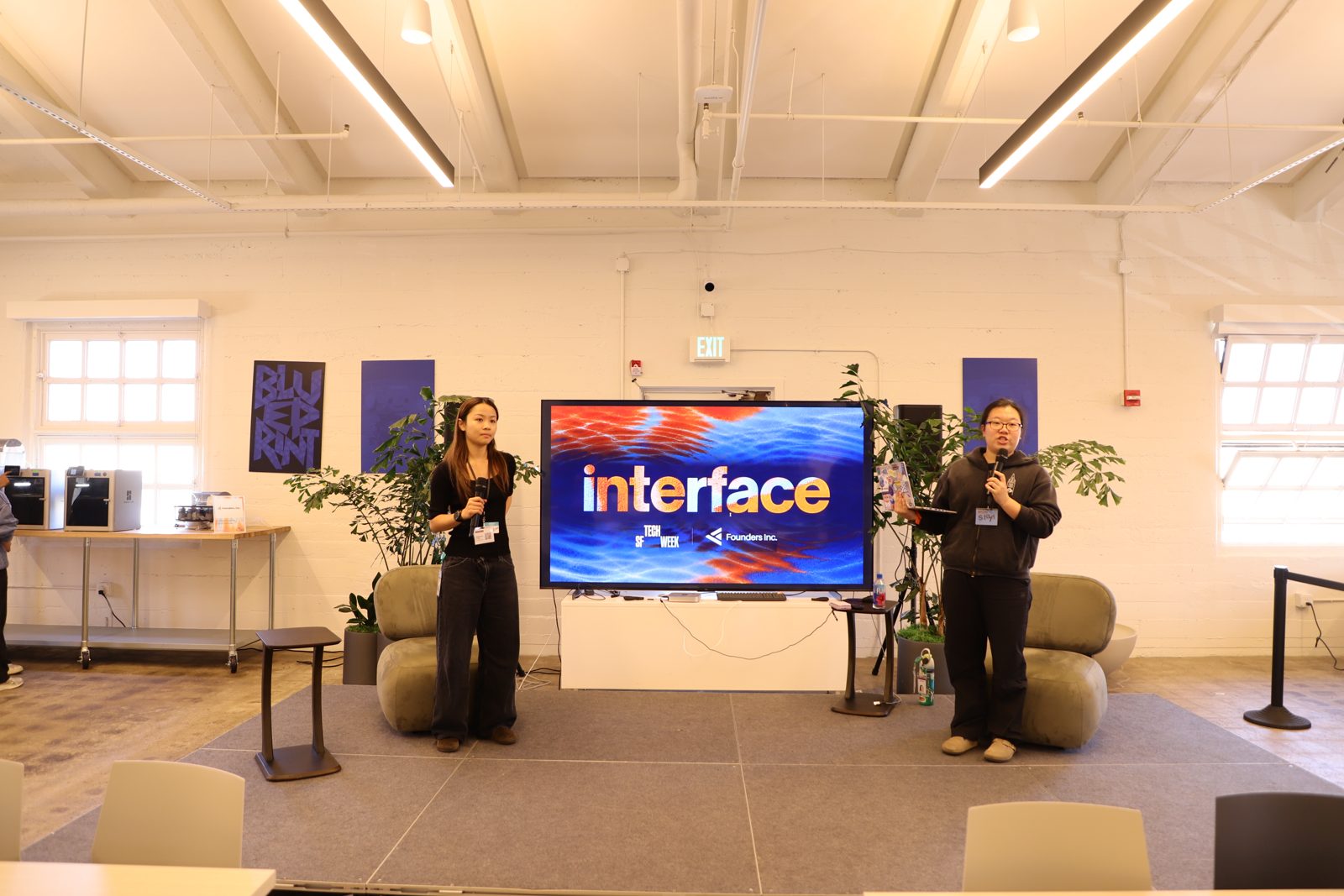
an empty sunlit loft with soft green armchairs and potted trees around a big screen reading interface
the stage before doors opened.
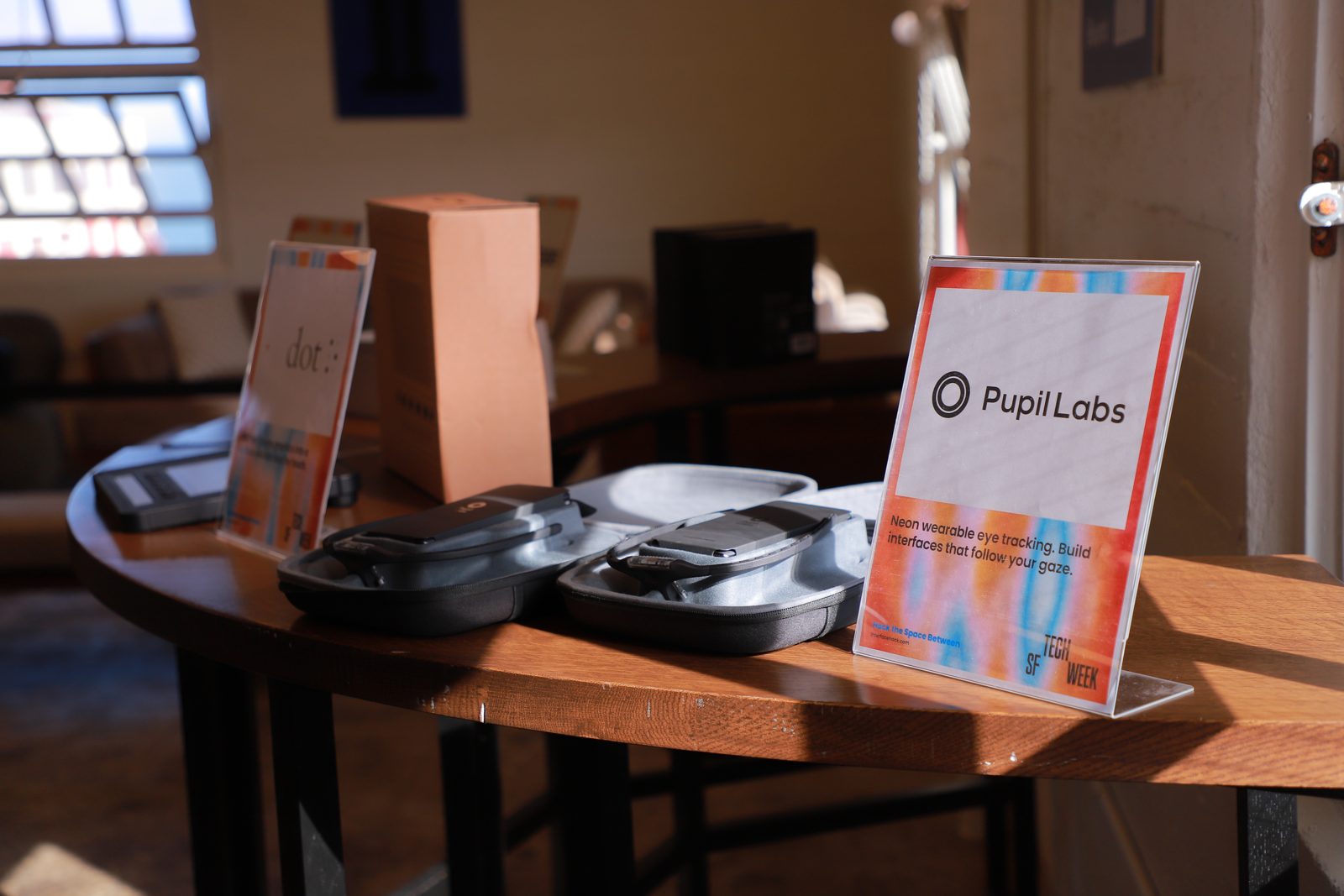
pupil labs eye-tracking glasses laid out on a round wooden table with a sponsor card
hardware tables: pupil labs eye trackers.
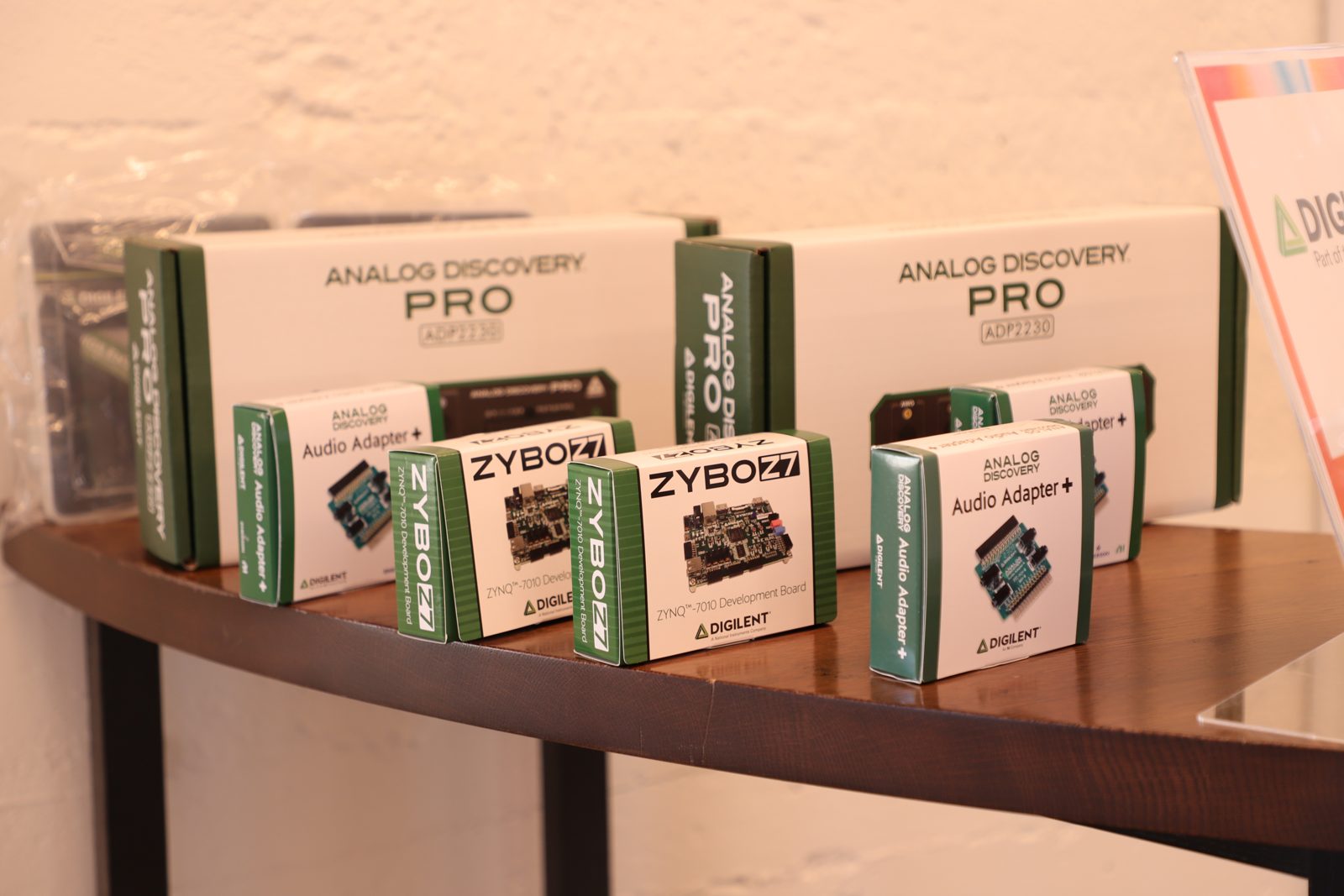
stacked boxes of digilent analog discovery pro and zybo boards on a curved wooden table
digilent boards, ready to borrow.
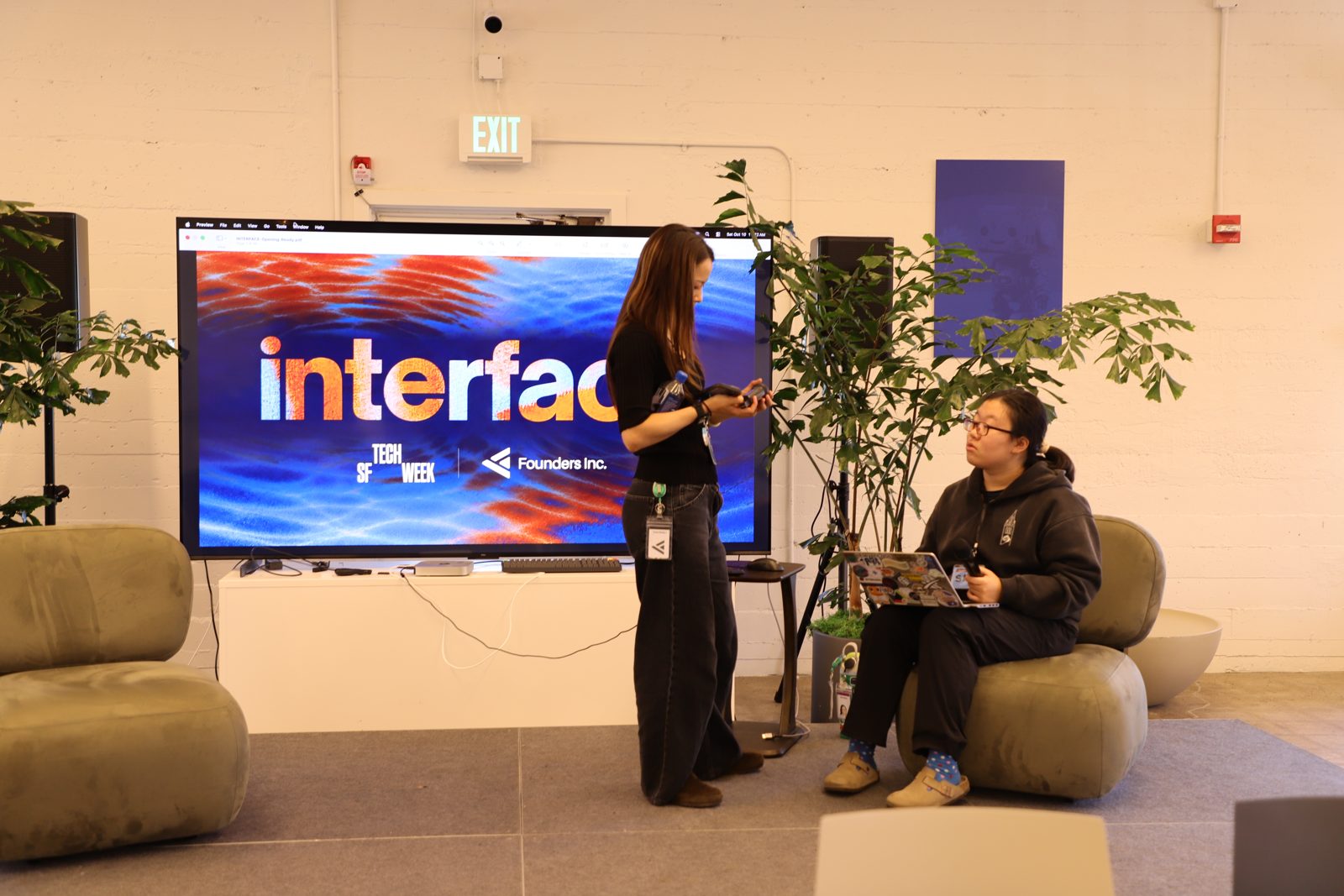
iana standing with a laptop and sissi sitting in a green armchair next to the interface screen
me and iana, just before kickoff.
iana and sissi on either side of the interface screen, speaking to the room
opening the hackathon.
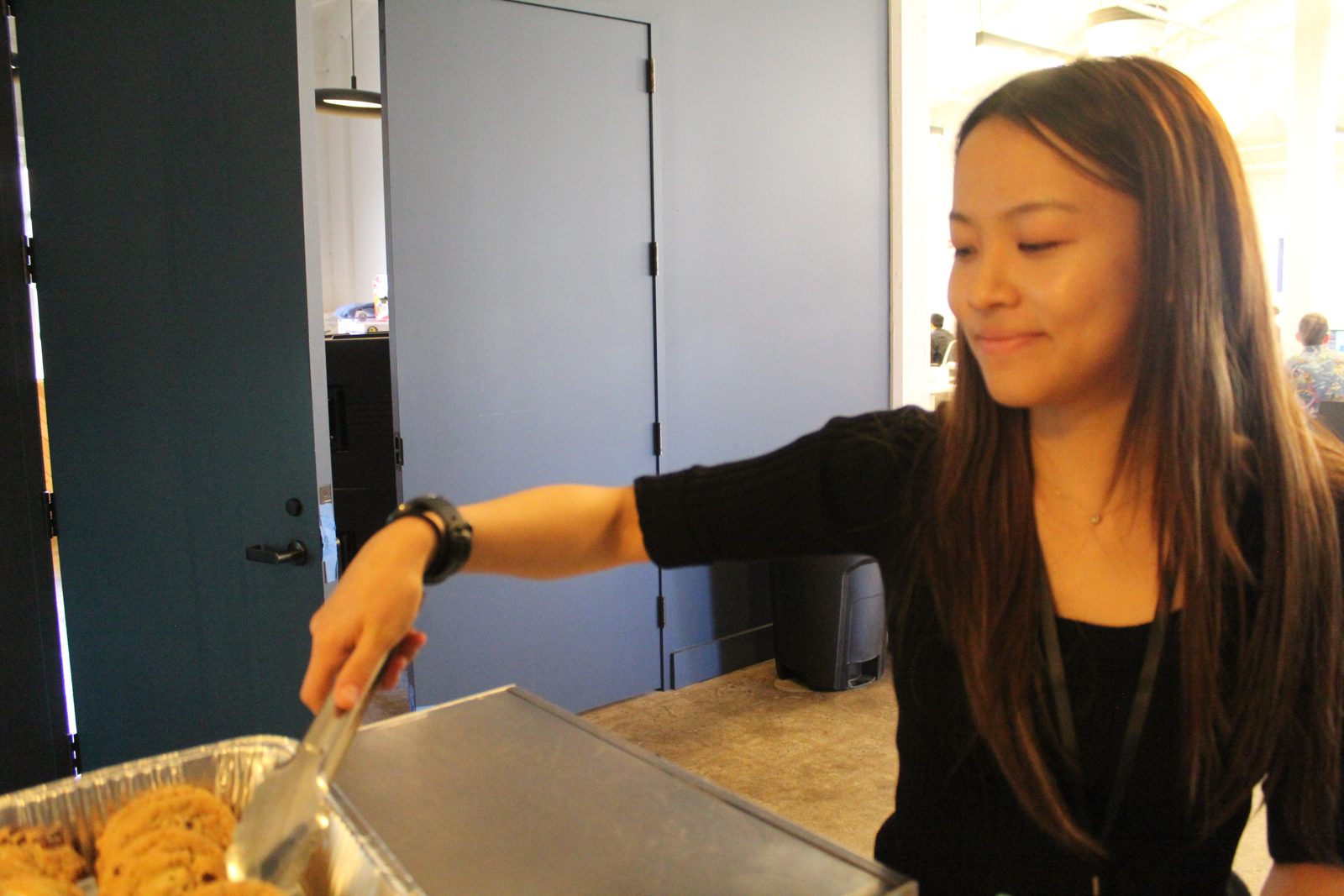
iana smiling as she lifts food out of a foil catering tray with tongs
iana serving lunch.
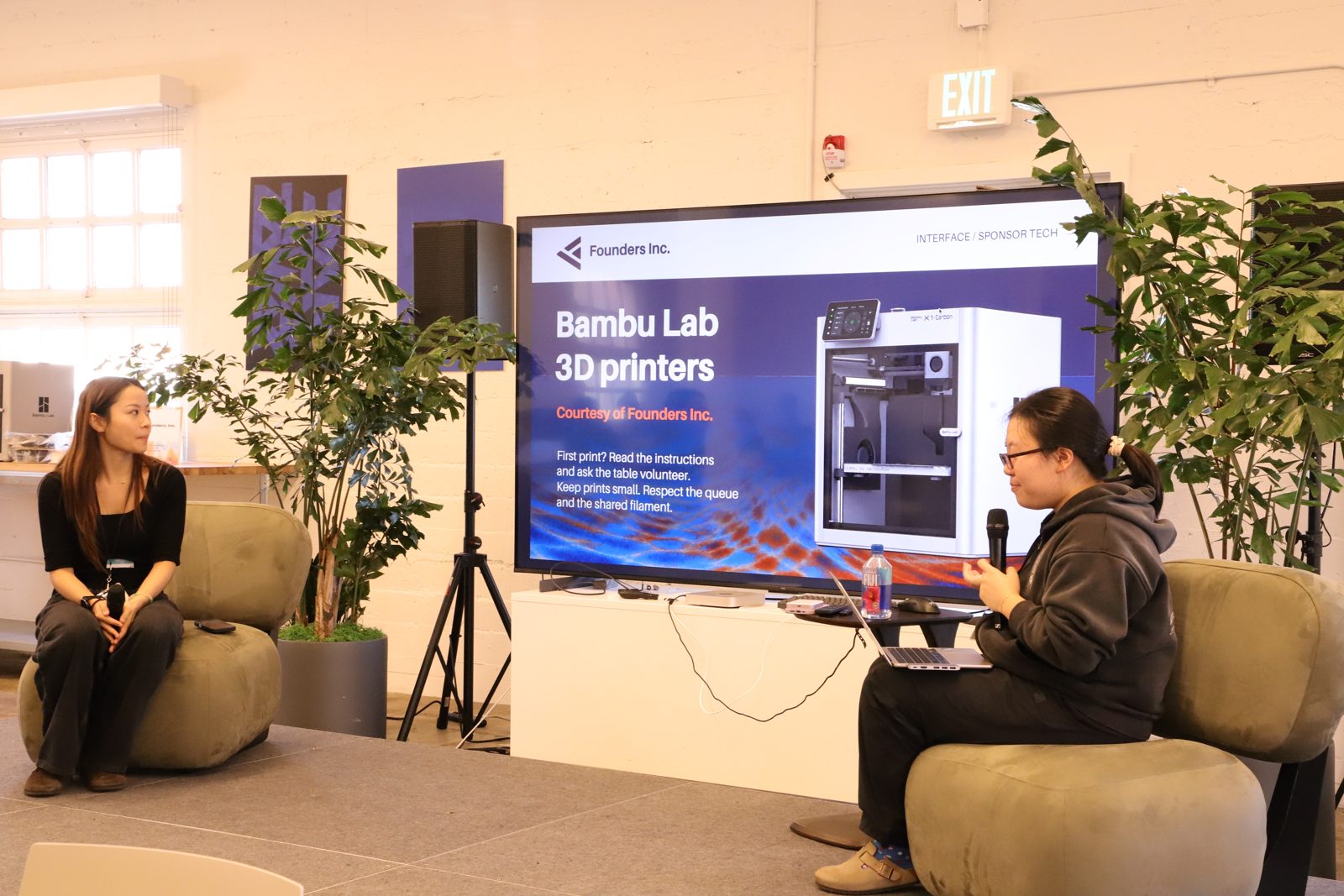
sissi in a green armchair with a mic, the screen behind her reading bambu lab 3d printers
me introducing the bambu lab 3d printers.
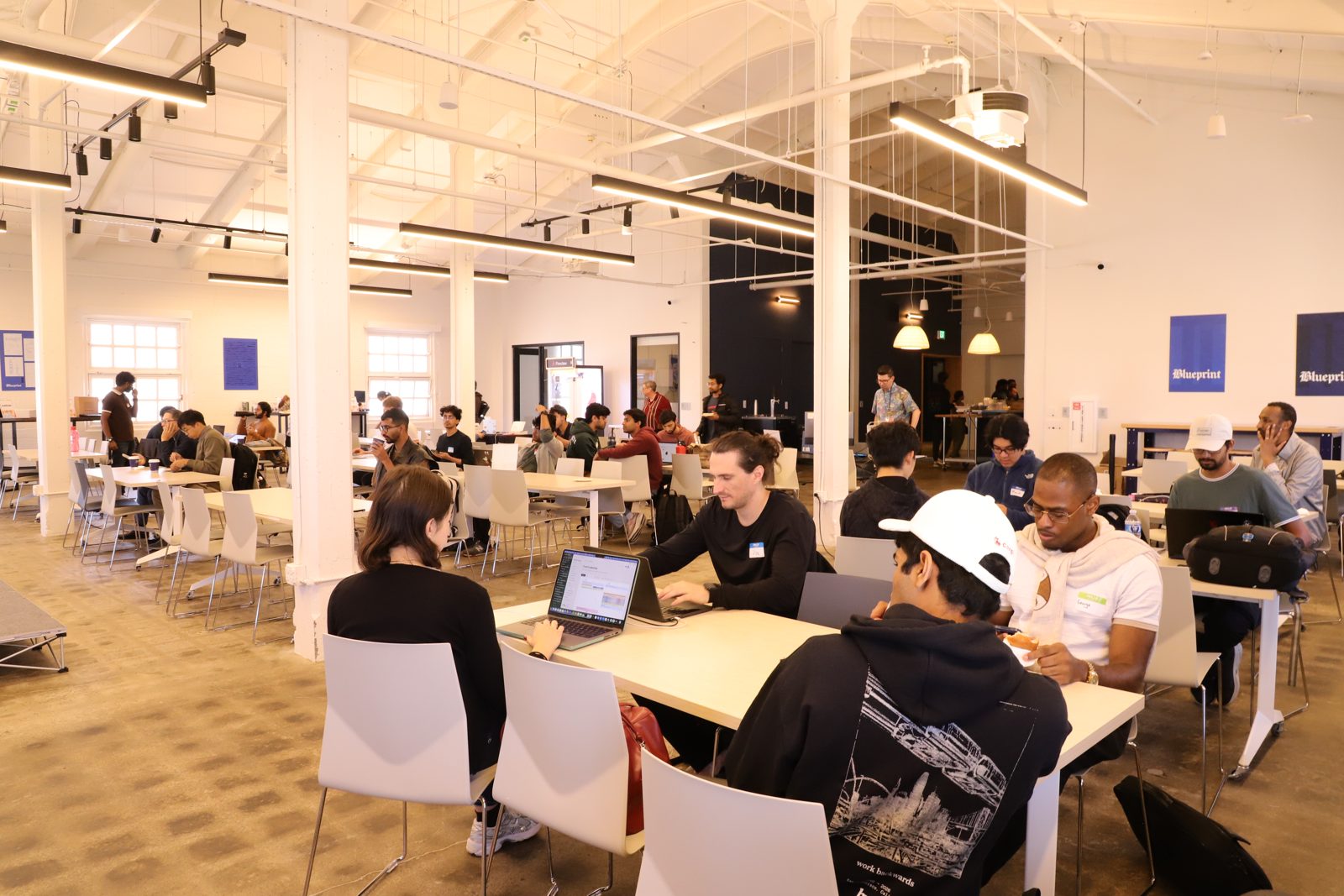
a big bright loft full of tables of people hacking on laptops
a full room by afternoon.
two hackers leaning into a laptop screen, an orange water bottle in front
heads down.
five hackers grinning at the camera around a table of laptops
a team mid-build.
a hacker talking to the datafeel team at their black-draped table
trying datafeel's haptics.
a hacker trying a hardware demo at a high table while a sponsor explains it
sponsor demos all day.
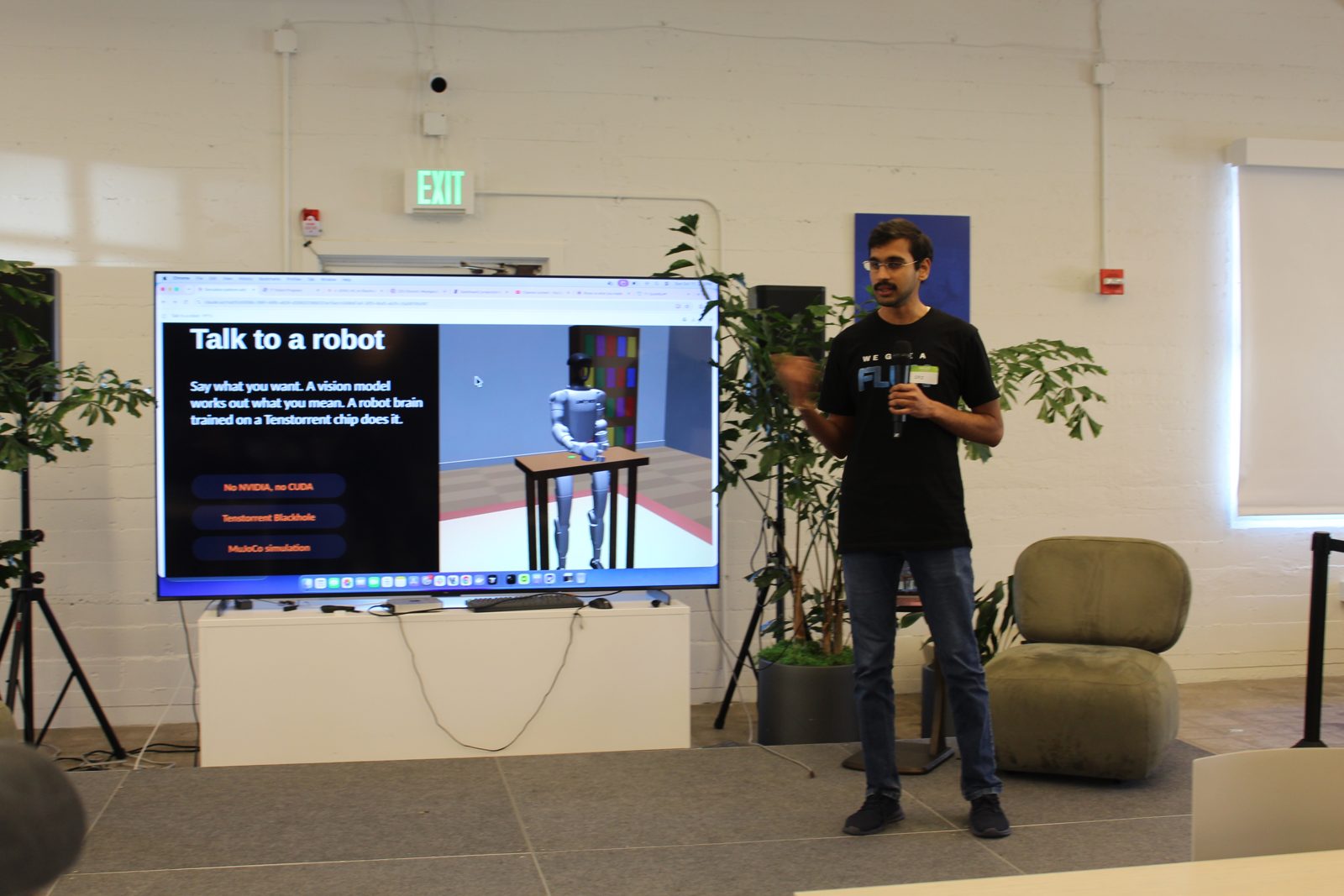
a builder presenting on stage, the screen reading talk to a robot
demos: talk to a robot.
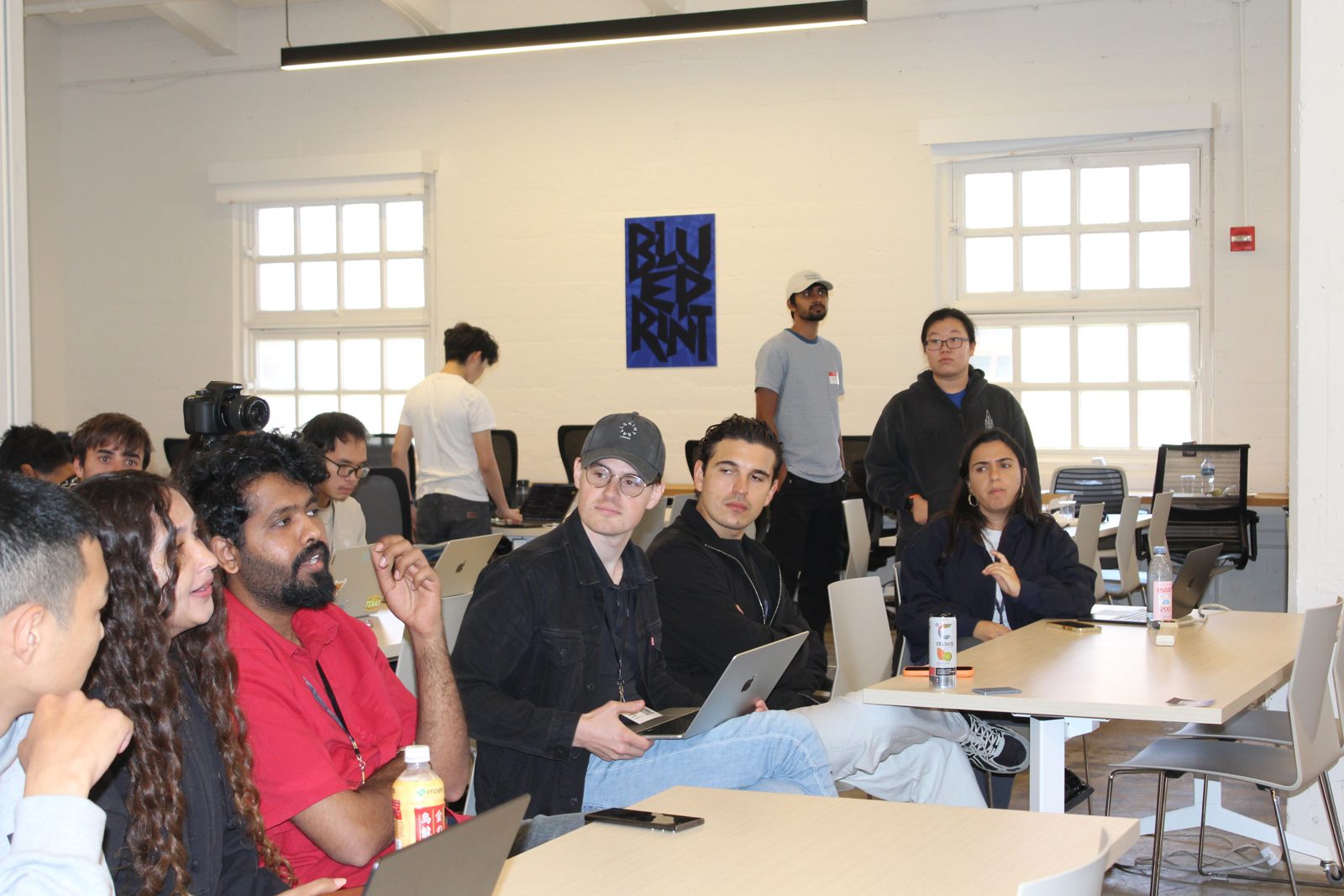
hackers seated at tables turned toward the stage, listening
everyone watching demos.
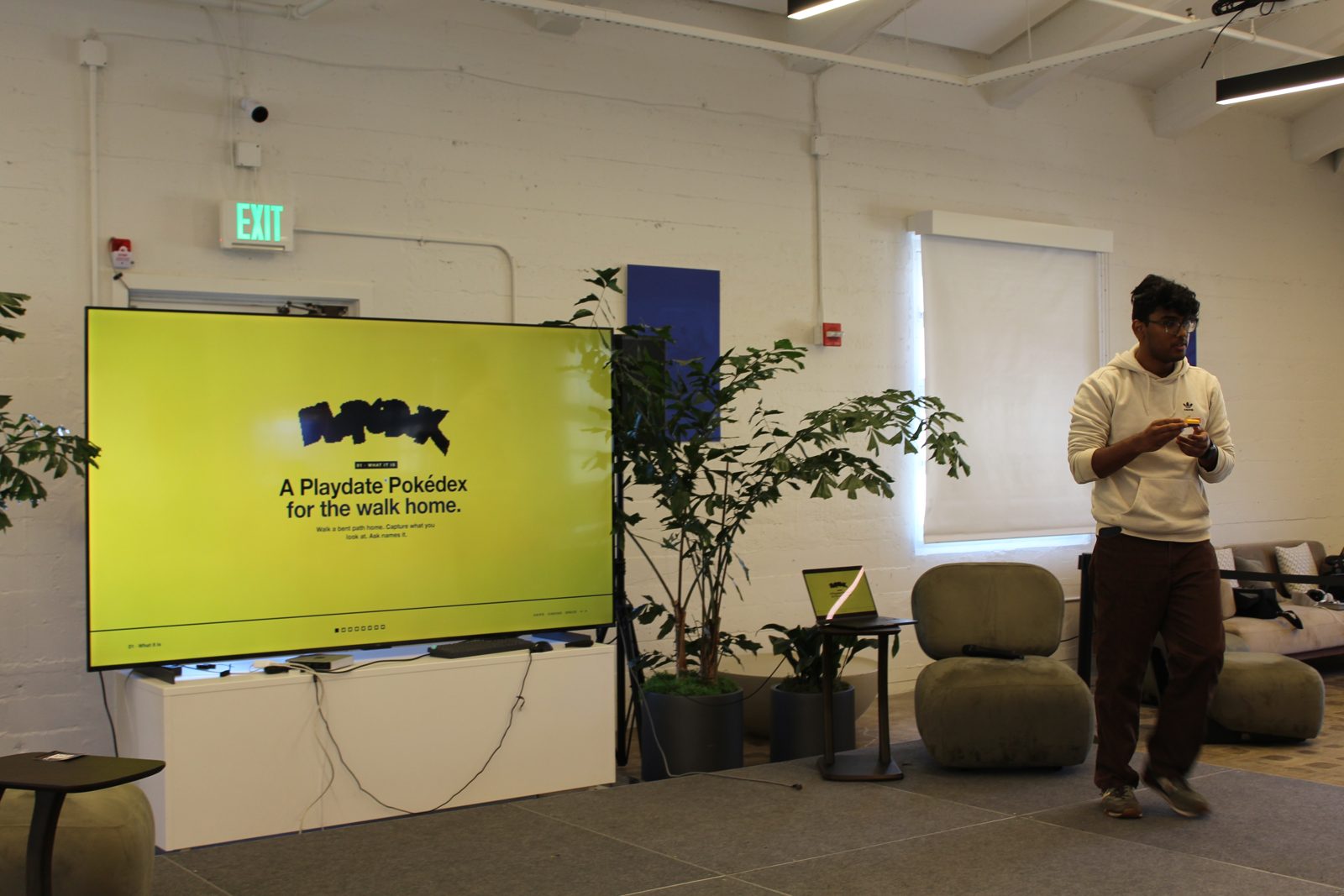
a builder presenting next to a bright yellow slide about a playdate app
demos: a playdate for the walk home.
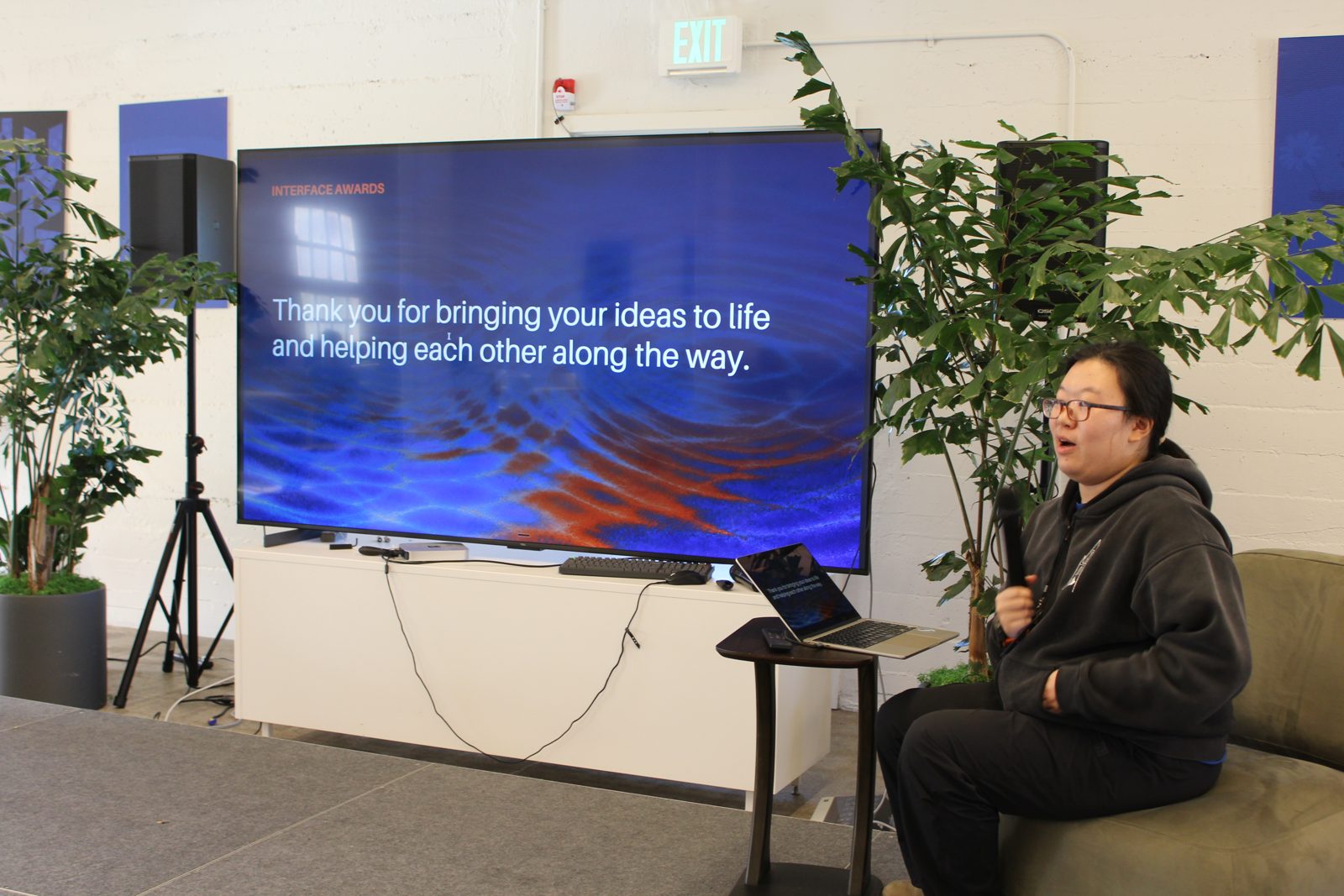
sissi in an armchair with a mic, the screen reading thank you for bringing your ideas to life and helping each other along the way
me, saying thank you.
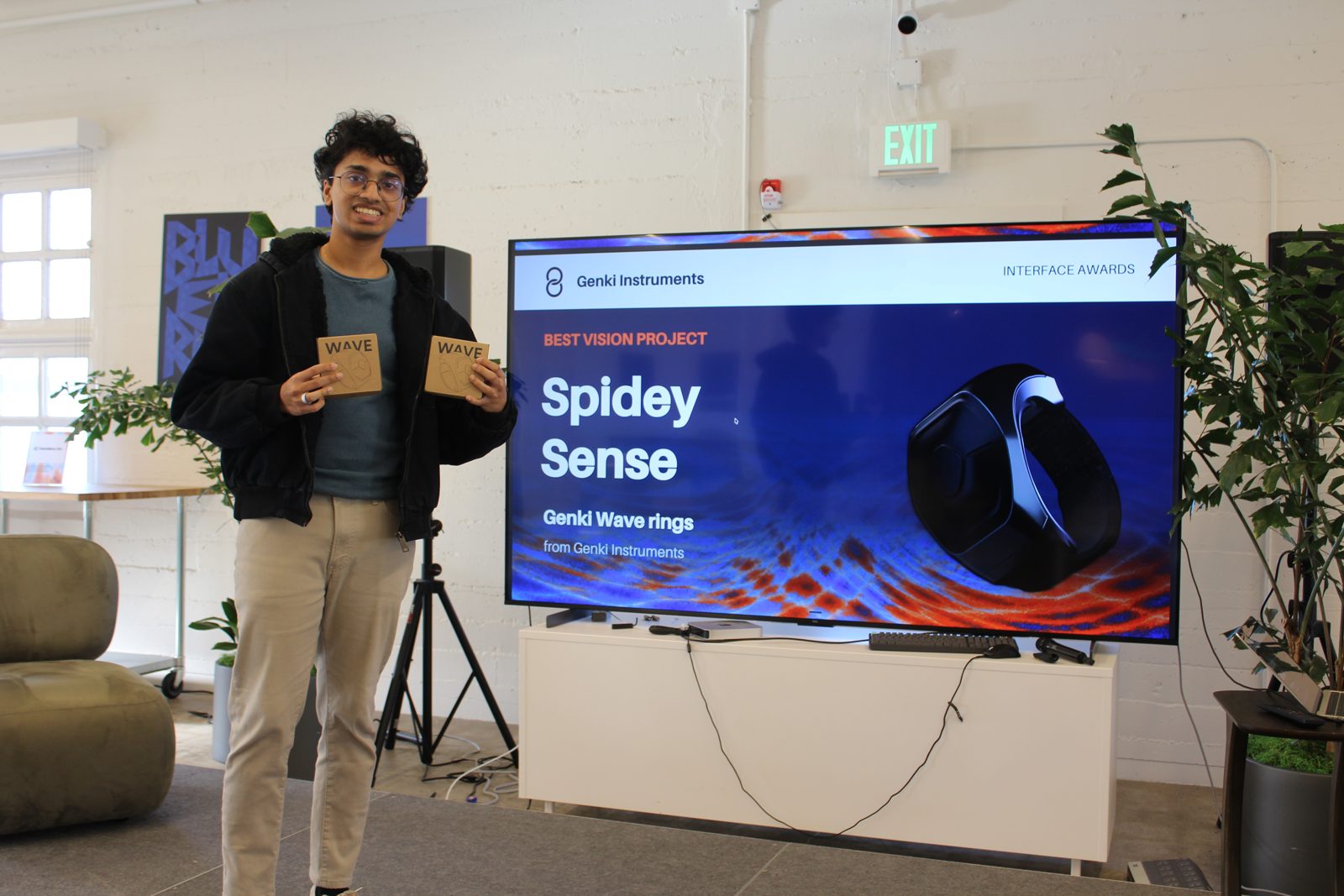
a winner holding a prize next to a slide reading spidey sense
awards: spidey sense.
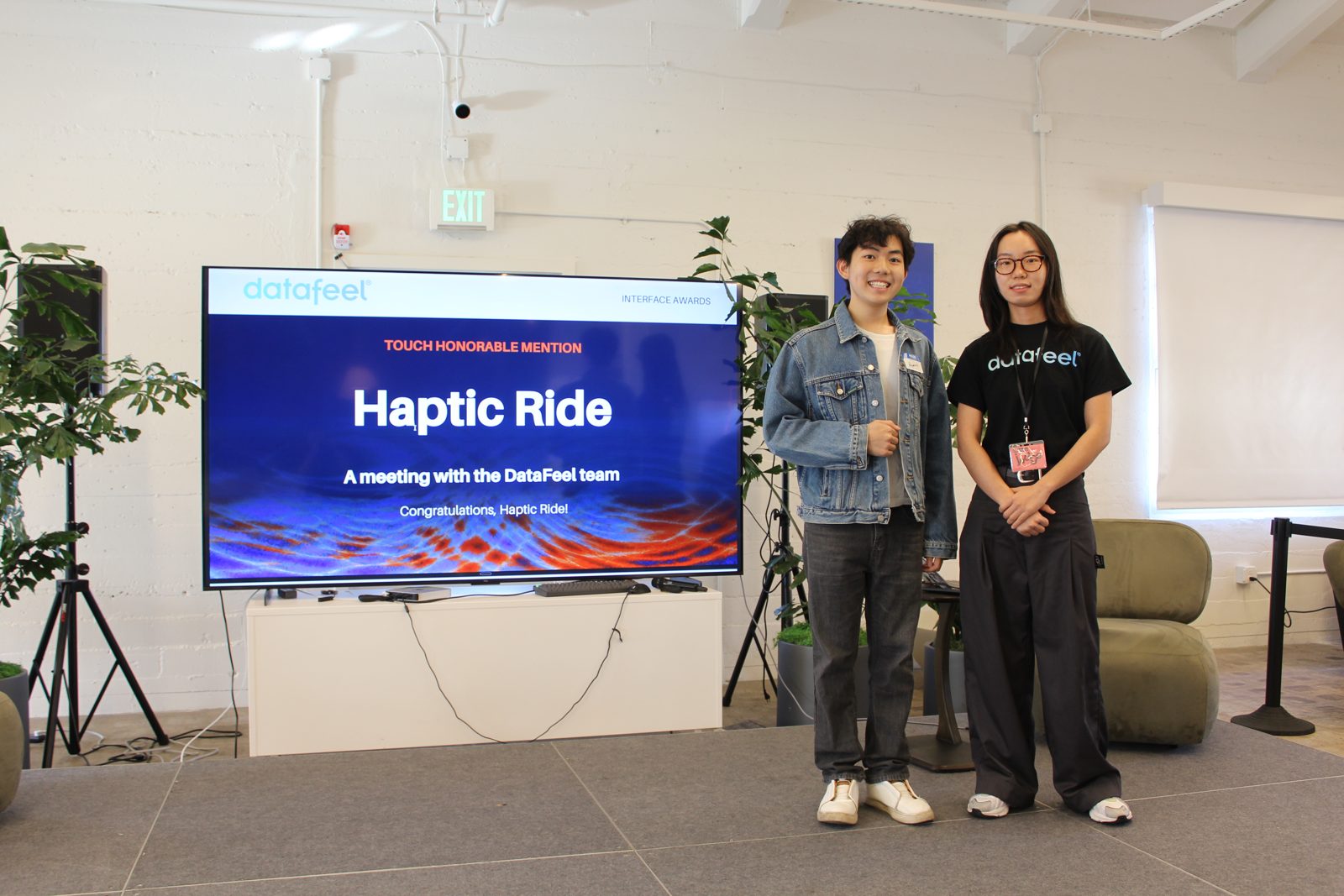
two winners standing by a slide reading haptic ride
awards: haptic ride.
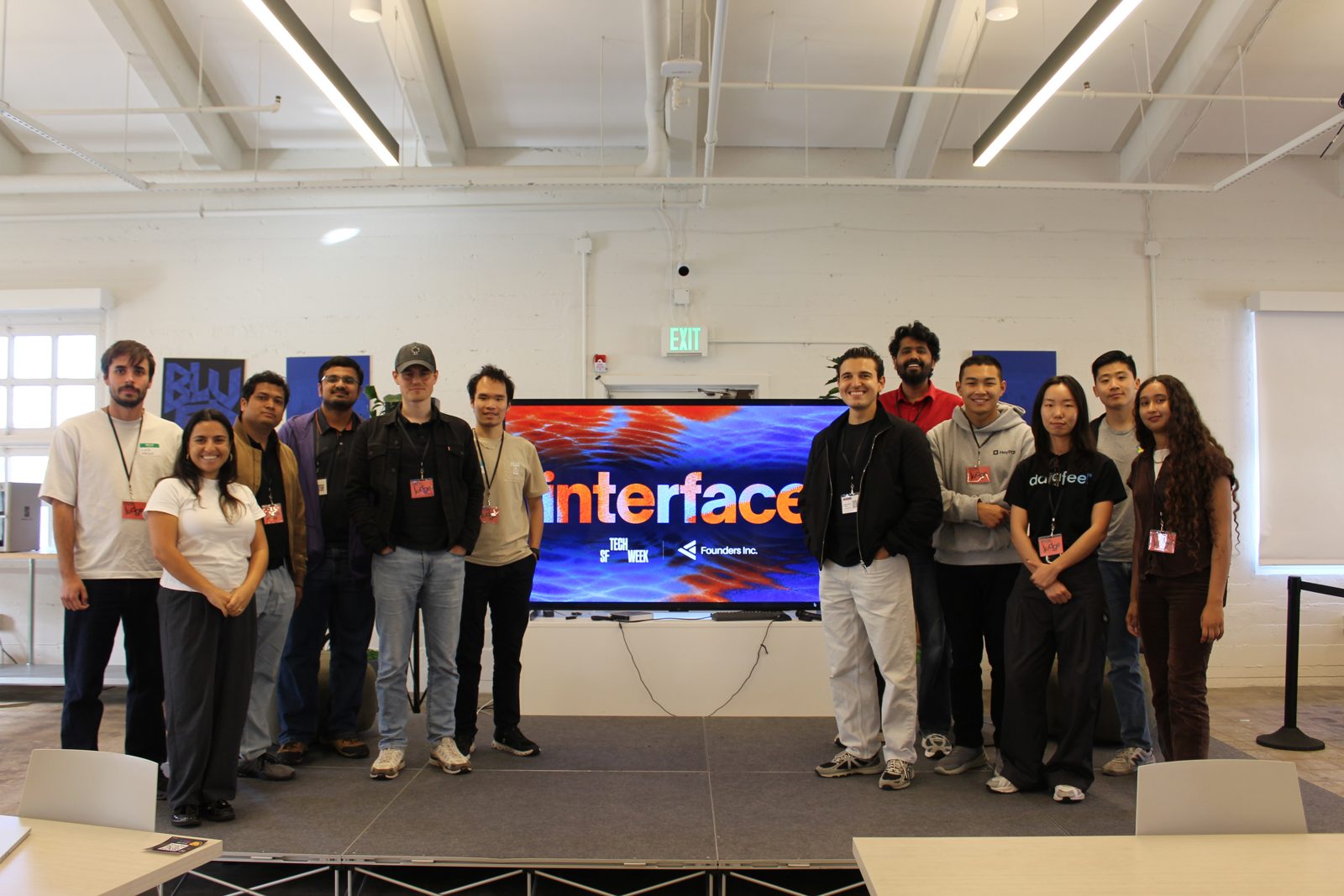
a group photo of hackers and organizers lined up in front of the interface screen
everyone who stayed to the end.

voice: a model that writes like me @ yc own your intelligence hackathon, with iana

first place, river ai side quest a gold medal on a red ribbon, with a little crying cat poking its face, paws and feet out of it

sponsors: river ai, gbrain, memorable, qm, superset, ufo

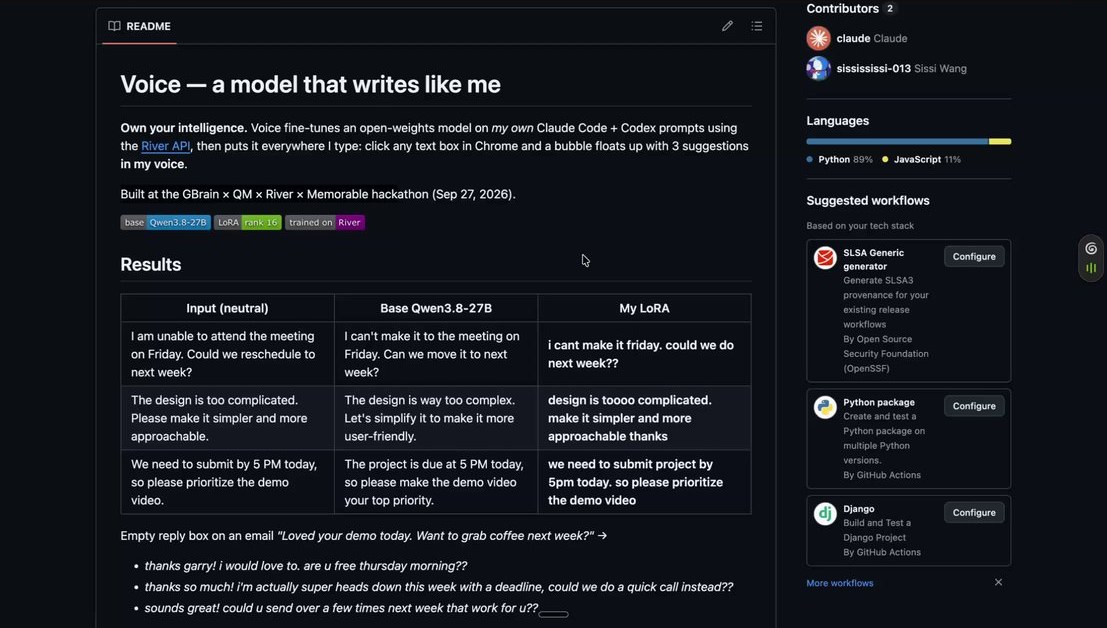
the loom demo, "training ai to write in my voice", 1 minute 45 seconds. the still shows voice's readme: the same sentences rewritten by the base qwen model and by sissi's fine-tuned lora, which writes lowercase and casual like her
the demo on loom (1:45): it learns from my own messages, then a little bubble offers 3 replies in my voice in any text box.
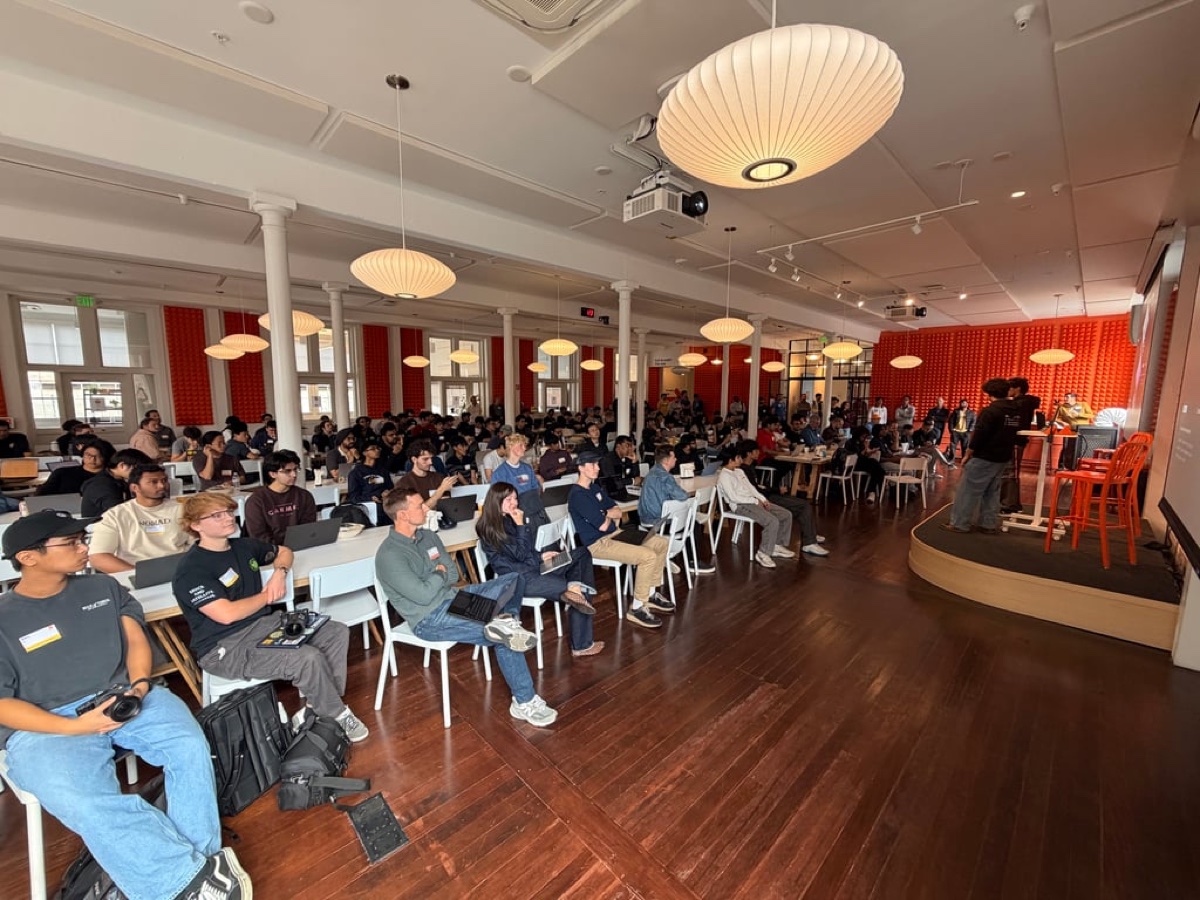
a full room of hackers at the yc own your intelligence hackathon, sitting in rows facing a stage, under round paper lamps
the room at yc (photo: compiled)
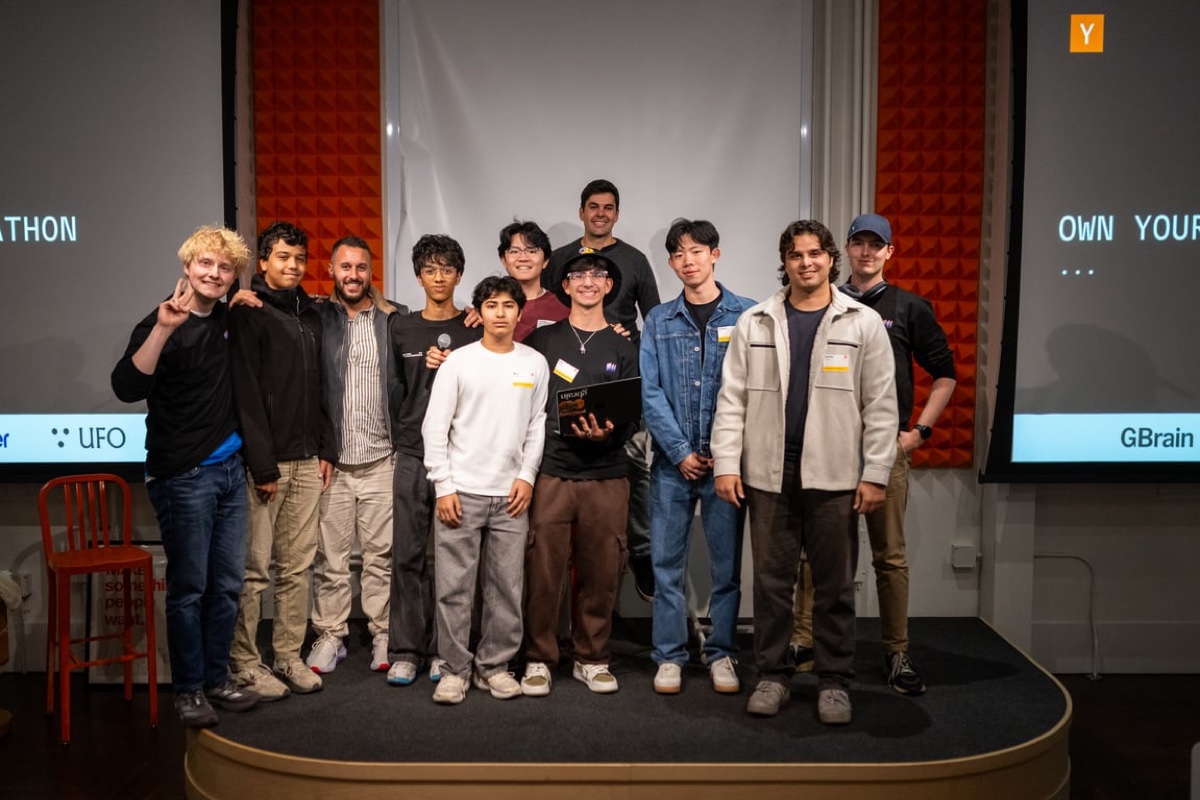
a group of hackers standing together on the stage at the end of the yc own your intelligence hackathon, slides behind them
everyone on stage at the end (photo: compiled)

bobot @ founders inc, silly robots contest, with iana

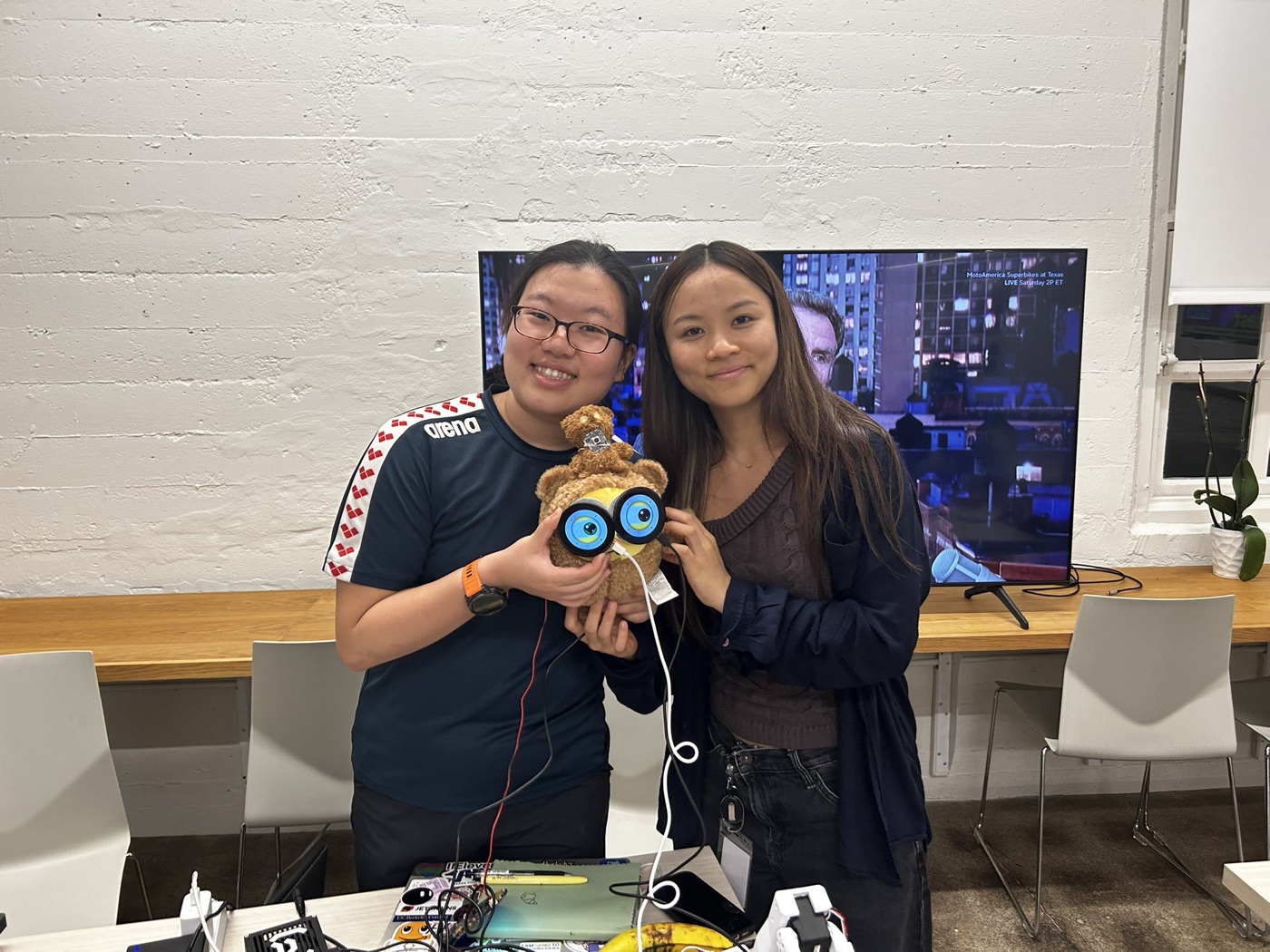
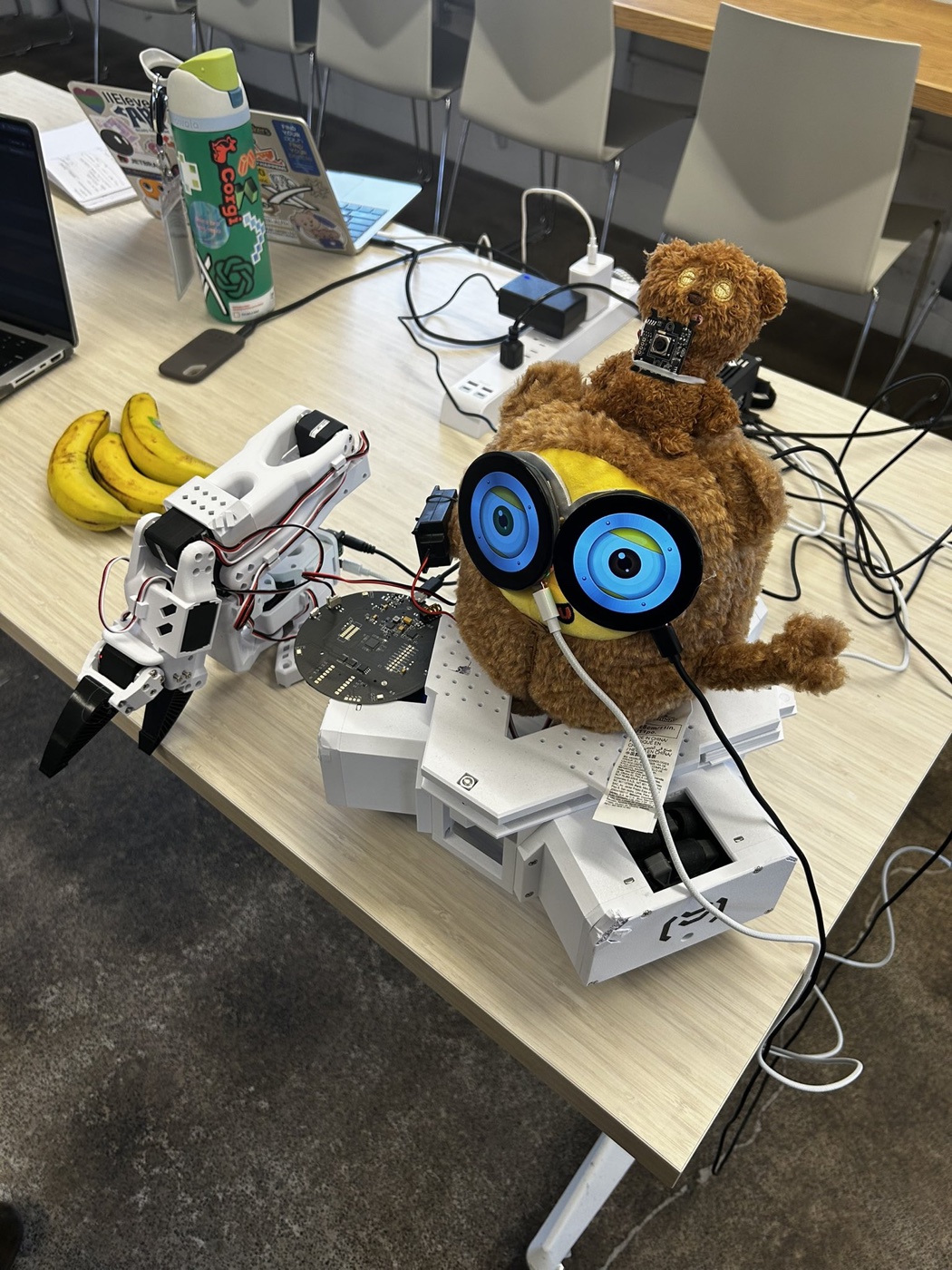
it speaks minionese, sings songs, loves bananas, recognizes people and hands you a banana if it wants to make friends with you.

grand (silliest) prize a gold medal on a red ribbon, with a little crying cat poking its face, paws and feet out of it

sissi and iana smiling at a table, holding bobot: a fuzzy brown minion-ish robot head with big blue goggle eyes, wires trailing to the table
me and iana with bobot.
bobot on a hackathon table: a fuzzy brown bear-like head with big yellow-and-blue goggle eyes on a white robot base, a white robot arm with a gripper beside it, and a bunch of bananas
bobot at home on the table: goggle eyes, a robot arm, and its bananas.
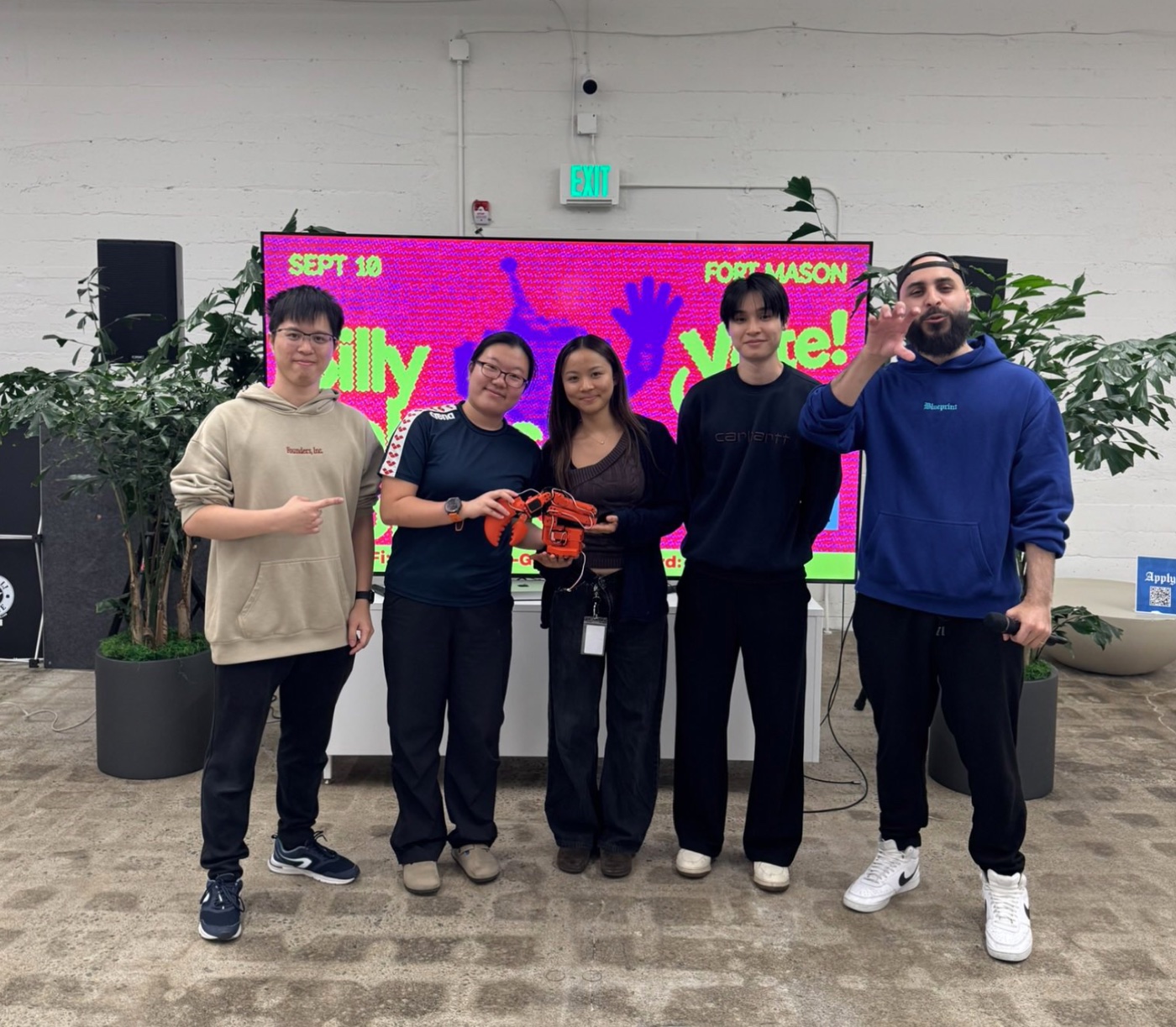
five people on stage in front of a bright pink and green silly robots contest screen that reads sept 10, fort mason; sissi and iana hold an orange robot hand between them
on stage at the silly robots contest, fort mason, sept 10.

offshore: an email-native ai ops agent for offshore oil platform maintenance @ openclaw hackathon

second place a gold medal on a red ribbon, with a little crying cat poking its face, paws and feet out of it

sponsors: eragon, nozomio, agentmail

the in-person demo (4:38): a quick improvised pitch in the first round, streamed from rednote.
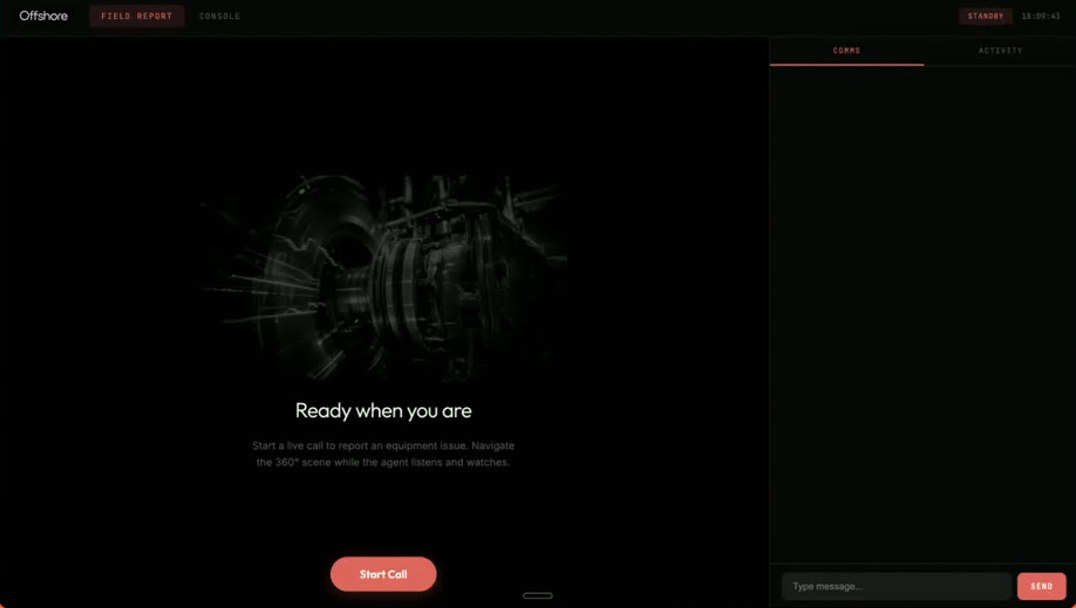
the loom demo, "offshore, 26 april 2026", 5 minutes 10 seconds. the still shows offshore's dark field report screen saying "ready when you are", with a start call button and a side panel for logs and activity
the demo on loom (5:10): a technician starts a live call and says what's wrong; offshore listens, looks things up, writes the work order and emails everyone.
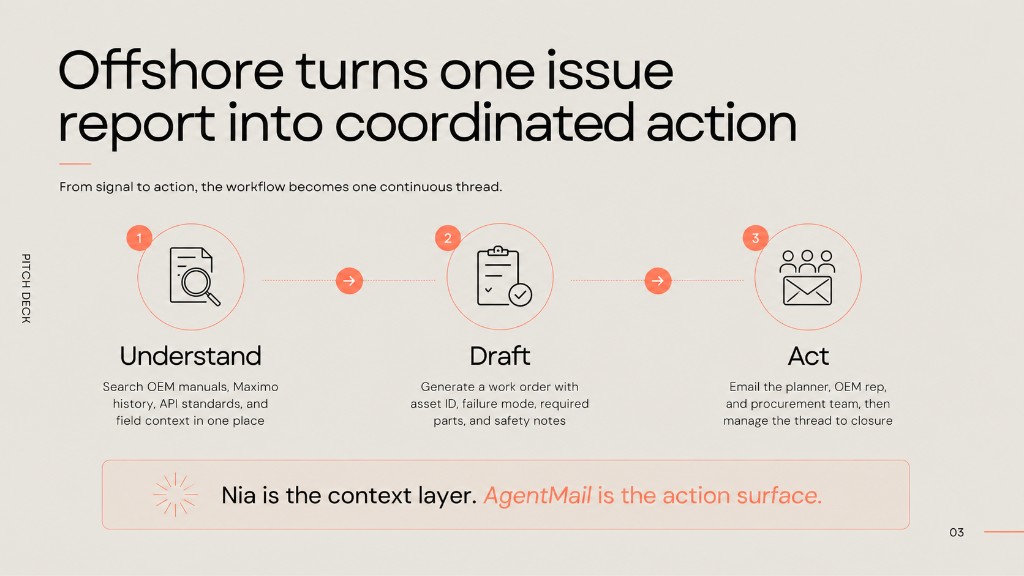
a pitch slide: "offshore turns one issue report into coordinated action". three steps: understand (search oem manuals, maximo history, api standards and field context), draft (a work order with asset id, failure mode, parts and safety notes), act (email the planner, oem rep and procurement team and follow the thread to closure). footer: nia is the context layer, agentmail is the action surface
one issue report becomes coordinated action: understand, draft, act.
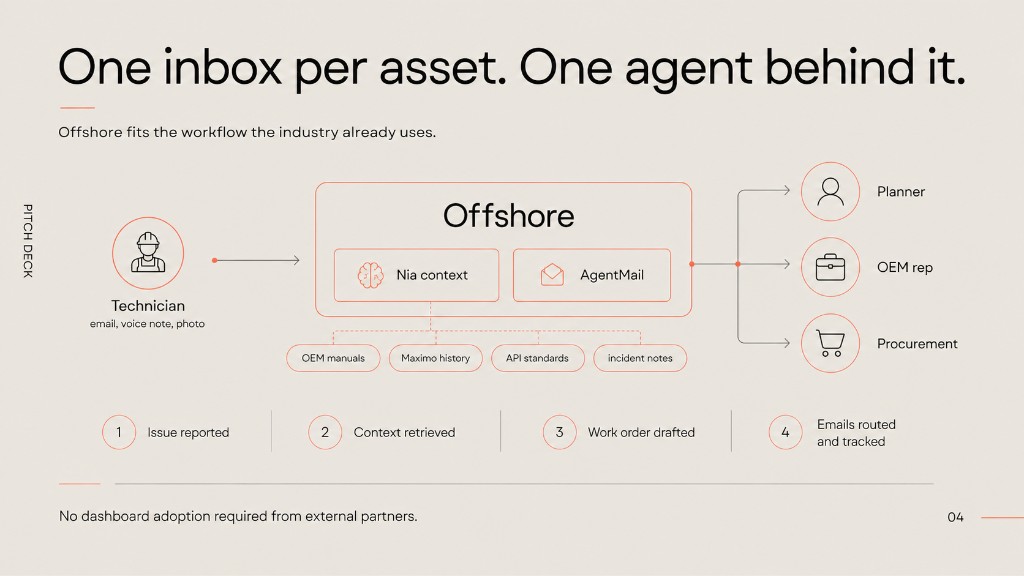
a pitch slide: "one inbox per asset. one agent behind it." a technician sends email, voice notes or photos to offshore, which uses nia for context (oem manuals, maximo history, api standards, incident notes) and agentmail to route emails to the planner, oem rep and procurement. steps: issue reported, context retrieved, work order drafted, emails routed and tracked
one inbox per asset, one agent behind it.
the offshore wordmark in cream on black, with a small orange dash in the f
offshore.

neuro ad-visor @ perplexity ai computer hackathon, with joshua, naisha, jacob

predict how people's brains react to your content before you post it, using meta tribe v2.

first place, most creative computer workflow a gold medal on a red ribbon, with a little crying cat poking its face, paws and feet out of it

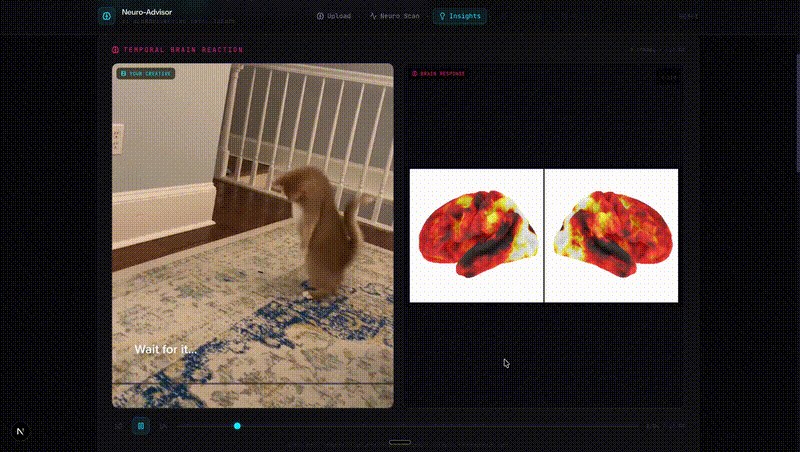
the neuro ad-visor demo video, on google drive. the still shows the temporal brain reaction screen: a video of an orange cat on a rug on the left ("wait for it…"), and two red-and-yellow heatmaps of the brain's cortex on the right, lighting up as the video plays
the demo video (1:51, on google drive): upload a clip, watch the brain react, get suggestions.
the brain watching along: as the clip plays, the predicted cortex lights up next to it, every 2 seconds.
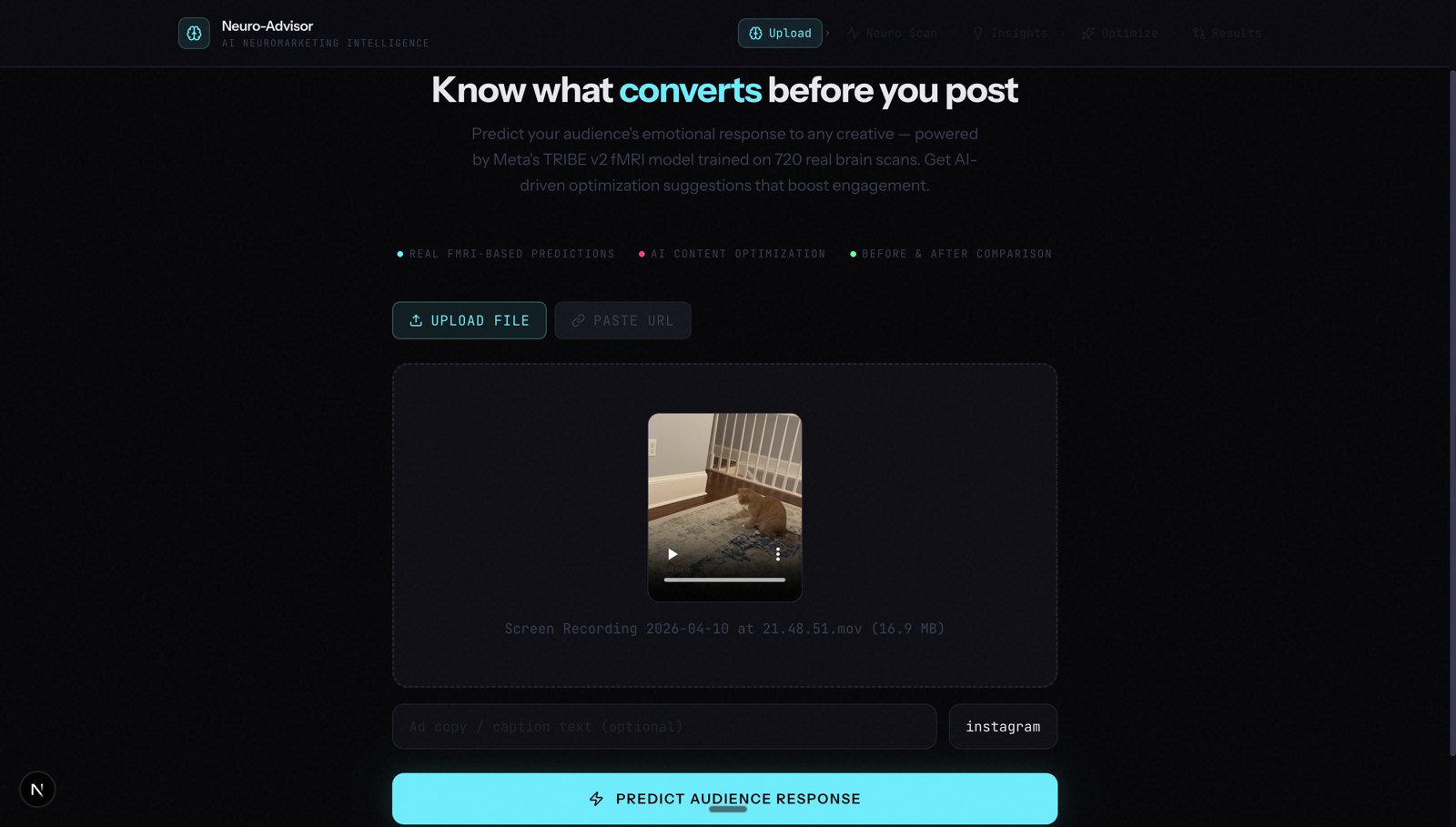
the upload screen: "know what converts before you post". a cat video is loaded, the platform is set to instagram, and a big cyan button says predict audience response
drop in a video or picture, pick the platform, press predict.
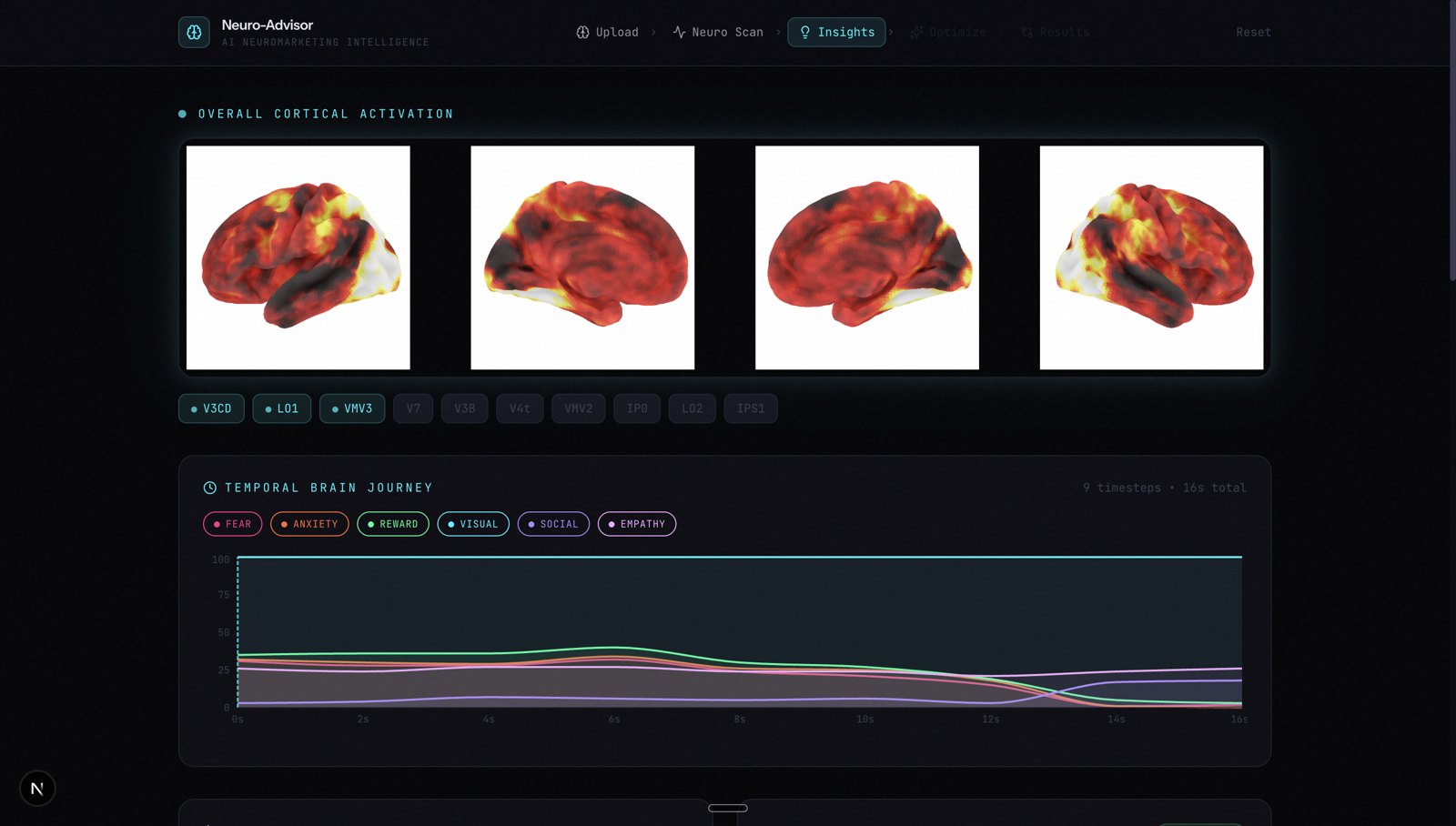
the overall cortical activation: four views of the brain as red-orange heatmaps, and below them a temporal brain journey chart with lines for fear, anxiety, reward, visual attention, social connection and empathy across the video
the whole cortex from four sides, and nine feelings over time.
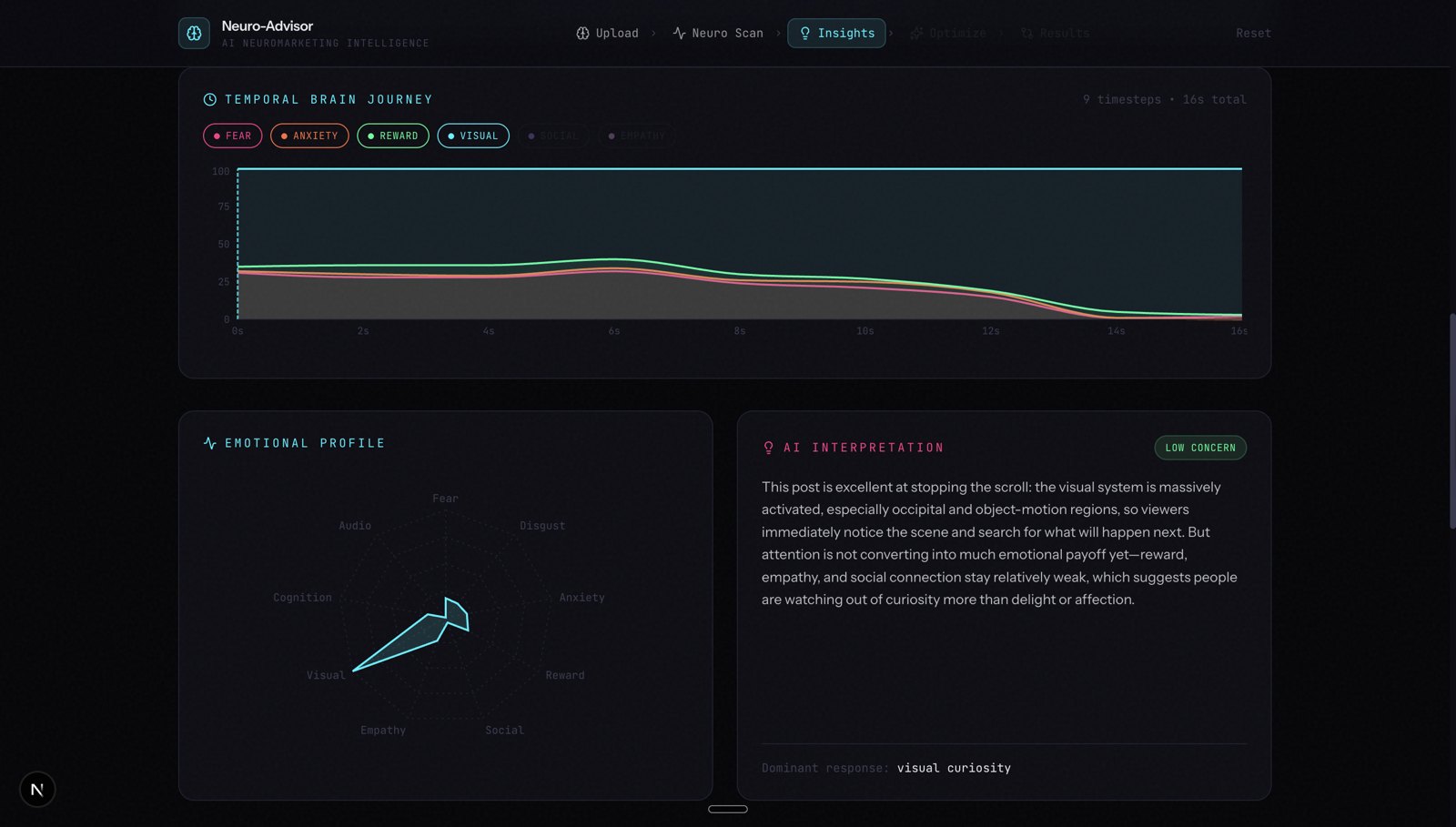
a nine-axis emotional profile radar chart next to an ai interpretation panel saying the post stops the scroll and strongly activates the visual system, but doesn't convert into much emotional payoff, with visual curiosity as the main response
an emotional radar, and the perplexity agent explaining what the brain data means.
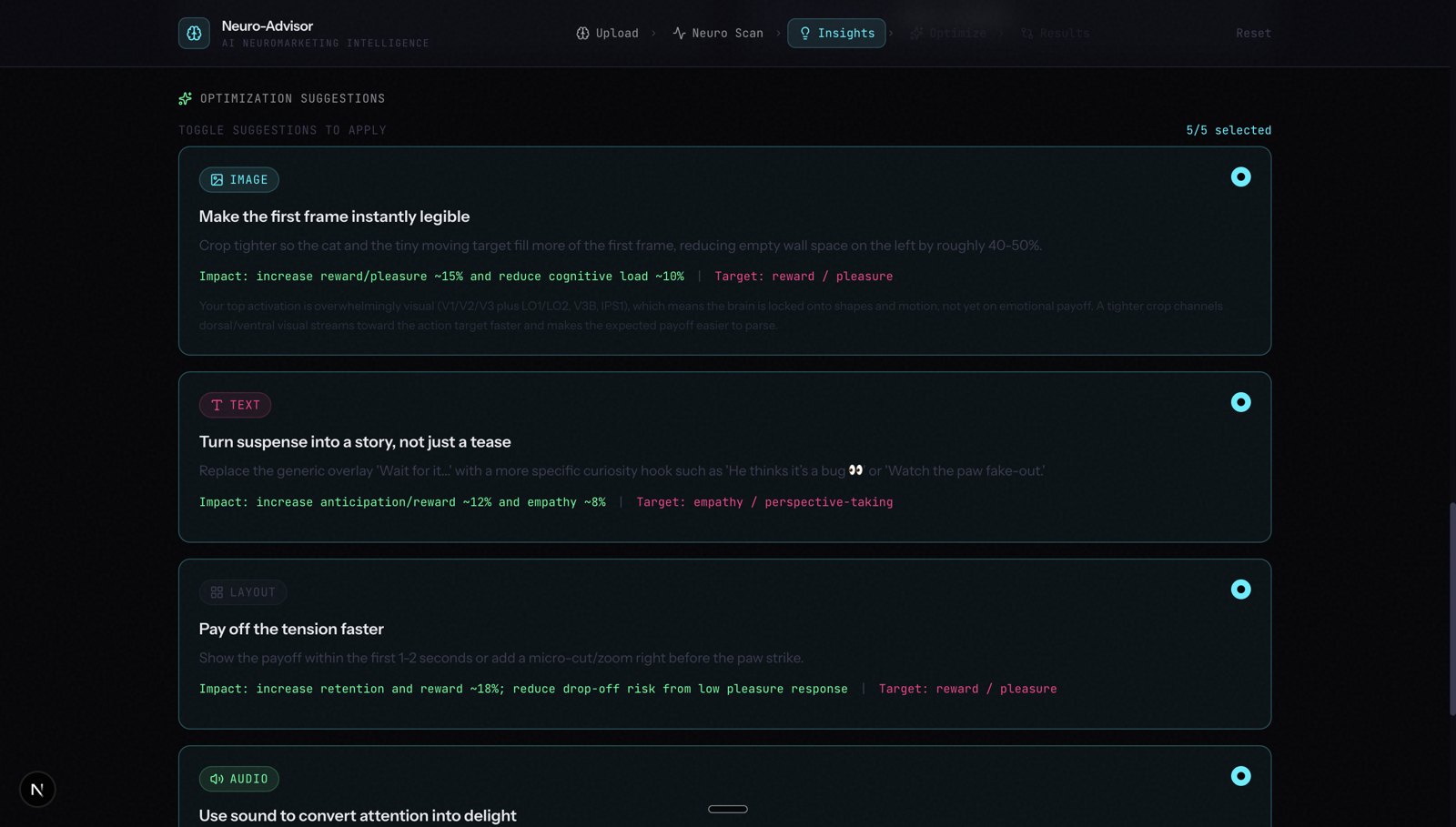
optimization suggestion cards with toggles: make the first frame instantly legible (image), turn suspense into a story, not just a tease (text), pay off the tension faster (layout), use sound to convert attention into delight (audio), each with its expected impact and target emotion
suggestions to make it land better, each with the feeling it targets.

field: an eeg foundational model @ the tech bros, with iana

field lab's mark: a stippled purple and navy brain made of tiny dots on cream, with the words onto intelligence in serif type below
field-lab.org: onto intelligence.
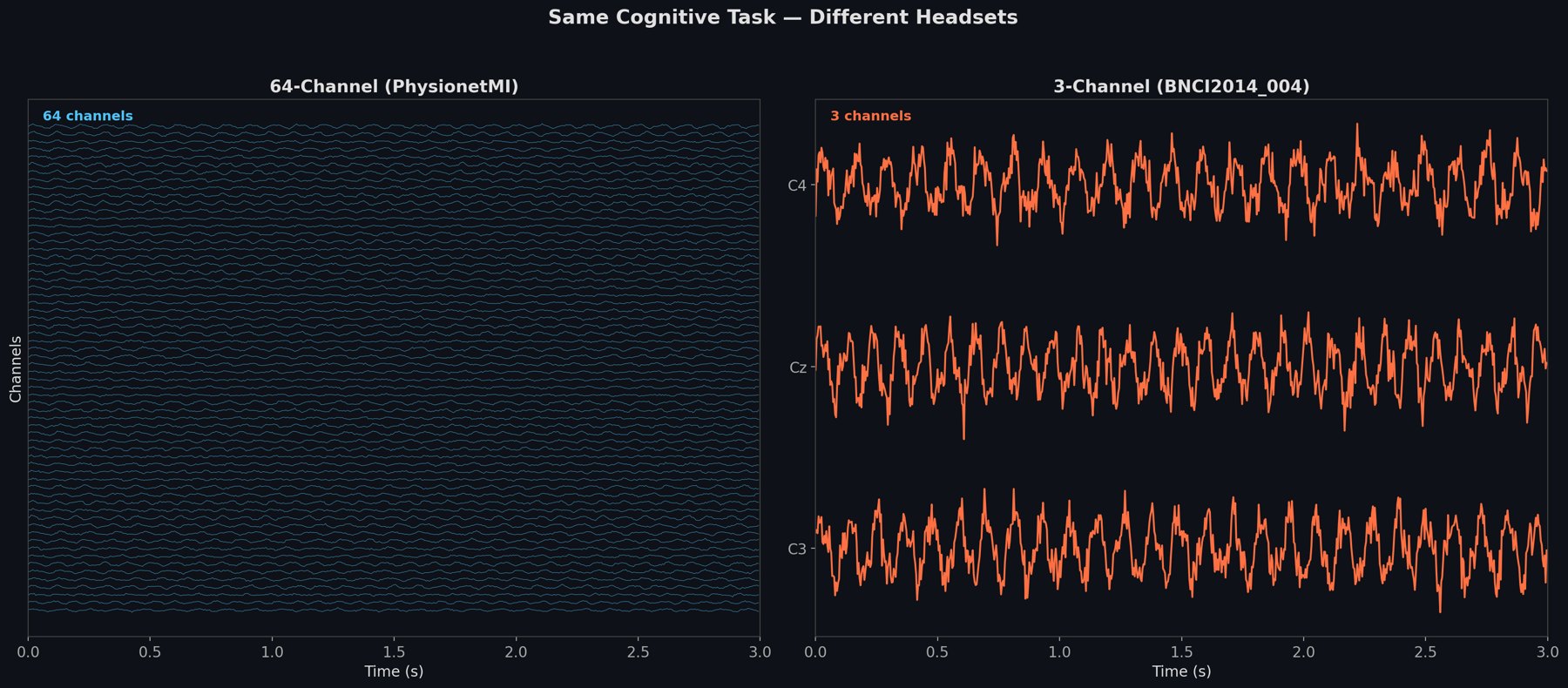
two eeg recordings of the same cognitive task on a dark background: on the left a dense 64-channel recording (physionet), on the right just 3 orange channels (bnci2014_004)
the same thinking task recorded by two headsets: 64 channels vs 3.
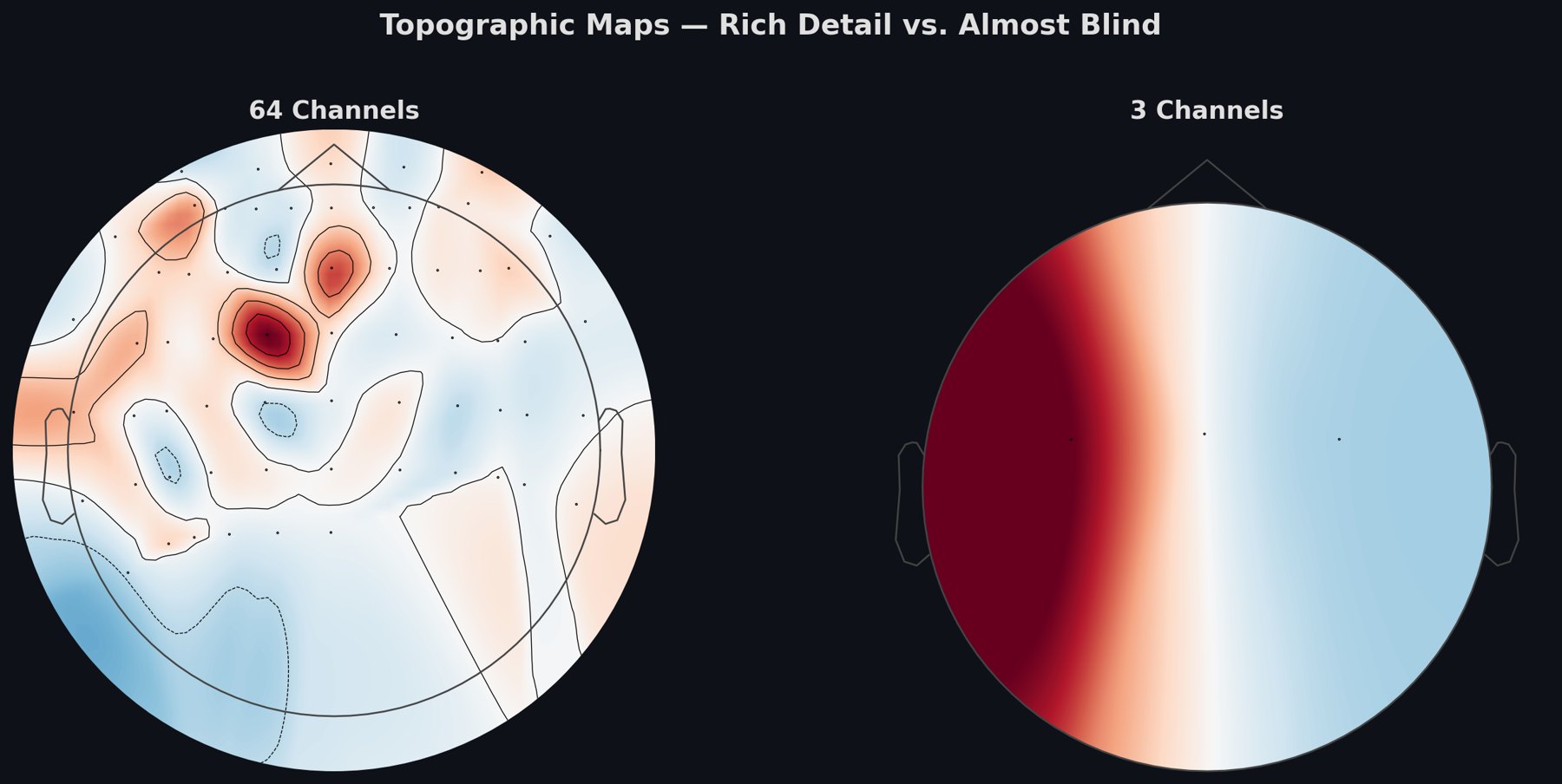
two topographic scalp maps side by side: the 64-channel one full of red and blue blobs and contour lines, the 3-channel one just a smooth red-to-blue split down the middle
what the head looks like with 64 electrodes, and with 3. rich detail vs almost blind.
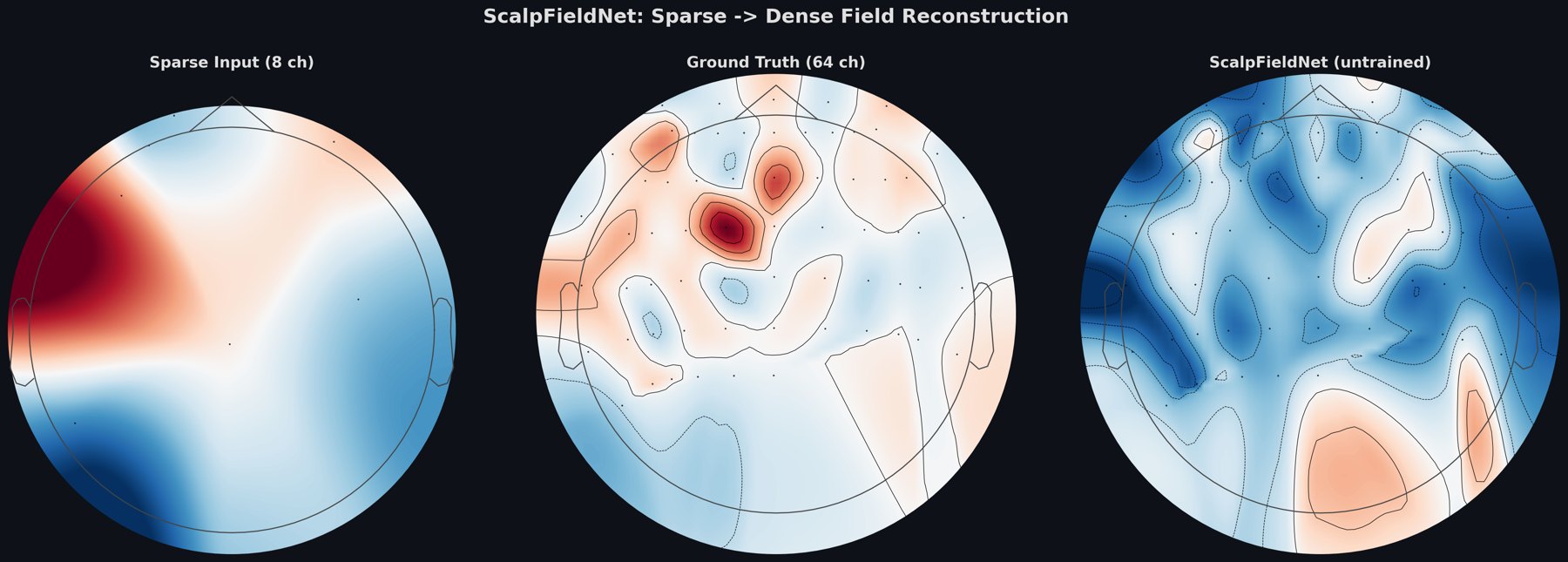
three scalp maps: the sparse 8-channel input, the 64-channel ground truth, and the dense field scalpfieldnet reconstructs from the sparse input
scalpfieldnet: 8 electrodes in, the full 64-channel field back out.
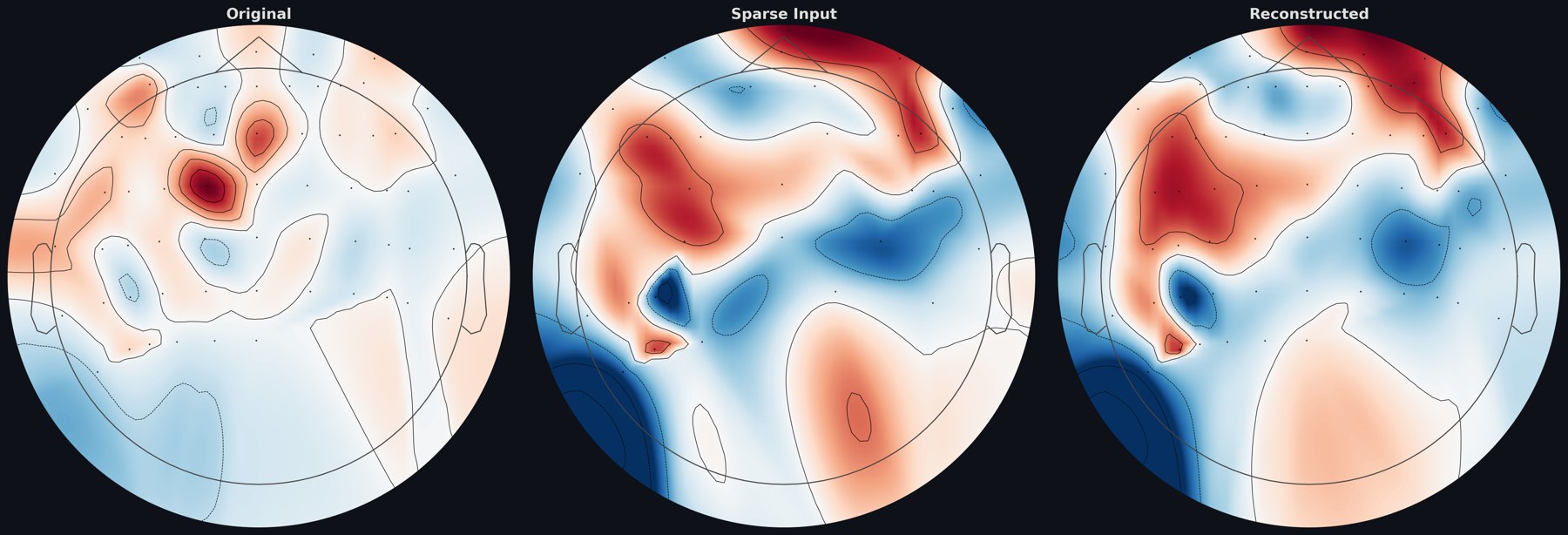
three scalp maps in a row: the original field, the sparse input with channels masked out, and the reconstructed field
masking channels and filling them back in: original, sparse input, reconstructed.
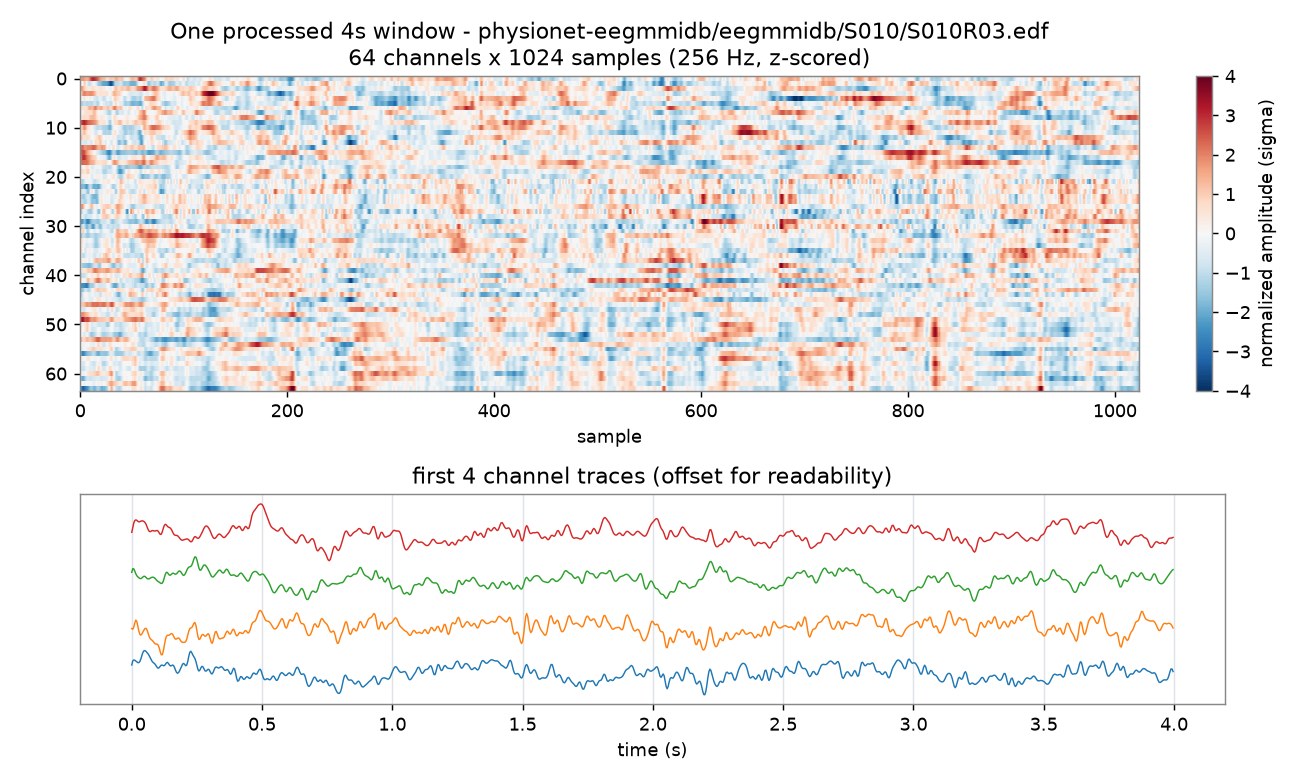
a heatmap of one processed 4-second eeg window from physionet eegmmidb (subject S010), 64 channels by 1024 samples at 256 hz, z-scored in red and blue, with the first 4 channel traces drawn underneath
one 4-second window after eegforge's preprocessing: 64 channels, 1024 samples, z-scored, ready for training.
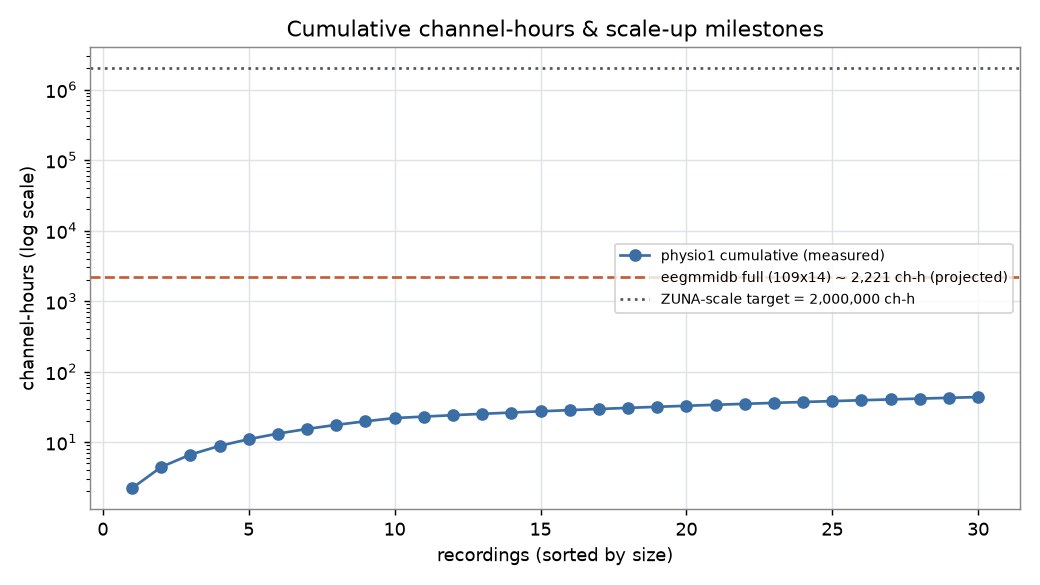
a log-scale chart of cumulative channel-hours over 30 physionet recordings, rising to about 44, with dashed lines for the full eegmmidb dataset (about 2,221 channel-hours, projected) and the zuna-scale target of 2,000,000 channel-hours
how much eeg we'd gathered (in channel-hours) vs the full dataset and zuna's 2,000,000 channel-hour scale.
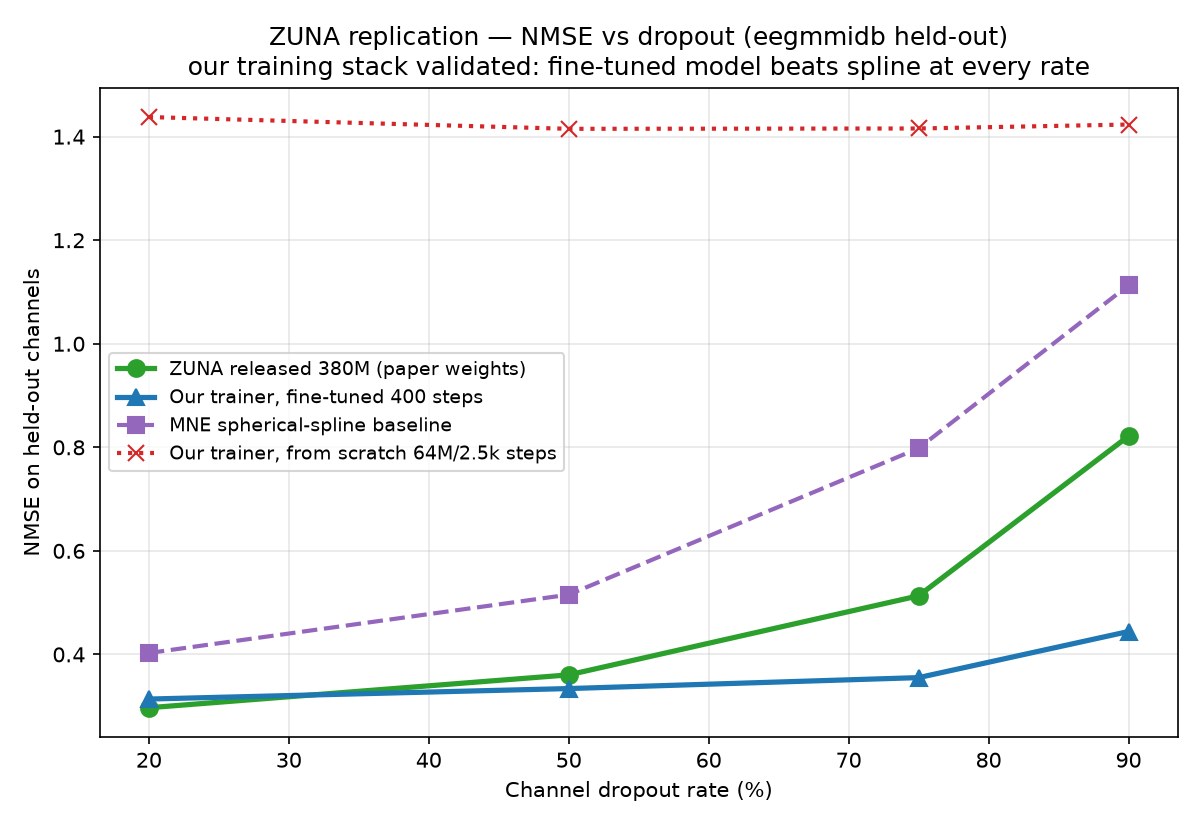
a line chart of nmse on held-out channels vs channel dropout rate (20 to 90%) on eegmmidb: zuna's released 380m weights, our trainer fine-tuned for 400 steps, the mne spherical-spline baseline, and our trainer from scratch (64m, 2.5k steps); the fine-tuned model has the lowest error at every rate and spline is worst except for the from-scratch run
replicating zuna: filling in dropped channels. our fine-tuned model beats spline interpolation at every dropout rate.

agentic data validation pipeline @ apple, generative ai @ berkeley

cellquest @ overworld "hack the world(model)", kindred ventures, with anna

enter the vein as a blood cell.

first place overall a gold medal on a red ribbon, with a little crying cat poking its face, paws and feet out of it

cellquest running again, 10 months later, on overworld's waypoint world model and a rented gpu. every frame is generated live as the drug molecule swims through the tissue; 13 hits clear the abnormal cells (40 s).
sissi and anna standing together in a wood-panelled office lobby, smiling and making hand signs at the camera
anna and me after we won, at kindred ventures.

attention kernel optimization challenge @ paradigm autoresearch hackathon

first place (in-person track) a gold medal on a red ribbon, with a little crying cat poking its face, paws and feet out of it

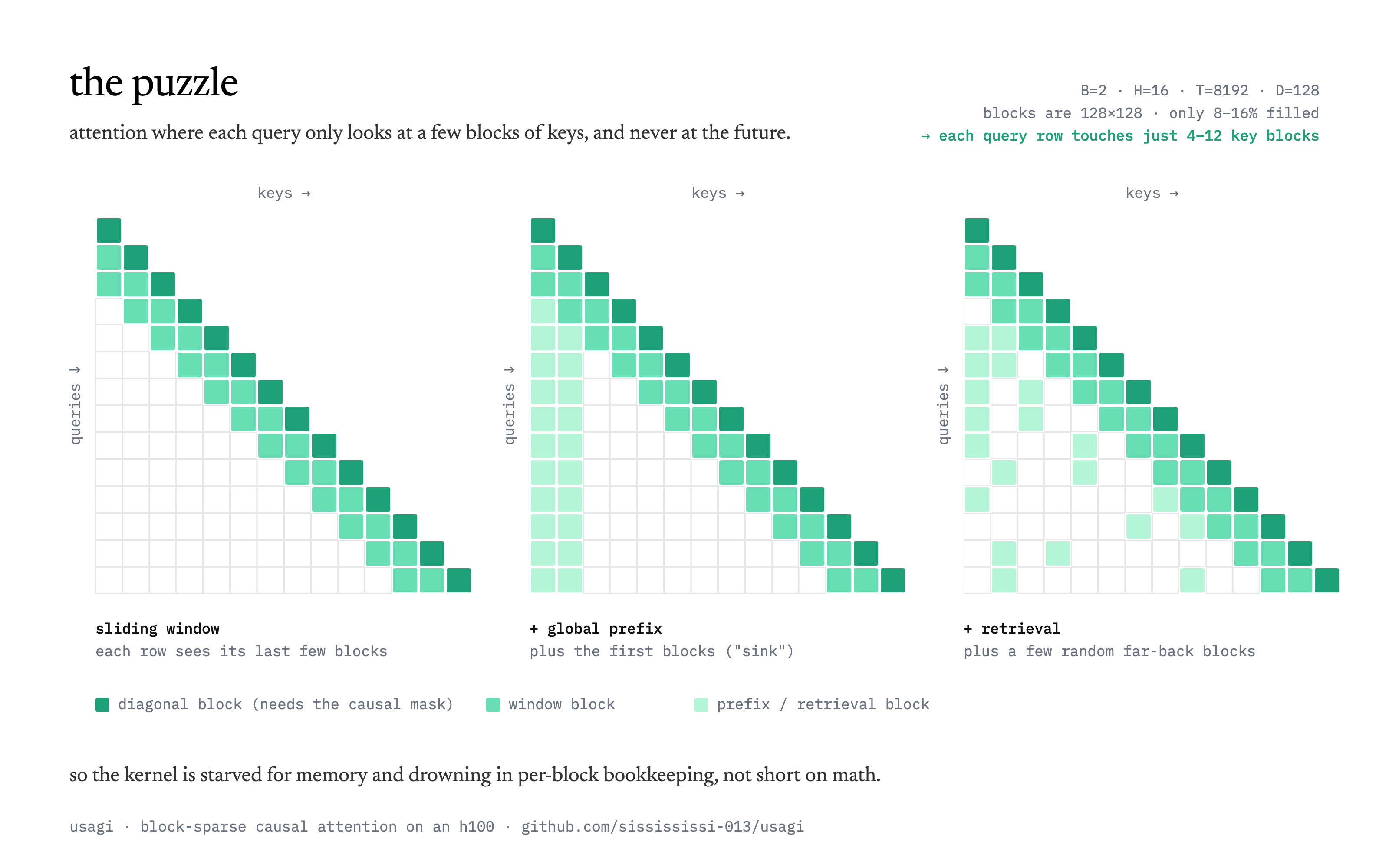
diagram titled the puzzle, in paradigm's style: three triangular grids of green blocks (keys across, queries down, nothing above the diagonal) for the three sparsity families: sliding window, sliding window plus a global prefix, and sliding window plus random retrieval blocks. notes: B=2, H=16, T=8192, D=128; 128×128 blocks, only 8–16% filled, so each query row touches just 4–12 key blocks, and the kernel is starved for memory and per-block bookkeeping rather than math.
the puzzle: block-sparse causal attention, three ways.
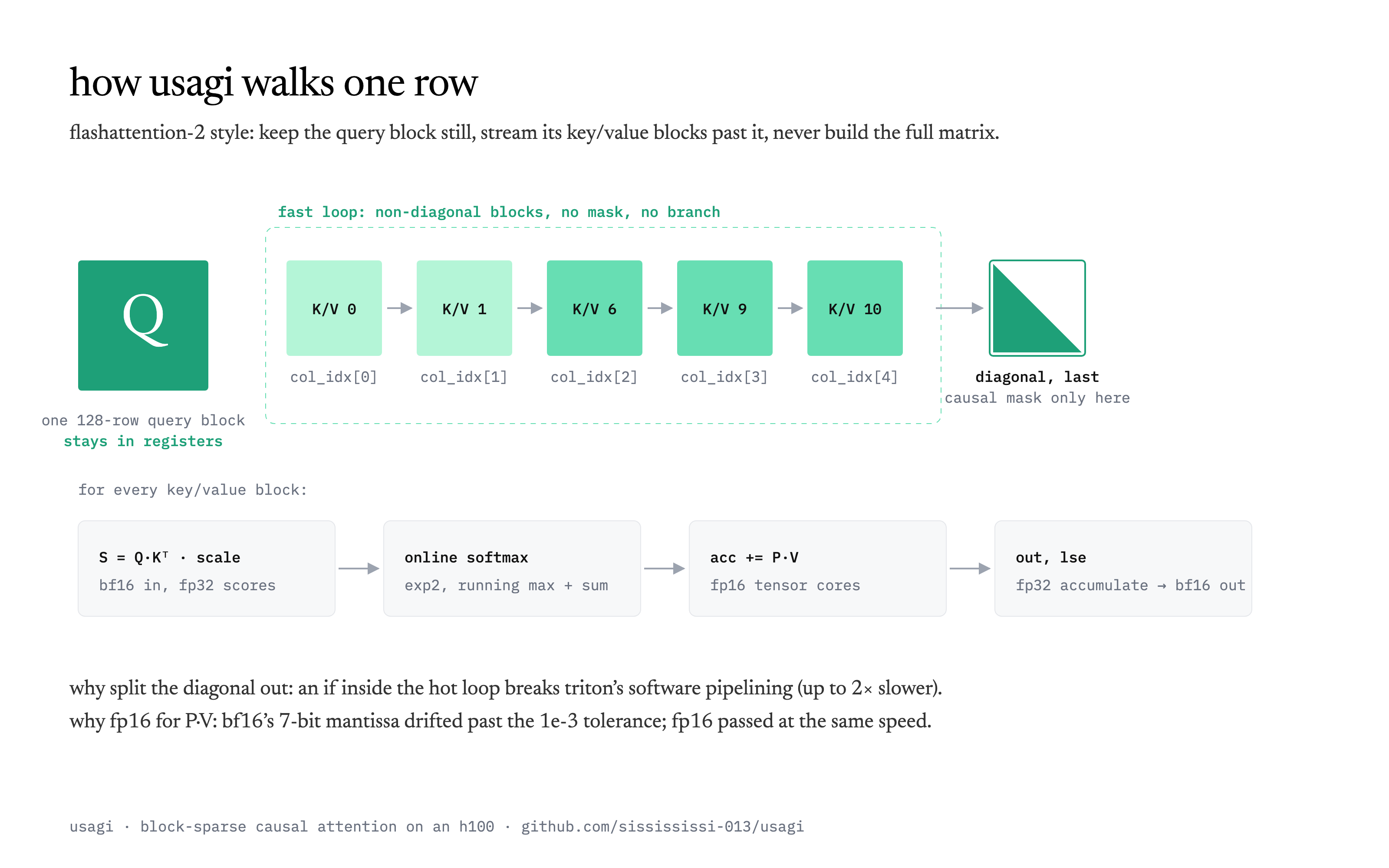
diagram titled how usagi walks one row: a dark green Q block (one 128-row query block, kept in registers) streams past key/value blocks listed by csr col_idx. the non-diagonal blocks run in a fast loop with no mask and no branch; the diagonal block comes last and is the only one with the causal mask. for every block: S = Q·Kᵀ·scale (bf16 in, fp32 scores), then online softmax (exp2, running max and sum), then acc += P·V on fp16 tensor cores, then fp32 accumulation into bf16 output and log-sum-exp. notes: an if inside the hot loop breaks triton's software pipelining (up to 2× slower); bf16 P·V drifted past the 1e-3 tolerance, fp16 passed at the same speed.
how usagi walks one row: non-diagonal blocks in a fast loop, the diagonal last.
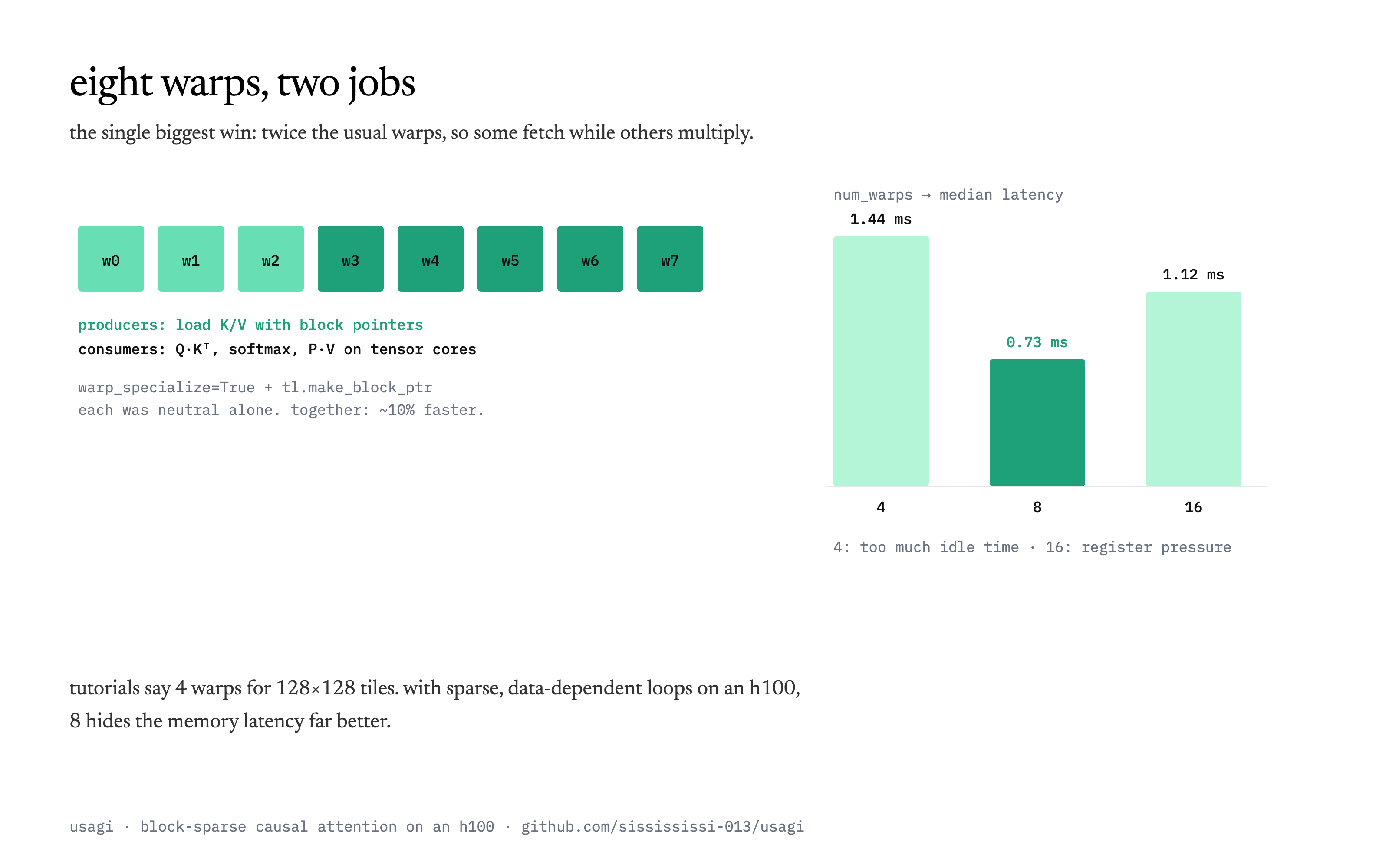
diagram titled eight warps, two jobs: eight warp squares, three light-green producers that load K/V with block pointers and five dark-green consumers that run Q·Kᵀ, softmax and P·V on tensor cores (warp_specialize=True plus tl.make_block_ptr; each neutral alone, about 10% faster together). bar chart of median latency by num_warps: 4 warps 1.44 ms, 8 warps 0.73 ms, 16 warps 1.12 ms; 4 leaves too much idle time, 16 causes register pressure.
eight warps, two jobs: the biggest single win.
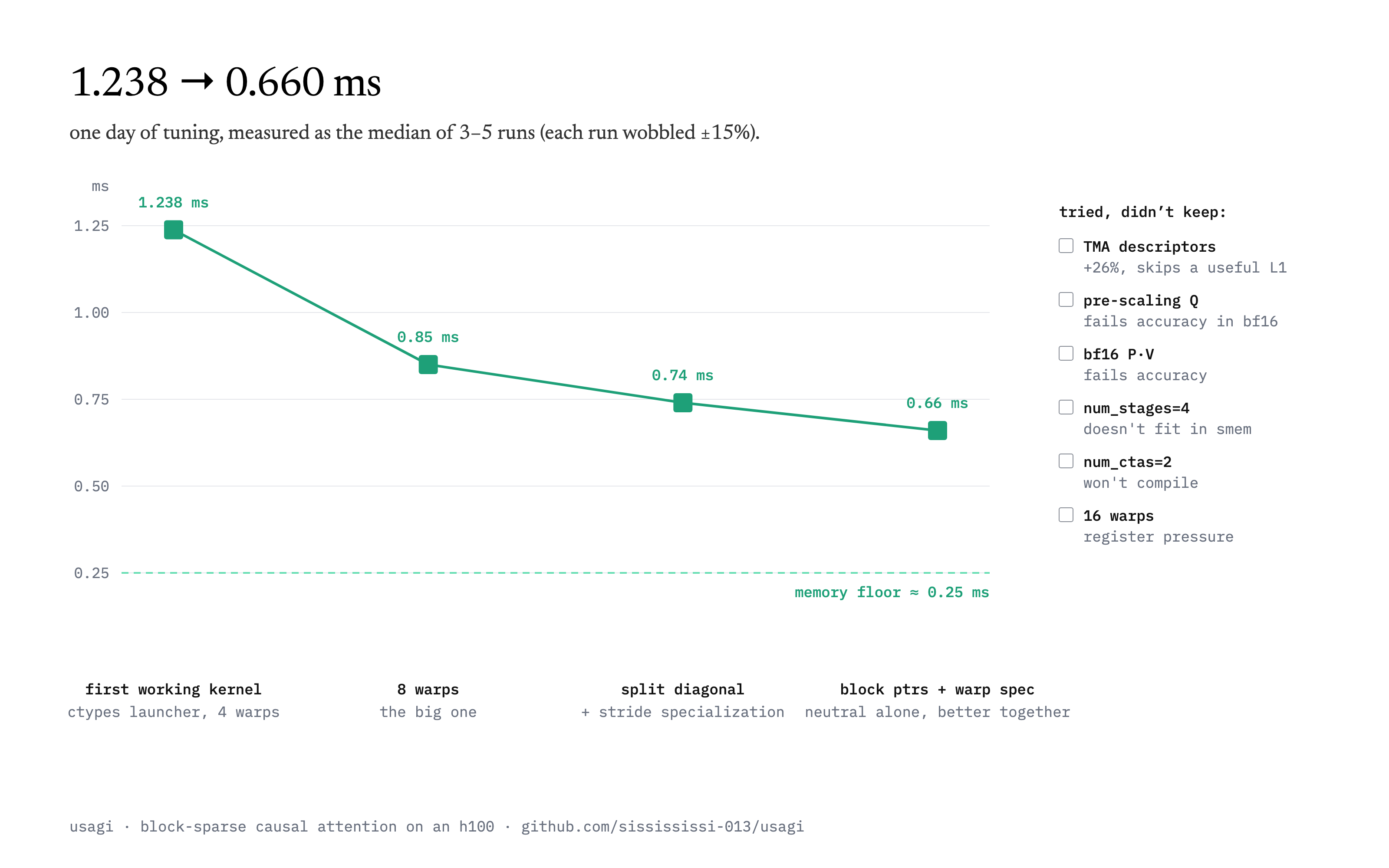
line chart titled 1.238 → 0.660 ms: latency drops from 1.238 ms (first working kernel, ctypes launcher, 4 warps) to 0.85 ms (8 warps) to 0.74 ms (split diagonal plus stride specialization) to 0.66 ms (block pointers plus warp specialization), above a dashed memory floor of about 0.25 ms; measured as medians of 3–5 runs since each run wobbled ±15%. tried and not kept: tma descriptors (+26%), pre-scaling Q (fails accuracy in bf16), bf16 P·V (fails accuracy), num_stages=4 (doesn't fit in shared memory), num_ctas=2 (won't compile), 16 warps (register pressure).
1.238 → 0.660 ms in a day, and what didn't make it.

stageready @ elevenlabs worldwide hackathon (san francisco), with rhea

practice going live in front of an ai audience.

first place overall a gold medal on a red ribbon, with a little crying cat poking its face, paws and feet out of it

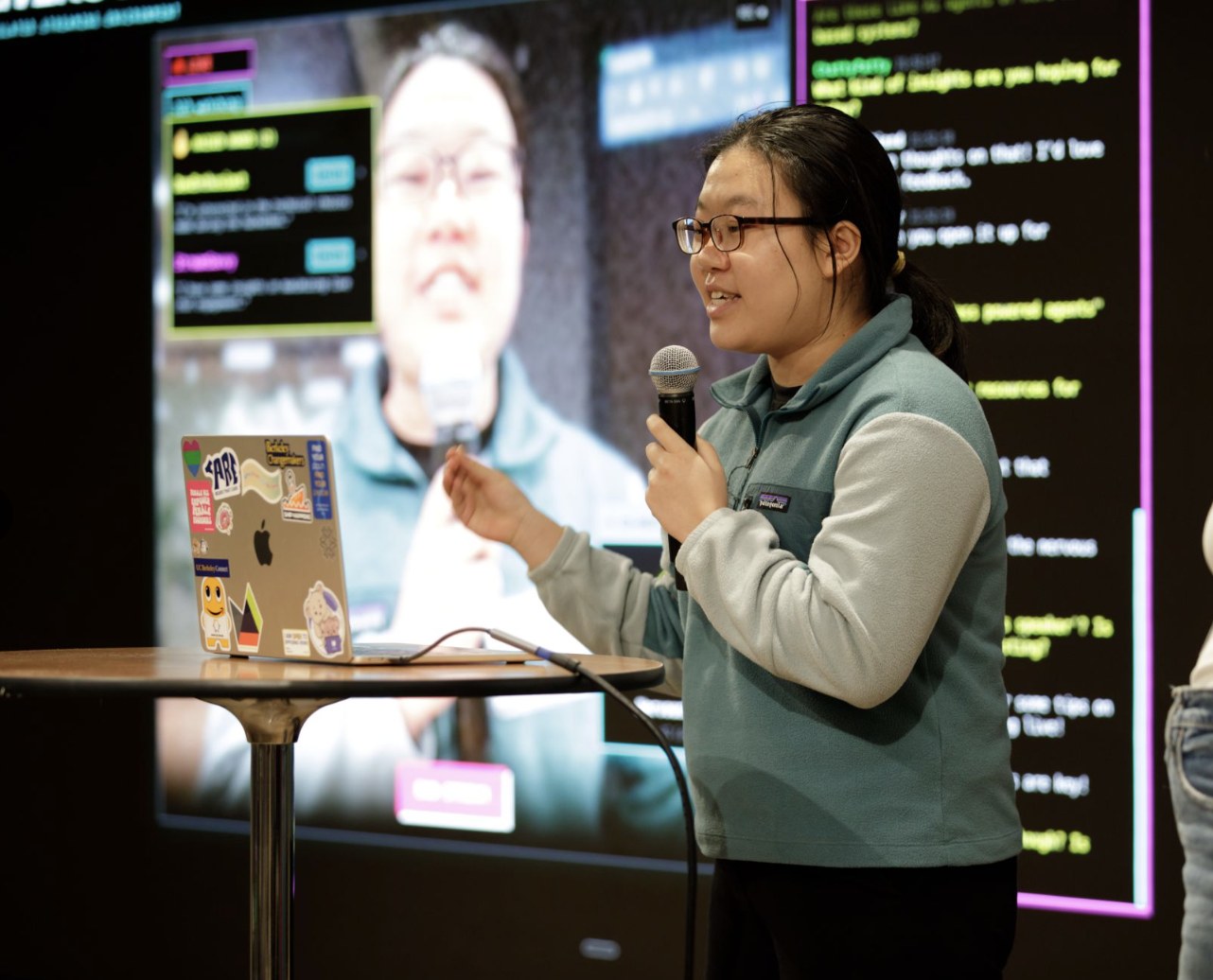
sissi on stage with a microphone, presenting stageready next to her sticker-covered laptop. behind her, the big screen shows the app running live: her own face streaming in the middle, a raised hands panel of ai viewers on the left, and the ai audience's chat scrolling in neon green on the right
presenting stageready on stage, live.
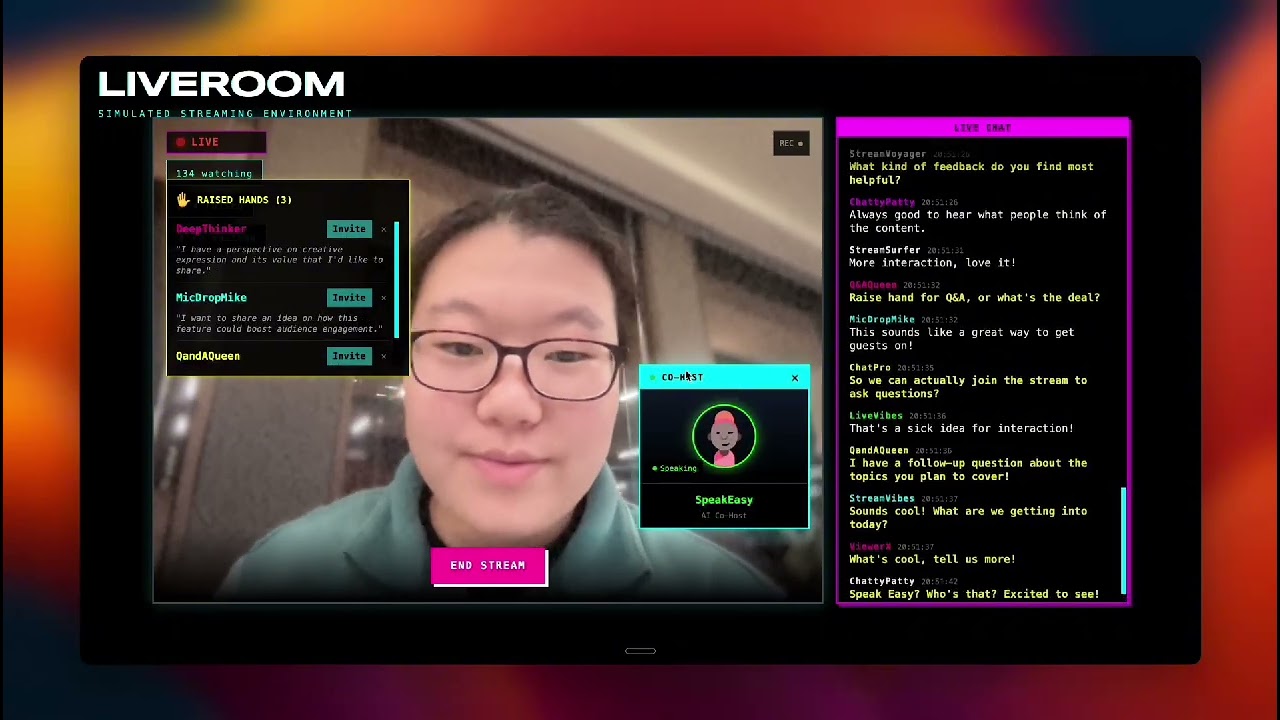
the stageready demo on youtube. the still shows sissi live-streaming in the practice room ("liveroom, simulated streaming environment"): her camera in the middle with 156 watching, a raised hands list of ai viewers on the left with invite buttons, an ai co-host called speakeasy in the corner, an end stream button, and a live chat of ai viewers on the right asking things like "what kind of feedback do you find most helpful?"
the demo on youtube (2:37): an ai audience chats back to what you're saying, raises hands to ask questions, and can join as a voice co-host.
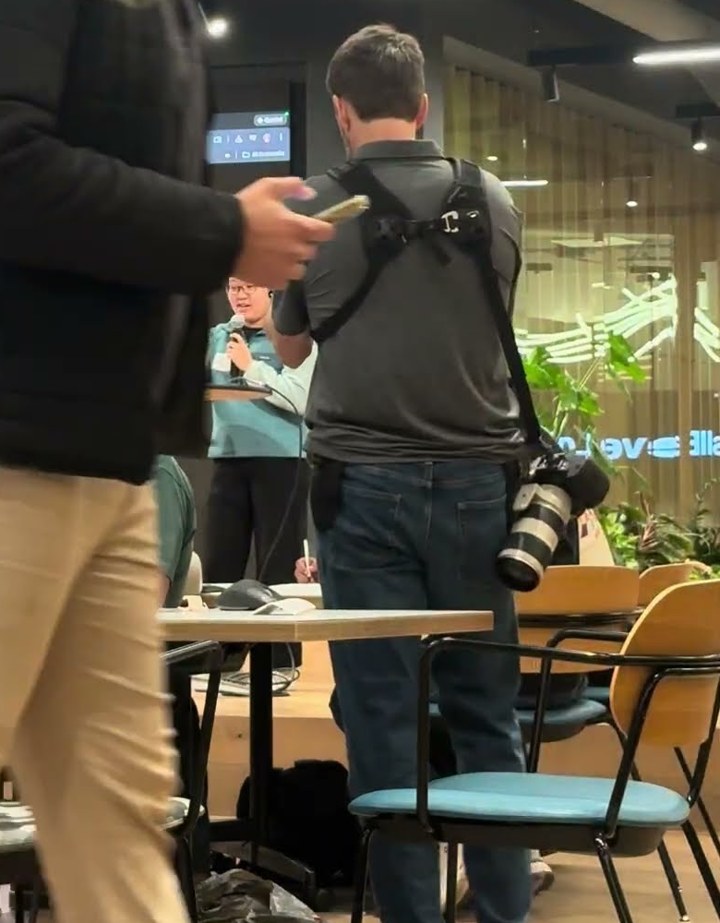
a youtube short filmed from the audience at the elevenlabs worldwide hackathon: sissi stands at the podium with a microphone, presenting stageready, while people walk past and a photographer with a big camera stands in front
presenting it at the hackathon, filmed from the crowd (a youtube short).

human brain cells in a dish learn to play cartpole, with neurotech@berkeley

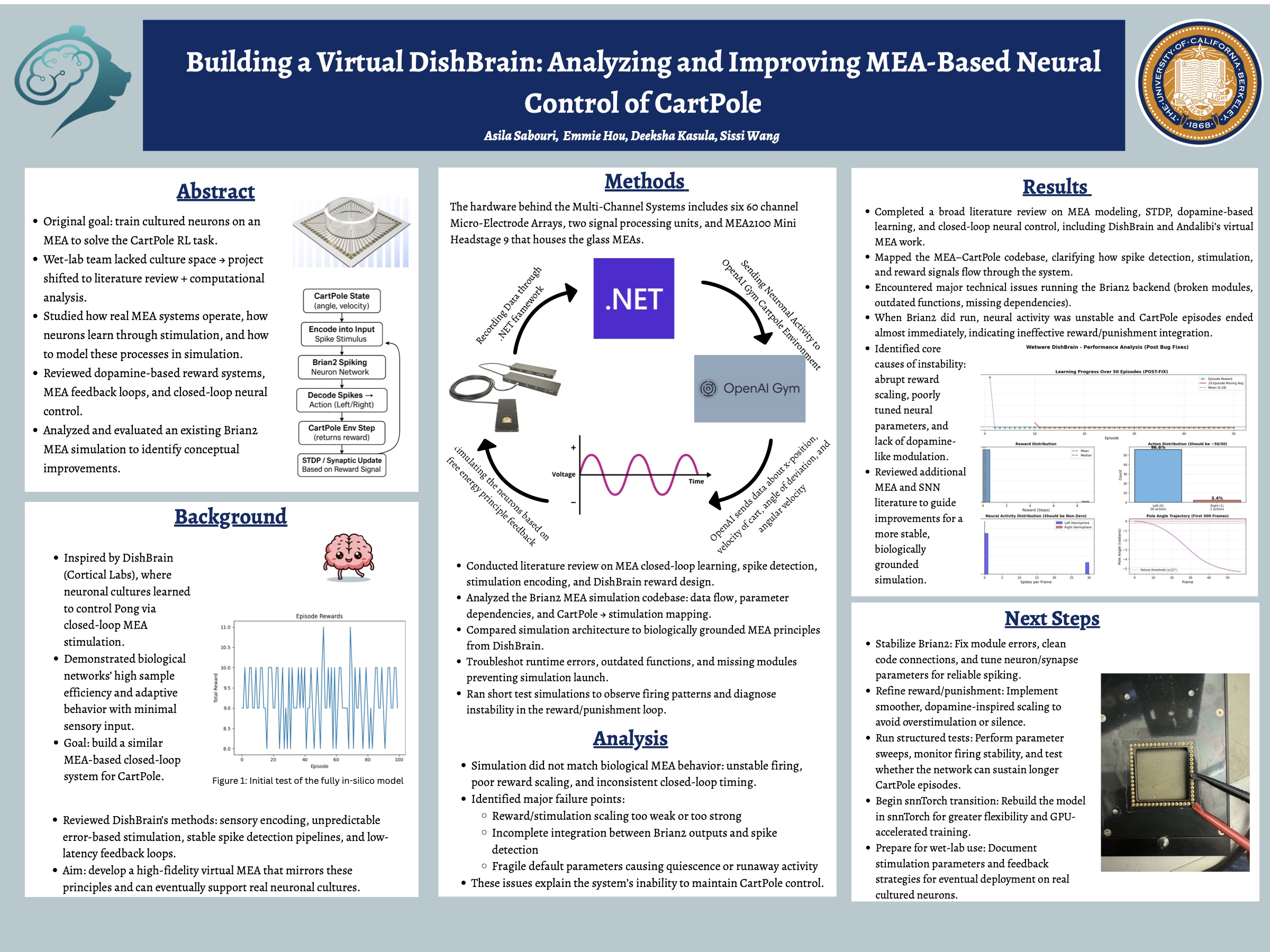
research poster, 'building a virtual dishbrain: analyzing and improving mea-based neural control of cartpole', by asila sabouri, emmie hou, deeksha kasula and sissi wang, uc berkeley. abstract: the original goal was to train cultured neurons on a multi-electrode array (mea) to solve cartpole; without wet-lab culture space the project became a literature review plus computational analysis of an existing brian2 mea simulation. background: inspired by cortical labs' dishbrain, where neurons learned pong through closed-loop stimulation. methods: a loop diagram where recorded neural data goes through .net to an openai gym cartpole environment, which sends cart position, angle and velocity back as stimulation; plus a pipeline from cartpole state to spike encoding, brian2 spiking network, spike decoding to left/right, reward, and stdp updates. analysis and results: the simulation fired unstably, reward scaling was too weak or too strong, brian2 integration was incomplete, and episodes ended almost immediately; charts show reward, action and neural activity distributions. next steps: stabilize brian2, smoother dopamine-like reward, parameter sweeps, move to snntorch, and prepare stimulation strategies for real cultured neurons. a photo shows a glass mea chip.
our poster: building a virtual dishbrain.
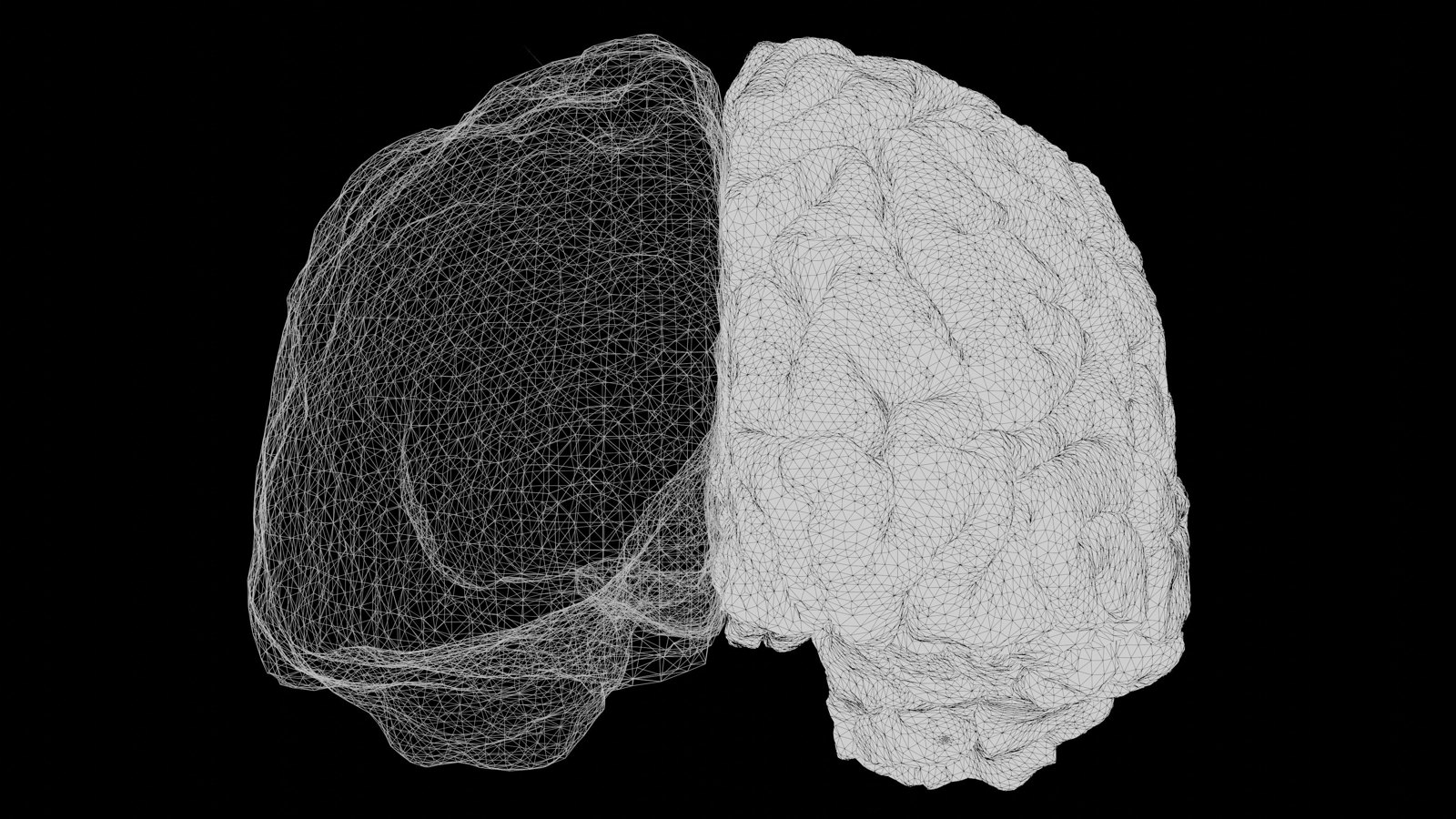
a 3d wireframe brain on black, one hemisphere drawn as a dense mesh and the other shaded solid, the cover of sissi's notebook 'running brian 2!'
running brian 2! my notebook for the simulation.
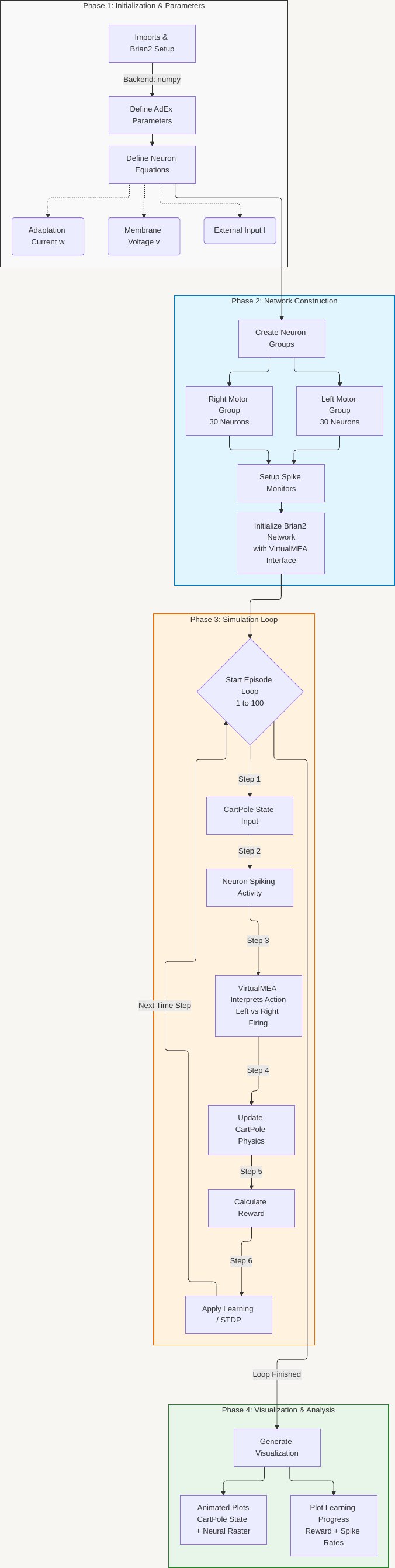
flowchart in four phases. phase 1, initialization: brian2 setup with a numpy backend, adex neuron parameters and equations (adaptation current w, membrane voltage v, external input i). phase 2, network construction: a right motor group and a left motor group of 30 neurons each, spike monitors, and a brian2 network wired to a virtualmea interface. phase 3, a simulation loop over 100 episodes: cartpole state in, neurons spike, the virtualmea reads left vs right firing as an action, cartpole physics updates, reward is calculated, learning / stdp is applied, then the next time step. phase 4: animated plots of the cartpole and neural raster, and plots of reward and spike rates.
how the virtual dish works, start to finish.
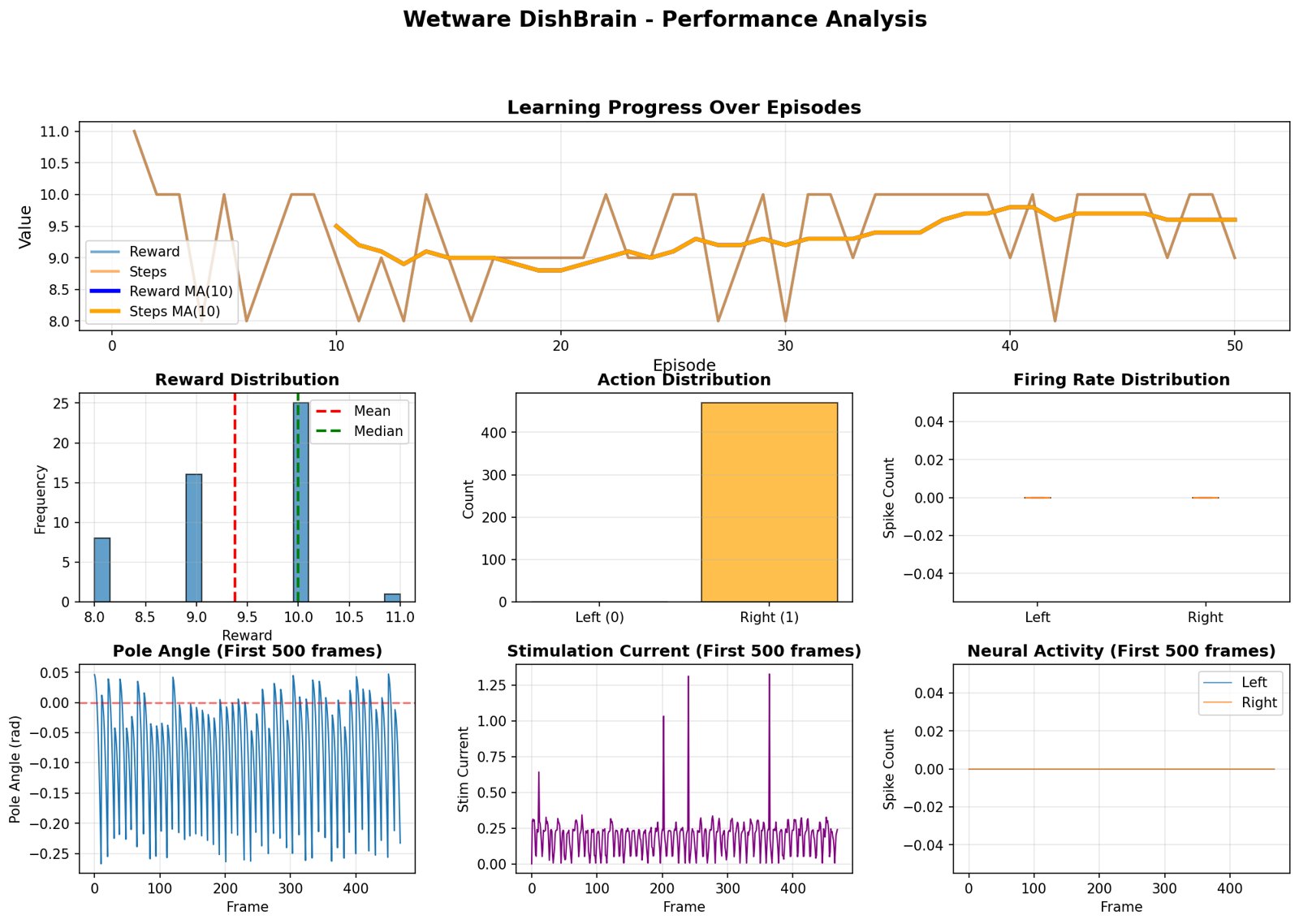
performance dashboard from the first run: reward stays flat around 9 to 10 steps for all 50 episodes, the reward histogram is a narrow spike around 9.5, the action chart shows almost every action was right, and the pole angle swings back and forth; no learning curve
run 1: no learning, and 88% of moves were 'right'.
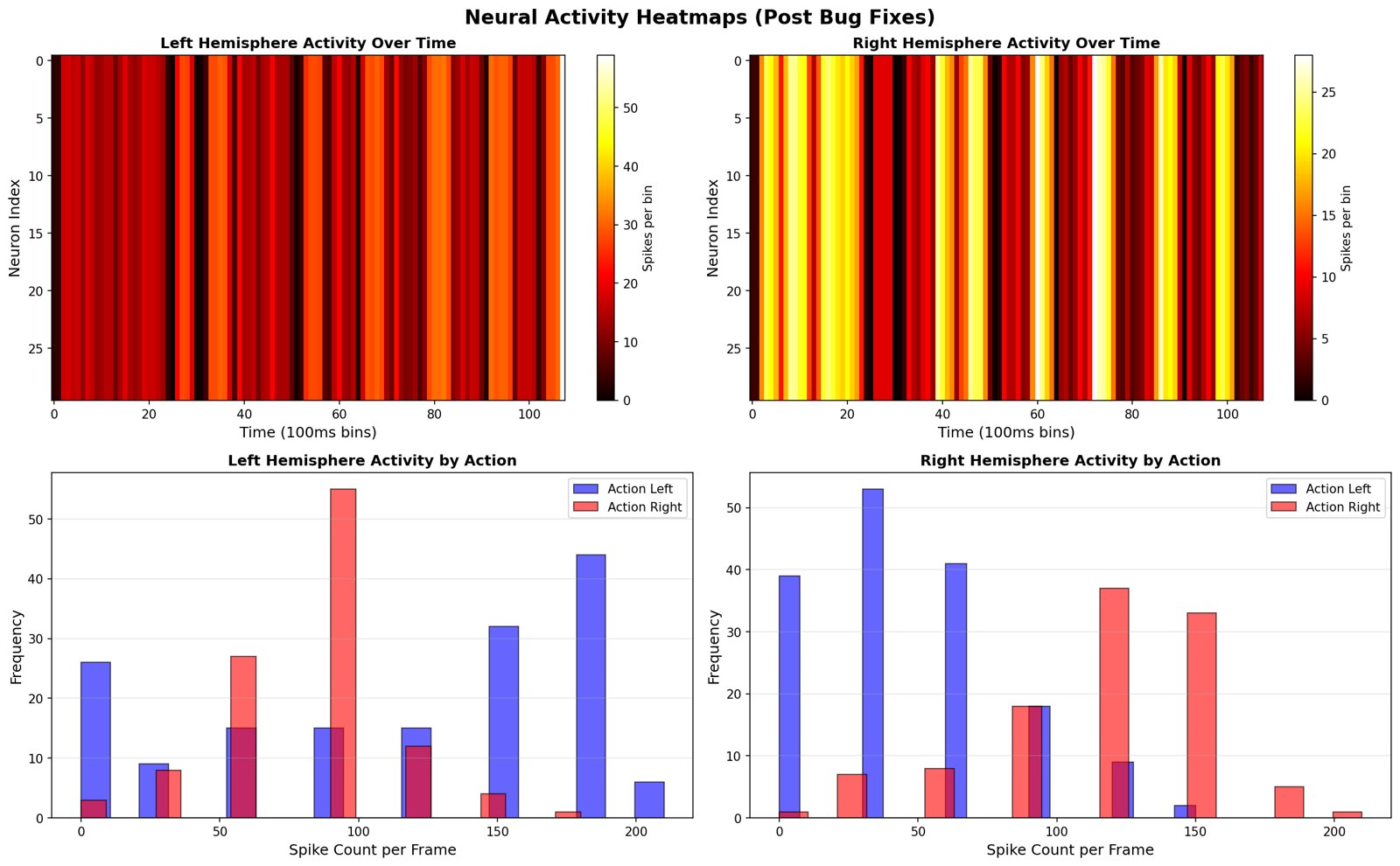
neural activity heatmaps after bug fixes: left and right hemisphere neurons firing over time in red and yellow bands, with bar charts below comparing spike counts per frame for left versus right actions
run 3, after the bug fixes: both hemispheres finally firing.
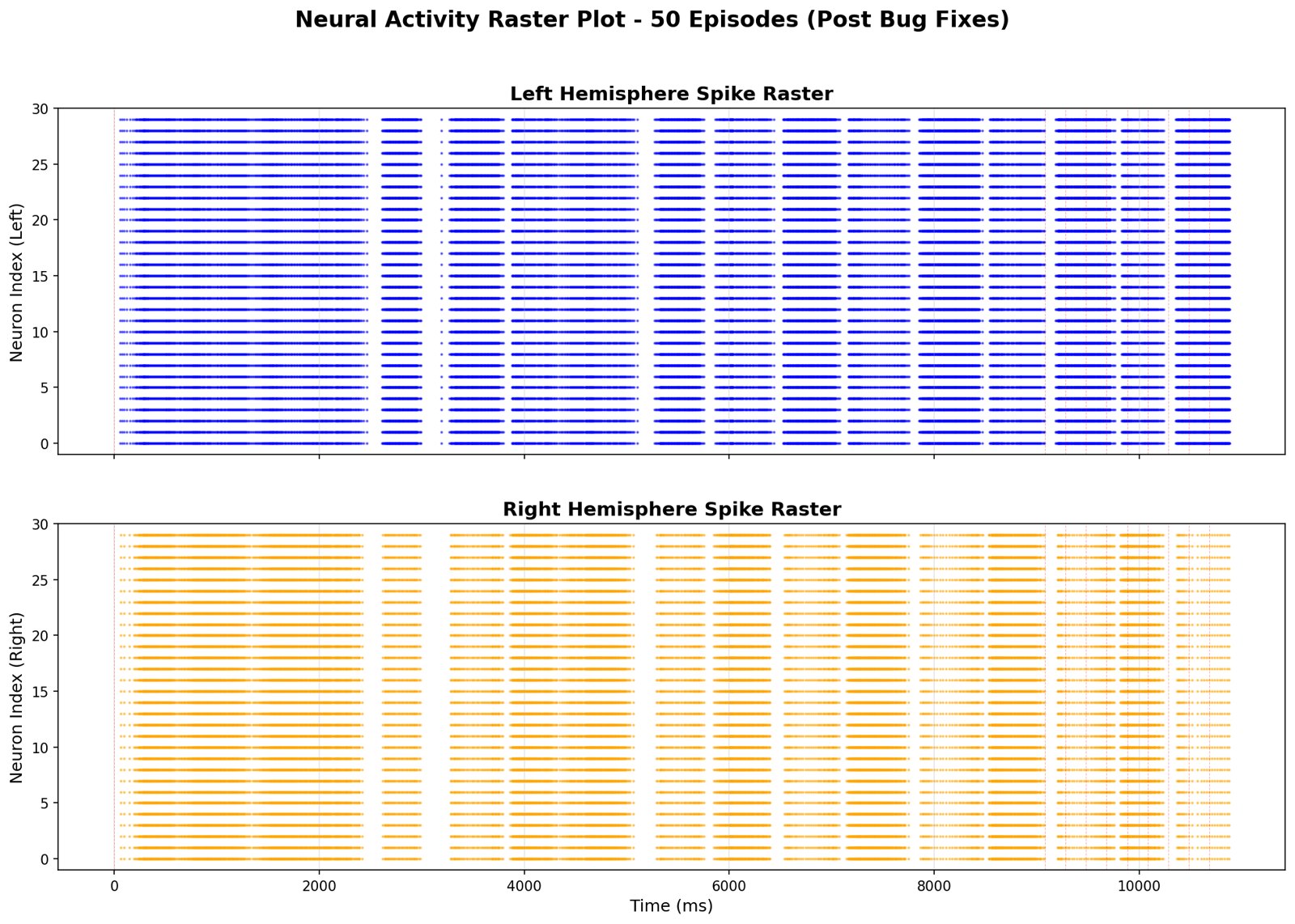
spike raster over 50 episodes after bug fixes: dense blue horizontal bands for all 30 left-hemisphere neurons and orange bands for all 30 right-hemisphere neurons, firing continuously in the same rhythm
spike raster: all 30 neurons per side, firing together.
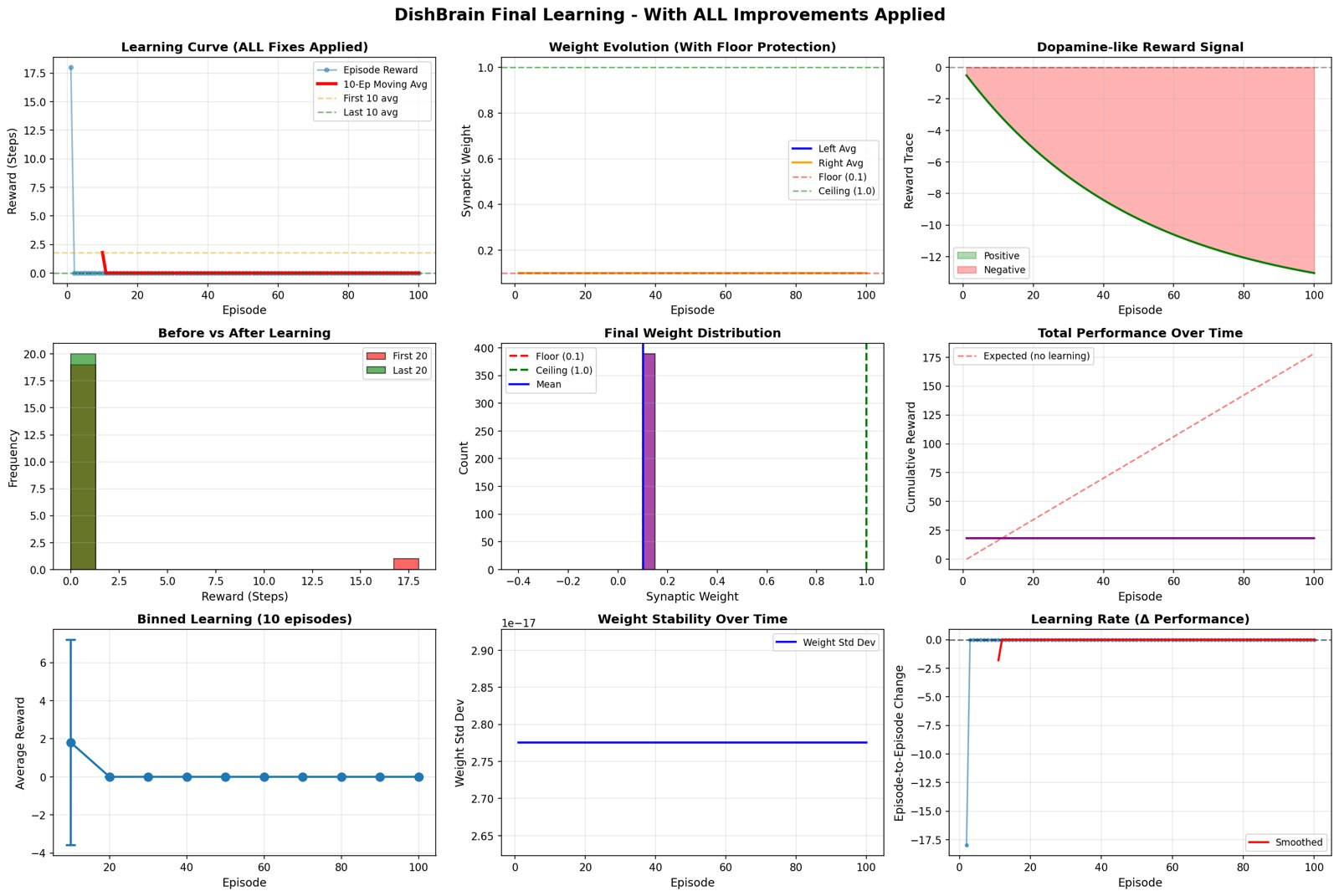
final learning dashboard with all improvements applied: the learning curve drops to zero after the first episodes, synaptic weights collapse to their floor value, the dopamine-like reward signal decays, and cumulative performance stays flat
last try, with stdp and a dopamine-like reward: the weights hit the floor.

welcome 欢迎

a moving installation about how children with dyslexia see chinese characters.

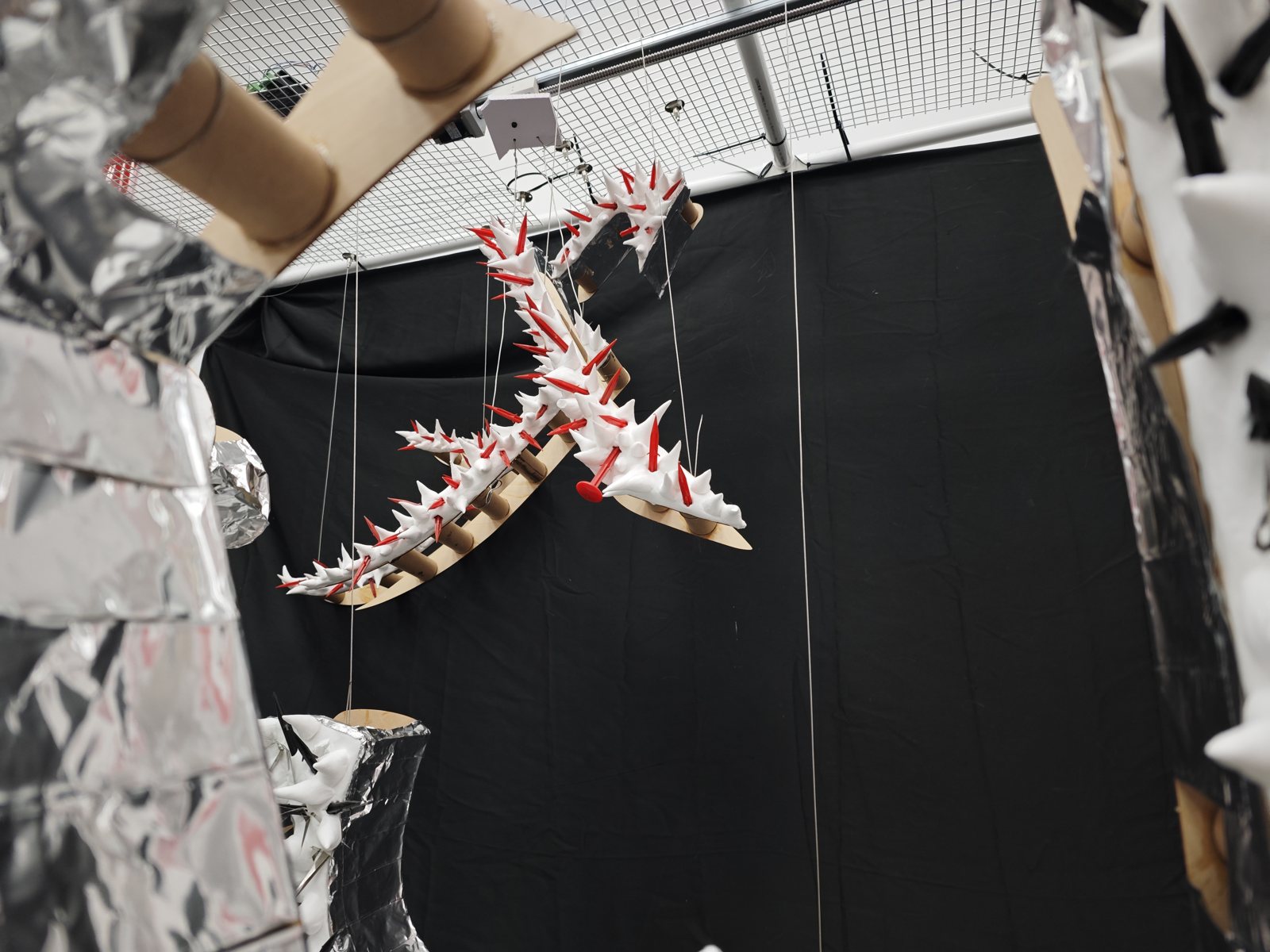
the strokes drift on motor rails until, for a moment, they line up into 欢迎.
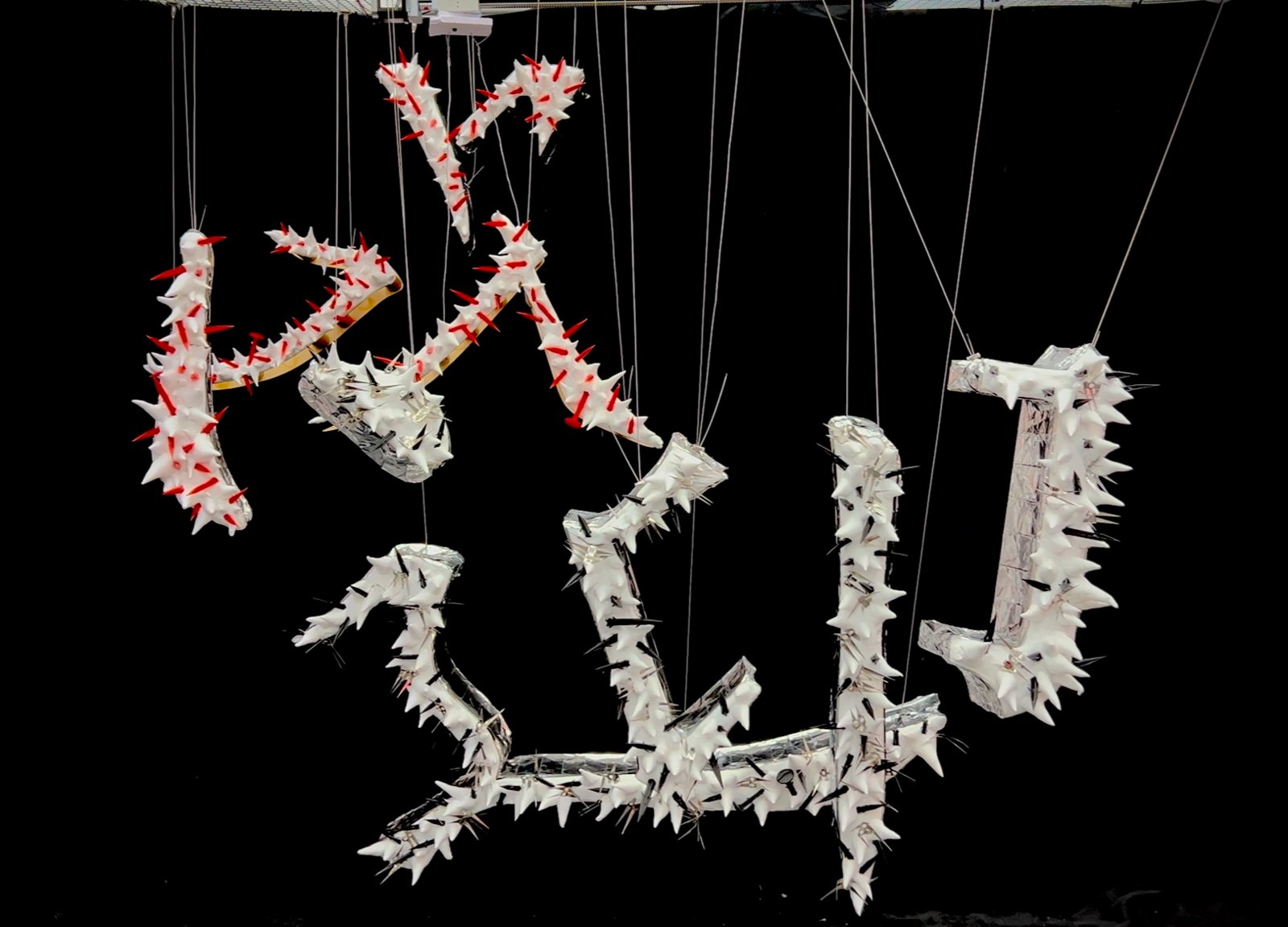
the whole installation from the front: all the strokes of 欢迎 hanging in the air on black
the whole piece, 3m × 2m × 2m, nanshan, shenzhen.
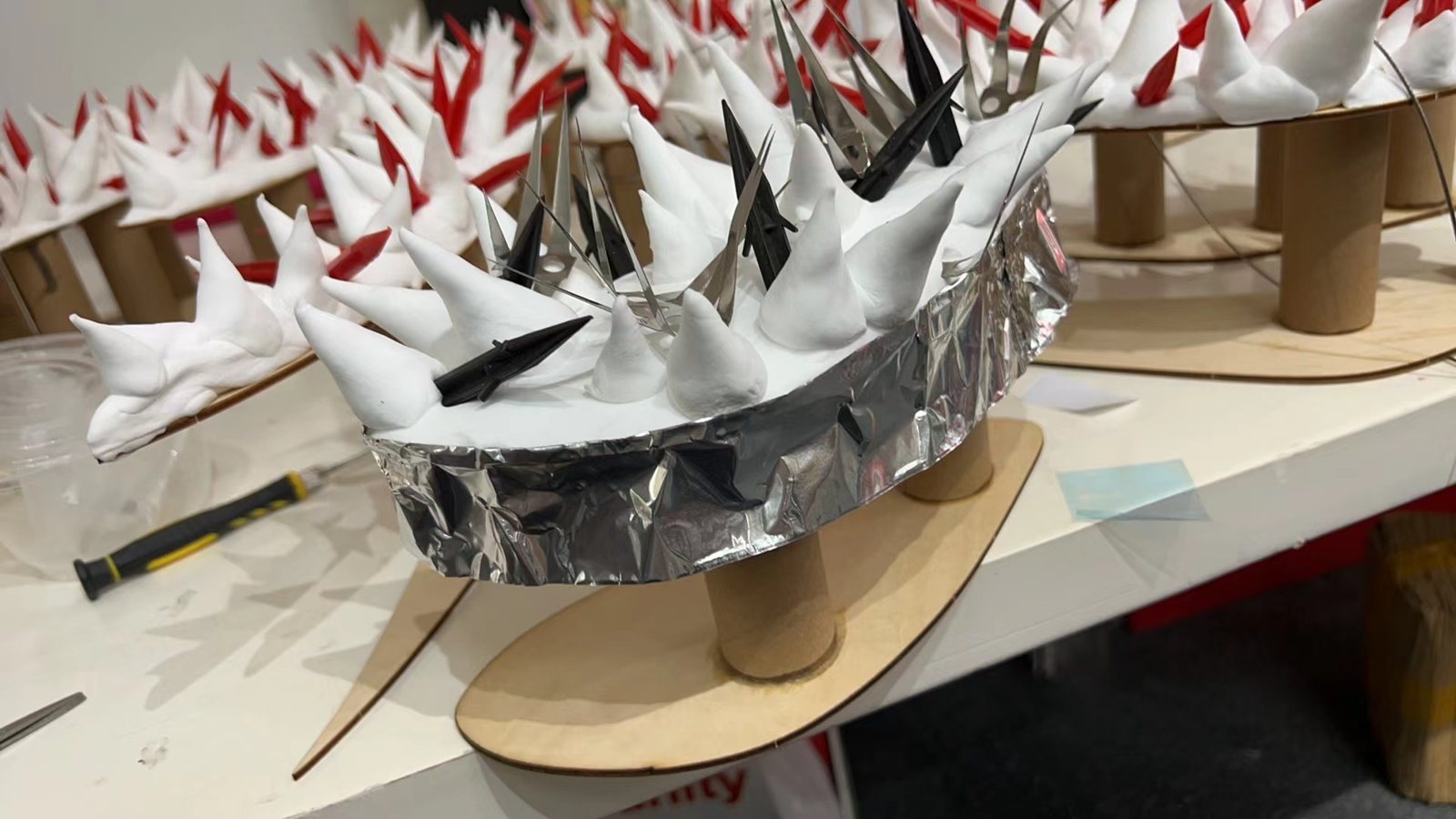
close-up of a hanging stroke: white clay spikes with red tips
欢迎 with its strokes back in place, clear and readable
the moment the strokes fall into place.
欢迎 next to a version with strokes and radicals missing
one of five ways dyslexic kids read characters: missing parts.
spiky paper stroke sculptures on cardboard stands

song of the elephants 横截面

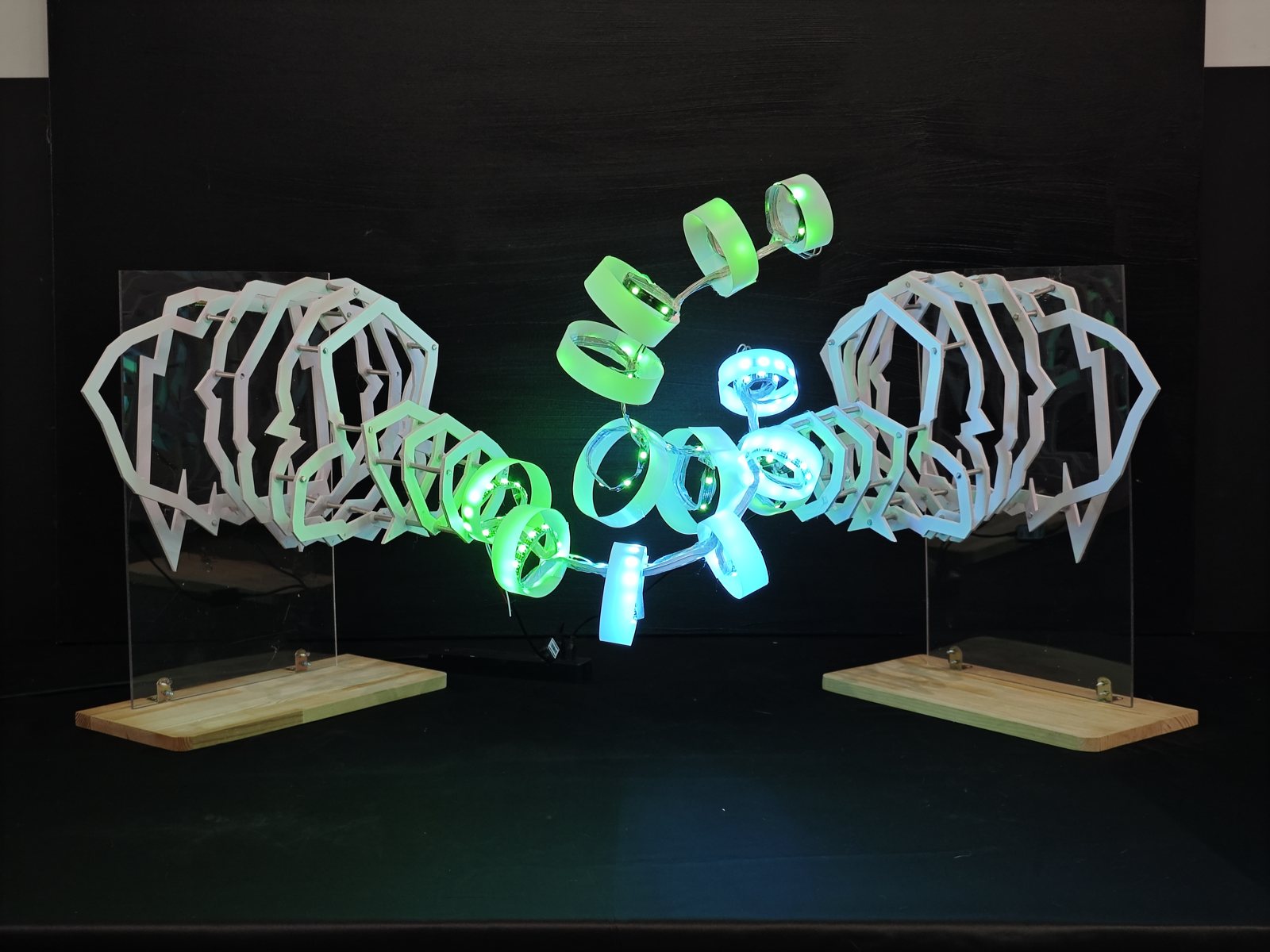
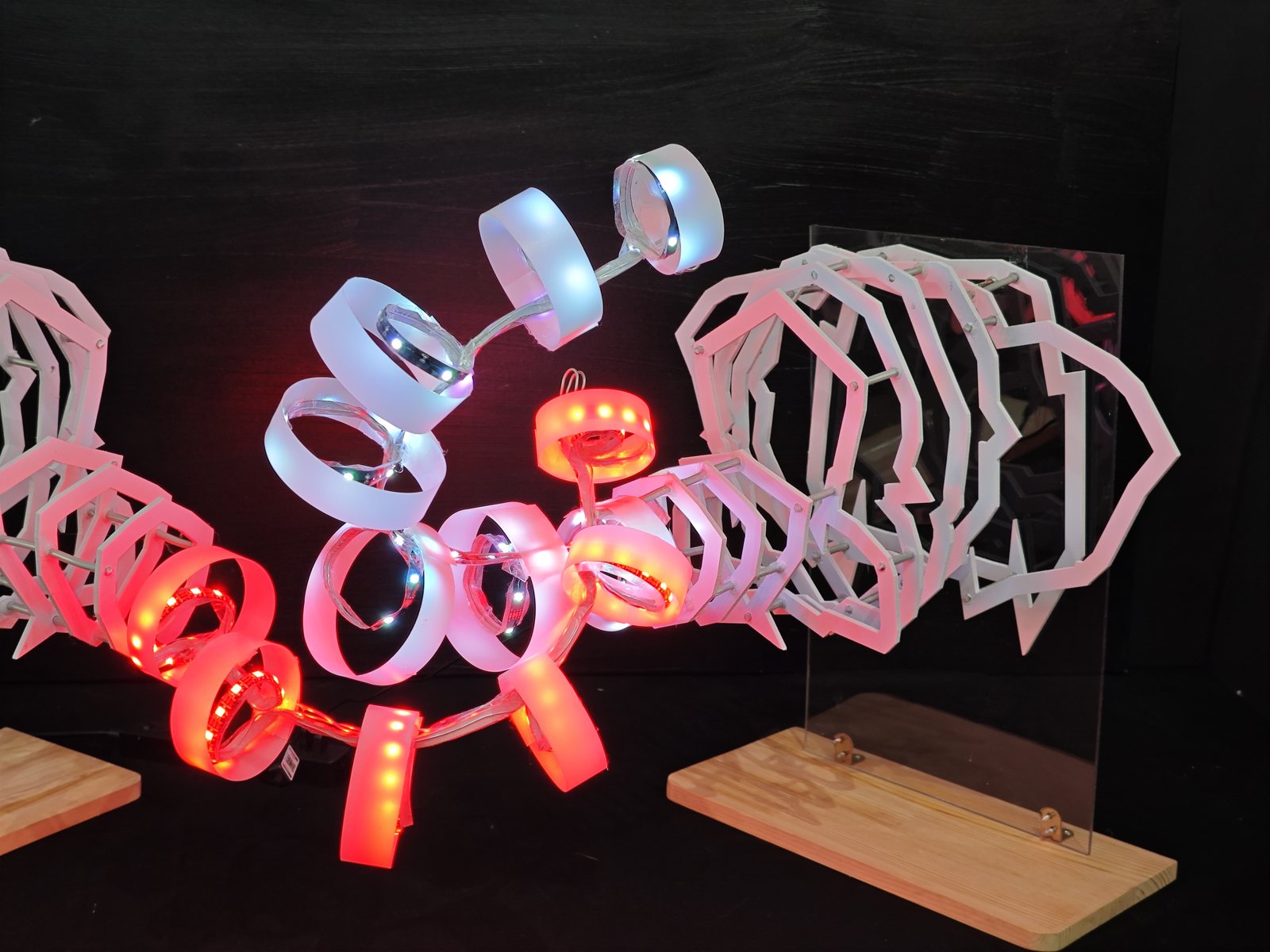
two elephants whose trunks light up with sound.

the trunks glow with what they hear: blue for low sounds, red for high.
two white geometric elephant heads on wooden bases, their ring trunks glowing green and blue
pvc, ws2812b leds, arduino, acrylic, diffuser sheet, aluminium wire.
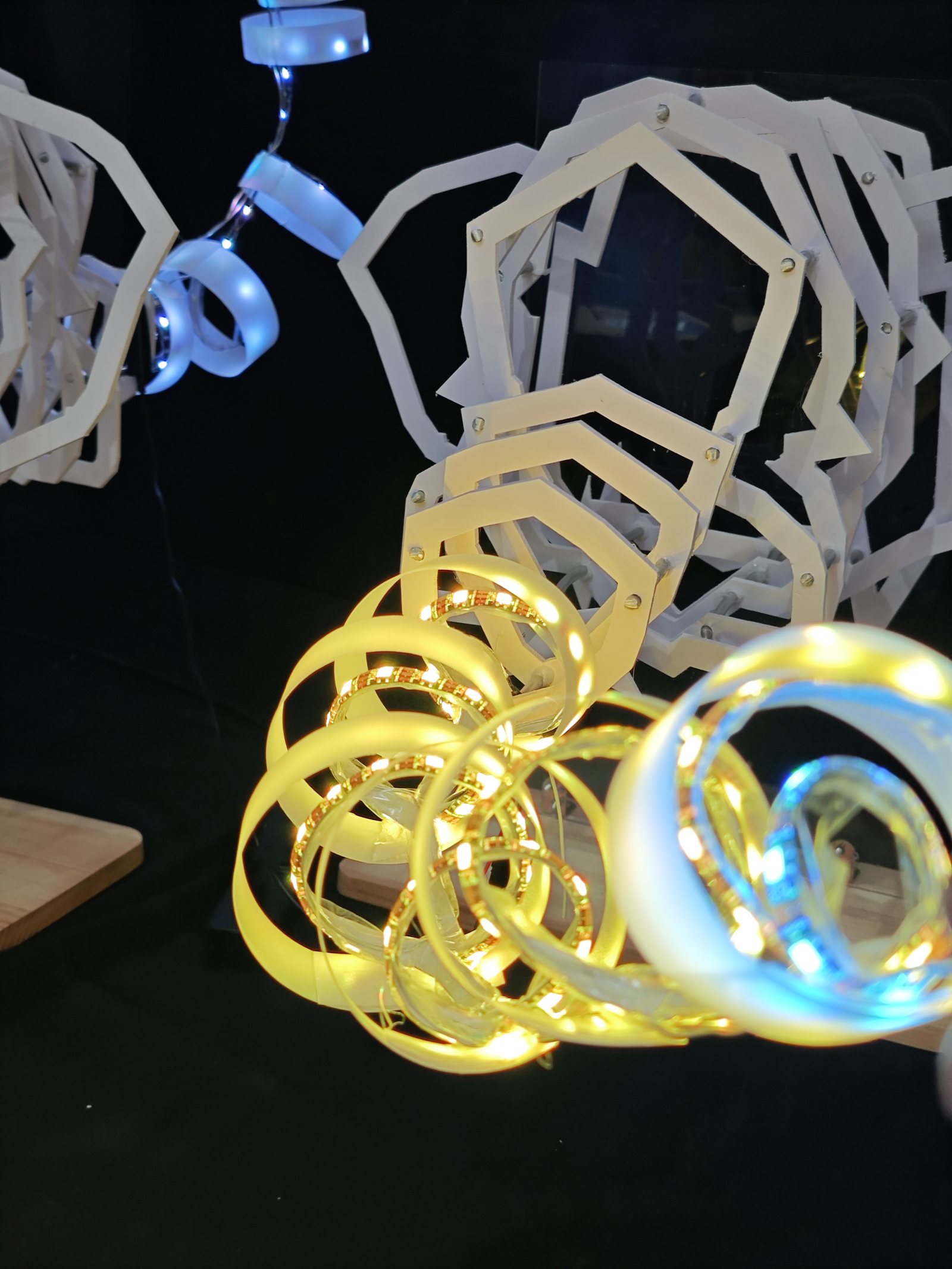
a trunk of rings glowing warm yellow
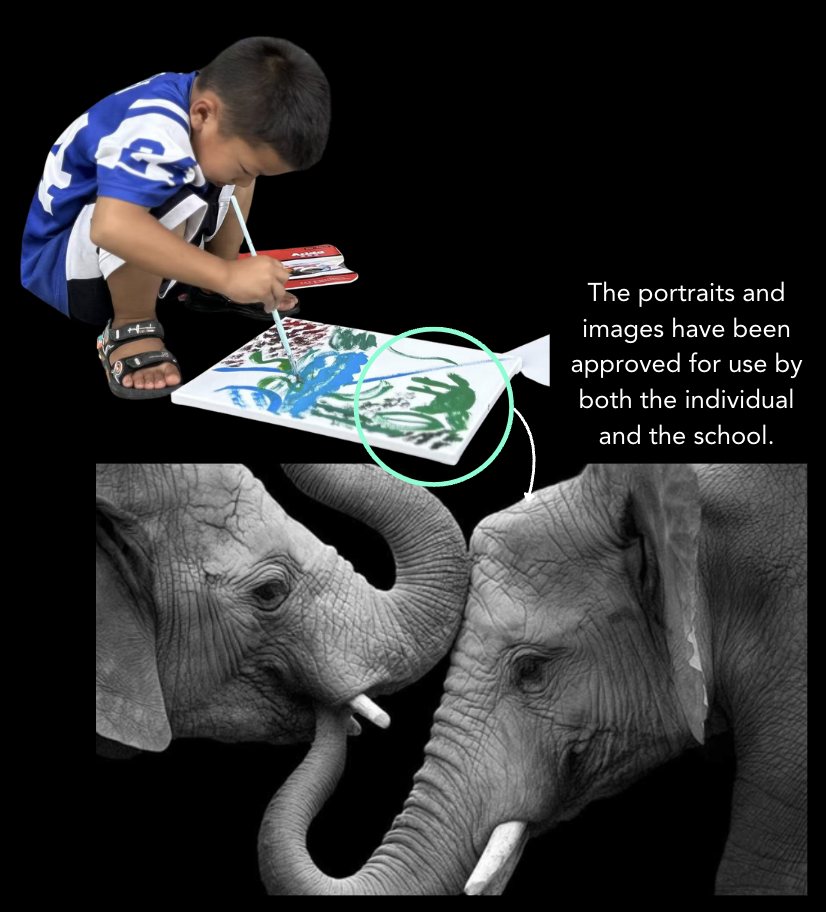
a child bent over his drawing of a green elephant, above two elephants touching trunks
"i feel like a green, symmetrical elephant."

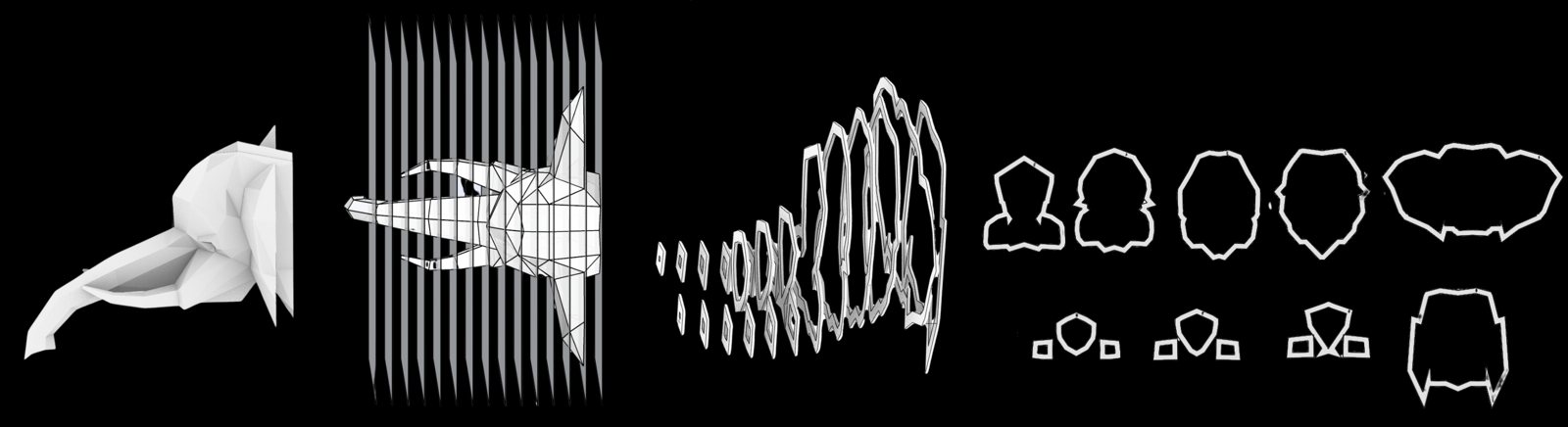
an elephant modelled in rhino, sliced into cross-sections and laid out for cutting
the trunks glowing pink and red between the two white elephant heads
back home